
Concerning Subsistence to the Government Servants claims in chapter III of Book V of Arthashastra that the king should fix at least one fourth of the total revenue charges for the maintaining the servants and at the same time attend to the requirements of the fort and countryside .this includes sacrificial priests, teachers, commander of the army, heir apparent princes, mother of the king and the queen who shall each receive 48000panas per annum. With this amount of subsistence, they will hardly yield themselves to temptation or discontentment. Regarding the door keepers, superintendents of the harem, commander, collector general and the chamberlain all shall be due for 24,000 panas per annum on which they shall be serviceable.
Concerning subsistence to the Government Servants in case of prince, nurse of the prince, the chief constable, officer in charge of the town, superintendent of law and commerce; the superintendent of manufacturing; members of council of ministers, Superintendent of country parts and of boundaries shall receive 12000 panas which shall make them loyal towards the king. In case of chief of military corporations which include chiefs of elephants, horses, chariots, and of infantry the wages shall vary from 8000, 4000 to 2000. In case of foretellers, astrologers, readers of puranas etc shall receive a payment of 1000 panas. In case of spies the, villagers, servants and savants leading the spies shall receive 250 panas as payment.
Concerning subsistence to the Government Servants shall authorise the superintendents to regulate the rates, wages, profits, appointments and transfer of men. It also provides subsistence for the wives, and sons of those who die during rendering services to the king either in the army or outside at times of emergency. The king can also provide subsistence to his masses by providing them livelihood in the waste lands. It also provides specifically that all the armoury and weapons shall enter into the armoury only when it will possess the royal mark with king`s seal on it.
Thus, Concerning Subsistence to the Government Servants mainly includes the source of income of those who serve the king and his kingdom both inside and outside the fortified area which owes the honesty of the serving people.
Concerning Subsistence to the Government Servants
Concerning Subsistence to the Government Servants mainly include the sources of income which is collected from the royal source of income to make payments and provide with minimum source of subsistence to those who attend the king directly. Chapter III of Book V in Arthashastra includes an account of all these expenditures which decide the conduct of the courtier.
Recently updated articles in History of India
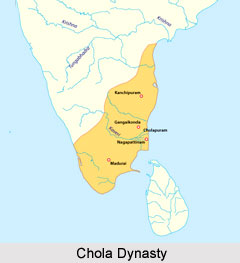
Chola Dynasty
Chola Dynasty is a Tamil dynasty and had longest duration of ruling in parts of South India. Chola dynasty had ruled South India successfully for a ex...
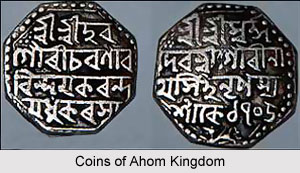
Suhungmung
Suhungmung was the fourteenth ruler of the Ahom dynasty who ruled from the period 1497 to 1539 AD. His reign was significant in terms of expansion of...
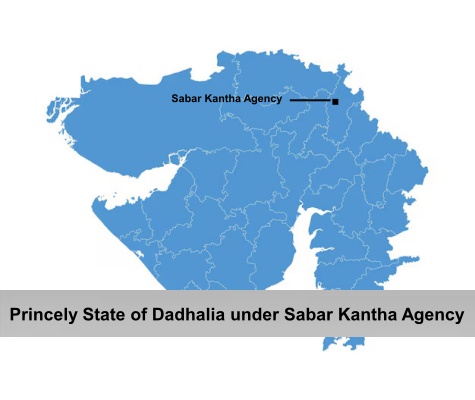
Princely State of Dadhalia
Princely State of Dadhalia was located in the present state of Gujarat. The state covered a total area of 28 sq miles and comprised of 15 villages. Th...
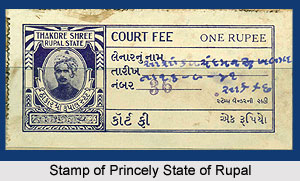
Princely State of Rupal
Princely State of Rupal was a part of the Baroda Agency, a sub division of Western India States Agency. It was under the administrative control of the...
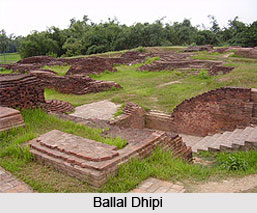
Archaeological Sites of West Bengal
Archaeological sites of West Bengal reveal several aspects of ancient India. Excavations by the Archaeological Survey of India have furnished artefact...
Related articles in History of India

Mughal Architecture during Babur
Mughal architecture during Babur marked the foundation of a new architectural era in India, blending Timurid, Persian, and local influences. His reign...
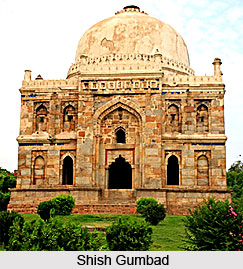
Architecture during Sayyid and Lodi Dynasty
Architectures during the Sayyid and Lodi dynasty were mainly the tombs and monuments for the dead rulers. It were carefully designed and meticulously...

Brahmanical Sources of Ancient History
Brahmanical Sources of ancient history are contained in the Vedas and they constitute one of the most important literary sources of information about...
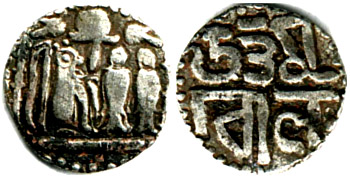
Coins of Chola Empire
Coins of Chola Empire were issued in gold, silver and copper and carried the Chola emblem.
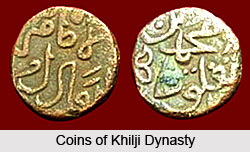
Coins of Khilji Dynasty
Coins of Khilji Dynasty had an influential feature that was followed by the other dynasties.