
Concerning Peace and Exertion lay down that a kingdom can remain stable only when there is acquisition and security of property and industries. Chapter II of Book VI in Arthashastra specifies that whenever efforts are made to undertake work it is called industry while carrying out of work without disturbance is peace.
Concerning Peace and Exertion has been further divided into two parts within which the initial part includes the factors of peace which includes definition of peace and the causes leading to peace The first part includes a definition of industries which says that whenever there is an effort to achieve a desired end of the work undertaken without any disturbance it is called industry which is working in peace. The peace gets disturbed with various man made as well as natural unforeseen causes which has been termed as providential and man made causes. A policy gets disturbed with both man made as well as providential factors which are included as policy and impolicy (naya and apanaya); fortune and misfortune also known as (aya and anaya). Whenever there is attainment of some end which seemed to be almost lost, it is called fortune but whenever a policy leaves some unfavourable results it is called misfortune. The success of a state depends on both the results.
Concerning Peace and Exertion in its next part lays down such factors which define the conditions for war and various types of war formation. The chapter along with this provides definition for the enemy country, friend or ally, and describes the various war formations in which the enemy as well as the ally nation should form and organise each other to wage a war against the enemy foe. Whenever a neighbour has styled himself as an enemy and has himself taken up evil ways and is destructible shall be defined as enemy .Thus, during a war formation, in front of the conqueror and close to his enemy, there happen to be situated kings such as the conqueror`s friend, next to him the enemy`s friend, and next to the last, the conqueror`s friend, and next, the enemy`s friend`s friend.
In the rear of the conqueror, there happen to be situated rearward enemy (parshnigraha), a rearward friend (akranda), an ally of the rearward enemy (parshnigrahasara), and an ally of the rearward friend (akrandasara).The foe who is equally of high birth and occupies a territory close to that of the conqueror is a natural enemy; while he who is merely antagonistic and creates enemies to the conqueror is a factitious enemy.
He whose friendship is derived from father and grandfather and who is situated close to the territory of the immediate enemy of the conqueror is a natural friend; while he whose friendship is courted for self-maintenance is an acquired friend.
The king who occupies a territory close to both the conqueror and his immediate enemy in front and who is capable of helping both the kings, whether united or disunited, or of resisting either of them individually is termed a Madhyama (mediatory) king. He who is situated beyond the territory of any of the above kings, and who is very powerful and capable of the helping the enemy, the conqueror and the Madhyama king, together or individually or of resisting any of them individually is a neutral king (udasina); all these form the twelve primary kings.
Concerning Peace and Exertion then lays down the form of war to be fought by these twelve kings on both the sides and at the same time defines the role of the Neutral king as well as the Madhyama king before and after the war.
Thus, Concerning Peace and Exertion discusses the famous Circles of States which was the first organised formation of war strategy ever followed by any of the Hindu rulers. This has remained one of the major contributions of Kautilya as mentioned in Arthashastra.
Concerning Peace and Exertion
Concerning Peace and Exertion which forms chapter II of Book VI in Arthashastra, includes the criteria which form the basis of war and peace in a kingdom. Arthashastra includes a list of factors which establishes peace in the kingdom while enlists certain features of exertion which includes various structures of war formation.
Recently updated articles in History of India
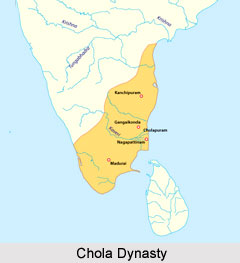
Chola Dynasty
Chola Dynasty is a Tamil dynasty and had longest duration of ruling in parts of South India. Chola dynasty had ruled South India successfully for a ex...
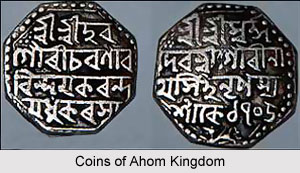
Suhungmung
Suhungmung was the fourteenth ruler of the Ahom dynasty who ruled from the period 1497 to 1539 AD. His reign was significant in terms of expansion of...
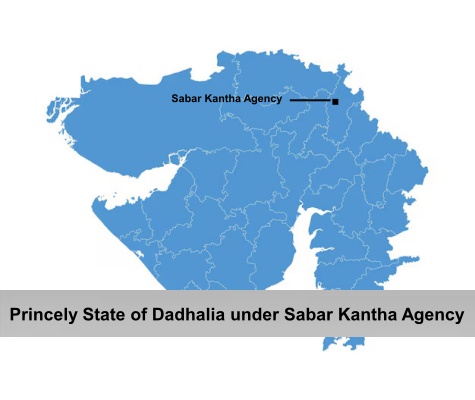
Princely State of Dadhalia
Princely State of Dadhalia was located in the present state of Gujarat. The state covered a total area of 28 sq miles and comprised of 15 villages. Th...
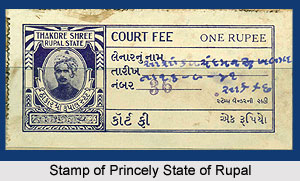
Princely State of Rupal
Princely State of Rupal was a part of the Baroda Agency, a sub division of Western India States Agency. It was under the administrative control of the...
Archaeological Sites of West Bengal
Archaeological sites of West Bengal reveal several aspects of ancient India. Excavations by the Archaeological Survey of India have furnished artefact...
Related articles in History of India

Mughal Architecture during Babur
Mughal architecture during Babur marked the foundation of a new architectural era in India, blending Timurid, Persian, and local influences. His reign...

Architecture during Sayyid and Lodi Dynasty
Architectures during the Sayyid and Lodi dynasty were mainly the tombs and monuments for the dead rulers. It were carefully designed and meticulously...

Brahmanical Sources of Ancient History
Brahmanical Sources of ancient history are contained in the Vedas and they constitute one of the most important literary sources of information about...

Coins of Chola Empire
Coins of Chola Empire were issued in gold, silver and copper and carried the Chola emblem.

Coins of Khilji Dynasty
Coins of Khilji Dynasty had an influential feature that was followed by the other dynasties.