
Concept of prakriti in Vaishnavism is a part of the Concept of Cosmic matter. The term prakriti denotes that which gives rise to various modifications (vikaran prakaroti iti). It refers to the primordial cosmic matter from which the various evolutes such as mahat, ahamkara etc., originate. The existence of this kind of a primordial substance is accepted by the Sankhya system and the Vedanta in order to explain a causal beginning for the physical universe of five elements.
While on the one hand, the Sankhya school adopts a logical argument which based on the principle of cause and effect to prove the existence of the primordial cosmic matter, the Visistadvaita Vedanta resorts to the authority of the scriptures. Prakriti is also referred to as maya, as has been stated in the Svetasvatara Upanishad. It is called maya in the sense that it serves as an instrument for the creation of variegated objects in the universe. Yet another word which is commonly used in Vaishnava treatises for prakriti is avidyda. Avidya when applied to prakriti does not denote the cosmic ignorance which is the cause of illusory manifestation as has been understood in the Advaita Vedanta. On the contrary, it is taken to mean that which stands as an obstruction for true knowledge of Reality (vidyavirodhi). The physical body and the sense organs are products of prakriti and these prevent the soul from having the true knowledge of God due to the attachment of an individual to the physical body and the sensual pleasures. This aspect of prakriti receives greater emphasis in the Vaishnava theology because the attachment to prakriti from a beginning-less time constitutes the major obstacle for the attainment of God.
As regards the nature of Prakriti, it is held to be a non-sentient substance (jadadravya) which is characterised by three fundamental attributes known as sattva, rajas and tamas. The term Sattva stands for whatever is fine or light (prakasa) and causes happiness (sukha) and knowledge. Rajas represent whatever is active and is the cause of suffering, attachment and passion. Tamas is whatever is heavy and is responsible for lethargy and ignorance. All these are held to be supernormal qualities which are present in all the evolutes of prakriti, including the gross physical objects of the universe. They are found in varying proportion, depending upon the nature of the objects. If an individual has pleasant and friendly disposition, the quality of sattva is considered to predominate his mind. If one is too passionate or angry, it is due to the predominance of rajas. If a person is lethargic, dull and ignorant, it is taken that the tamasic quality is predominant in him. Thus, the presence of the three qualities and their influence are inferred from the type of activities and the nature of the object. In a piece of stone which is absolutely inert, tamas is the most predominant quality. The three gunas remain in equilibrium in the causal state of prakrti. That is, the primordial matter in the state of dissolution remains with all the three gunas in equal proportion. In the state of evolution variation takes place in the gunas by way of one of them being dominant, while others remaining subdued. In fact, evolution is the disturbed state of the gunas, while dissolution is the state of their equilibrium.
Concept of Prakriti
Concept of Prakriti in Vaishnavism refers to the original cosmic matter from which all the various evolutes originate. It is used to explain the beginning of the physical universe of five elements.
Recently updated articles in Religion in India
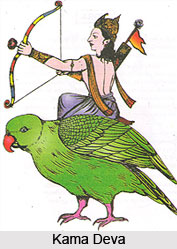
Kusumayudha
Kusumayudha is a name of Kamadeva, the Hindu God of Love. Depicted with a sugarcane bow and flower-tipped arrows, he represents attraction and longing...

Bhoyar Caste
Bhoyar Caste is largely found in the Central Provinces of the country. Traditional occupation of Bhoyars is agriculture. They are good cultivators and...
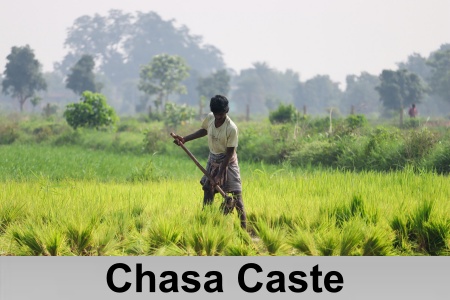
Chasa Caste
Chasa caste is a prominent agrarian community native to Odisha. Traditionally associated with cultivation and farming, Chasas have historically played...
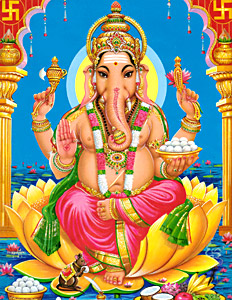
Vigneswara, A Form of Lord Ganesha
Lord Vigneswara is another form of Lord Ganesha or Vinayaka, prominently worshipped as the God of intelligence and good luck in the Indian subcontinen...
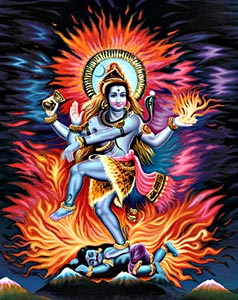
Maheswara
Maheswara, meaning “the Great Lord,” is a revered name of Lord Shiva in Hindu tradition. It represents Shiva’s supreme authority over creation, preser...
Related articles in Religion in India

Religion in Indus Valley Civilization
Religion in Indus Valley Civilisation included Hinduism, Buddhism and Jainism. Details about the religion in Indus Valley Civilization have been gathe...

Iyer Brahmin
Iyer Brahmins are originally from Tamil Nadu of South India. They are known for their adherence to Advaita philosophy and Smarta traditions. Tradition...

Kumbhakar / Kumhar Caste
Kumbhakar or Kumhar caste is a traditional artisan community in India known for pottery making. Derived from Sanskrit word Kumbhakar, meaning potter,...

Gujjars in Mughal Era
Gujjars in the Mughal era enjoyed great power. Further their power increased with the decline of Aurangzeb, Mughal emperor.

Gotra in Hinduism
In Hinduism, gotra refers to a lineage system tracing descent from ancient sages, primarily through the paternal line. Originating from Vedic traditio...