
Concept of Jiva according to Ramanuja is limited or anu. According to Ramanuja Brahman has chosen to associate himself with a particular place or time, for the purpose of encouraging spiritual meditation on him. This nature is consistent with his compassionate disposition. It is the jiva that is the knower in reality. Jiva undergoes change as a knower only extrinsically. The atman essentially is unchanged and the change is brought about by Karma.
According to Ramanuja all jivas are provided with all necessary apparatus that is required for the performance of actions and the enjoyment of the fruit. The individual who is conditioned by this apparatus of the powers of faculties acts freely. The Lord is the individual`s existential support who allows this action to be realized.
According to Sri Ramanuja, the soul is the doer and the experiencer. It is coextensive since one`s experiences are the result of one`s actions. Thus experience of one`s actions does not oppose the immutability of the soul. Ramanuja defines karma as meritorious or unmeritorious. The doer is morally responsible for his actions. Selfless actions that are performed with pure love of God do not bear material fruit.
Sri Ramanuja considers the jiva responsible for his actions. Sri Ramanuja firmly says that in release or in bondage, the jivas are identical yet numerically different. The essential characteristics are consciousness and bliss. However they are incapable of inter-communicating their experience of personal identity as experience. This knee jerk experience is self-distinguishing for each jiva.
In the state of Moksha, the atman is no more the subject of external limiting factors. The atman in the company of the blessed one exists in loving and blissful unity with the central focus of that company. The liberated atman continues as an identifiable person.
However, as the liberated atman shares the all-knowingness of God, the liberated atman is not ignorant of the experiences of which it was the subject during its samsaric pilgrimage. The liberated atman is blissful. It sees the good and the bad, the triumphs and failures of its past as shift and summated in a healing vision.
Concept of Jiva, Ramanuja
Concept of Jiva according to Ramanuja is that jiva is fully responsible for its own decisions and the consequent actions.
Recently updated articles in Religion in India

Kusumayudha
Kusumayudha is a name of Kamadeva, the Hindu God of Love. Depicted with a sugarcane bow and flower-tipped arrows, he represents attraction and longing...

Bhoyar Caste
Bhoyar Caste is largely found in the Central Provinces of the country. Traditional occupation of Bhoyars is agriculture. They are good cultivators and...
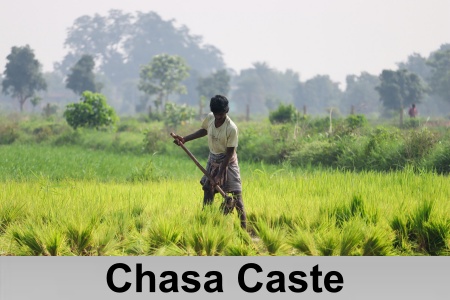
Chasa Caste
Chasa caste is a prominent agrarian community native to Odisha. Traditionally associated with cultivation and farming, Chasas have historically played...
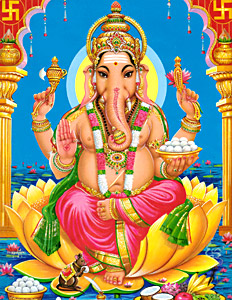
Vigneswara, A Form of Lord Ganesha
Lord Vigneswara is another form of Lord Ganesha or Vinayaka, prominently worshipped as the God of intelligence and good luck in the Indian subcontinen...
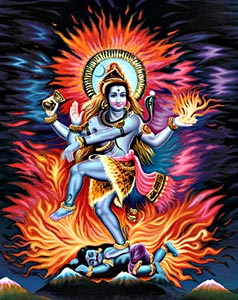
Maheswara
Maheswara, meaning “the Great Lord,” is a revered name of Lord Shiva in Hindu tradition. It represents Shiva’s supreme authority over creation, preser...
Related articles in Religion in India
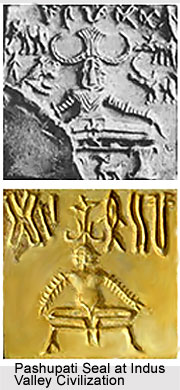
Religion in Indus Valley Civilization
Religion in Indus Valley Civilisation included Hinduism, Buddhism and Jainism. Details about the religion in Indus Valley Civilization have been gathe...
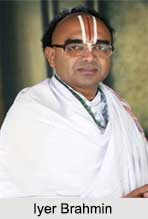
Iyer Brahmin
Iyer Brahmins are originally from Tamil Nadu of South India. They are known for their adherence to Advaita philosophy and Smarta traditions. Tradition...
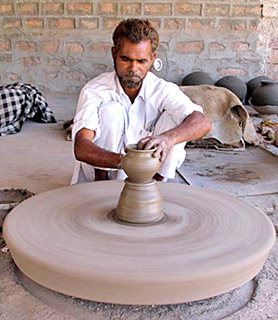
Kumbhakar / Kumhar Caste
Kumbhakar or Kumhar caste is a traditional artisan community in India known for pottery making. Derived from Sanskrit word Kumbhakar, meaning potter,...

Gujjars in Mughal Era
Gujjars in the Mughal era enjoyed great power. Further their power increased with the decline of Aurangzeb, Mughal emperor.
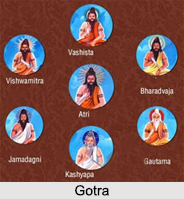
Gotra in Hinduism
In Hinduism, gotra refers to a lineage system tracing descent from ancient sages, primarily through the paternal line. Originating from Vedic traditio...