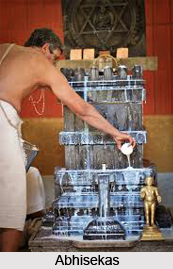
 Concept of Abhisekas in Tantra is a necessary introduction to initiation into mystical rites. It consists of sprinkling holy water on the beginner while reciting mantras to propitiate different deities for warding off malevolent spirits. Abhisekas are of different types which are appropriate in different stages of the disciple. Abhiseka are divided into eight categories.
The eight categories are:
(i) Saktabhiseka: This is for the disciple who has just initiated sadhana where the guru reveals the nature of Sakti. A new energy is instilled into the disciple. This is given on entrance into the path of sadhana. In this stage the guru reveals to the shishya the introductory mysteries of shakti-tattva. The shishya is cleansed of all sinful foeces thereby acquiring a new Shakti.
(ii) Purnabhiseka: This is for the disciple who has acquired fitness by means of Purascharana. One has to undergo severe torments and this confers divinity on the devotee. This is done when the disciple has qualified himself by Purascharana and other practices to receive it. Asana, yama strengthen the disciple`s determination to persevere along sadhana`s higher stages.
(iii) Kramadiksabhiseka, (iv) Samrajyabhiseka, (v) Mahasamrajyabhiseka, (vi) Yogadiksabhiseka, (vii) Purnadiksabhiseka, (viii) Mahapurnadikabhiseka: sadhaka reaches the completion of spiritual goal after which he performs his own siddha, offers purnahuti with the sacred thread. The relation of guru-shishya stops in this stage. The realisation of the identity of Jiva and Brahman is the highest goal of this initiation.
In the third stage the sacred thread is worn round the neck like a garland. The shishya undergoes various ordeals and receives samrajyabhisheka and Maha-samrajyabhisheka. The sadhaka has performed the panchanga-puraschharana in the previous stages. With the guru`s assistance he does the panchanga-yoga. After attaining perfection Mahapurnadikabhiseka is performed.
This article is a stub. You can enrich by adding more information to it. Send your Write Up to content@indianetzone.com.