
Herodotus, Skylex and Ctesias were the early Greek writers (before the invasion of Alexander) who wrote about India. Herodotus and Ctesias received their understanding about India through Persian. According to Herodotus, North-West India was 20th satrapy of the Empire of King Darius. He wrote about the political conditions of North-West of India. His legendary book "Histories" furnishes a good deal of information about India and other countries. Skylax writes about his voyage between Persian Gulf and Indus Valley. After these early Greeks, some Greek historians like Nearchos, Aristobulus. Onesicritus Clitarchus etc., had companioned Alexander to India. These writers condensed into writings the experience of the wars which Alexander had crusaded. Without these writers, Alexander`s crusade would have remained unknown to everybody. later comes the historians who arrived subsequent to Alexander`s invasion. The most authoritative among these writers was Megasthenes, an ambassador of Seleukus, in the court of Chandra Gupta. His accounts are of rich historical value, because his writings are the result of first hand experiences. Deimachus was the ambassador in the court of Bindusara and had written about India. However, according to Strabo the account of Magasthenes and Deimachus are not dependable. He writes- "Generally speaking the men who have written on the affairs of India were a-set of liars. Deimachus holds the first place in the list, Megasthenes comes next,.…No faith whatever can be placed in Deimachus and Megasthenes". Strabo seems to be partially right, because even if these writers had not fancied things intentionally, their lack of knowledge in Indian languages was a hindrance to them. Furthermore, they witnessed every thing from the point of view of the Greeks. Therefore, Dr. R.C. Majumdar is just about the opinion that their accounts should be read with vigilance and wherever feasible, should be scrutinised and confirmed. Lastly comes the later Greek and Roman writers like Strabo, Diodoras, Arrian, Pliny, Ptolemy etc. These writers were more coherent and exceedingly decisive and their accounts are of profound value for the early history of India.
Classical Sources of Ancient Indian History
The classical foreign sources need special reference in illustrating the age-old history of the ancient Indians.
Recently updated articles in History of India
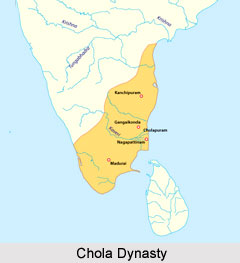
Chola Dynasty
Chola Dynasty is a Tamil dynasty and had longest duration of ruling in parts of South India. Chola dynasty had ruled South India successfully for a ex...
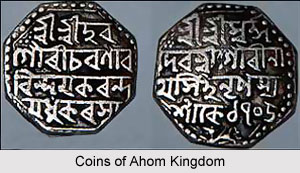
Suhungmung
Suhungmung was the fourteenth ruler of the Ahom dynasty who ruled from the period 1497 to 1539 AD. His reign was significant in terms of expansion of...
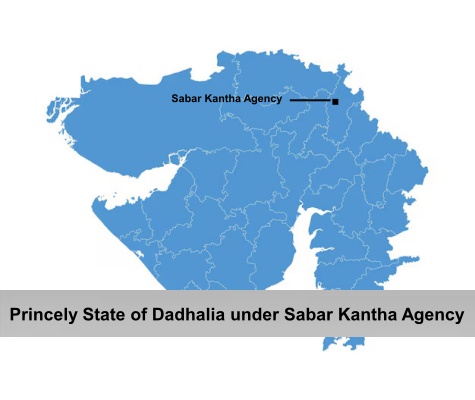
Princely State of Dadhalia
Princely State of Dadhalia was located in the present state of Gujarat. The state covered a total area of 28 sq miles and comprised of 15 villages. Th...
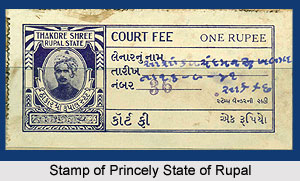
Princely State of Rupal
Princely State of Rupal was a part of the Baroda Agency, a sub division of Western India States Agency. It was under the administrative control of the...
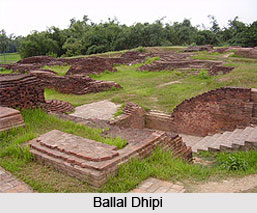
Archaeological Sites of West Bengal
Archaeological sites of West Bengal reveal several aspects of ancient India. Excavations by the Archaeological Survey of India have furnished artefact...
Related articles in History of India

Mughal Architecture during Babur
Mughal architecture during Babur marked the foundation of a new architectural era in India, blending Timurid, Persian, and local influences. His reign...

Architecture during Sayyid and Lodi Dynasty
Architectures during the Sayyid and Lodi dynasty were mainly the tombs and monuments for the dead rulers. It were carefully designed and meticulously...

Brahmanical Sources of Ancient History
Brahmanical Sources of ancient history are contained in the Vedas and they constitute one of the most important literary sources of information about...

Coins of Chola Empire
Coins of Chola Empire were issued in gold, silver and copper and carried the Chola emblem.

Coins of Khilji Dynasty
Coins of Khilji Dynasty had an influential feature that was followed by the other dynasties.