
Many causes were responsible for the failure of the Portuguese Empire in India. After the death of Alfonso de Albuquerque, no strong person was sent by the Portuguese Government to India and the result was that the Portuguese Empire began to disintegrate in India. The Portuguese administration in India was very corrupt. The salaries of the officers were very low and they did not feel any hesitation to accept bribes from any quarter. The bulk of the Portuguese officers were selfish. Unmindful of the sufferings of the people they were bent upon making fortunes for themselves. The religious policy of the Portuguese was also responsible for their ruin.
The Portuguese had introduced Inquisition into India and they committed atrocities on those who were not Christians. They used all kinds of methods for the conversions of Indians to Christianity. Their coercive methods created bitterness in the minds of the people. One such instance was in the year 1540 all Hindu temples in Goa were destroyed by the Portuguese. Goa had become the propaganda by the Franciscan missionaries. The Portuguese authorities in India did not care for the people. The establishment of the Mughal Empire was also partly responsible for the downfall of the Portuguese in India.
At the beginning of the 16th century the Portuguese did not meet any great opposition. However after the ascension of Akbar in the year 1556, the Mughal power began to grow. The Mughals were able to bring almost the whole of India under their control. Under this circumstance there was no scope for the Portuguese power to grow in the mainland of India.
Portugal was a small country. Her resources were not sufficient for the conquest of a country like India. Moreover those resources were divided between the Portuguese possession in India and Brazil which was also under the control of the Portuguese. After some time the situation was such that Portuguese people started caring more for Brazil than for India. In1580 Portugal came under the control of Spain and as a result the Spanish interests predominated the Portuguese interests. Various restrictions were put on the Portuguese in the interest of the Spain.
As a result of Spanish control on Portugal worthless Spanish officers were sent to India and they tried to make as money as possible unmindful of its effect on the people. The Spanish officers in fact ruined the Portuguese cause in India. The rise of the Dutch and English powers also created strong rivals in the country. They were more than a match for the Portuguese. The result was that by slow degrees the Portuguese Empire in India disappeared.
The Portuguese who had first come to India were characterized by great individual courage, enthusiasm for conquest, personal and national pride, but many of them were cruel, factitious and domineering. Their early successes had encouraged their inborn arrogance.
The Portuguese were encouraged to marry Indian women so that the Portuguese settlements in India would become self-supporting in soldiers and sailors. Unfortunately the mixed race which came into existence was far inferior to the original stock, less brave but not less arrogant, increasingly avaricious and corrupt. Records of gallant exploits became fewer and instances of treachery and rapacity increased. The Portuguese came to be detested by the people of India and as a result it was evident that the Portuguese Empire in India became more and more insignificant with passing days.
History states that the major causes of Portuguese downfall in India stands as corrupt officers, declining trade and moreover it has been said that they could not stand the growing competition from the west and it is said that the burial place of the Portuguese was Goa.
Causes of Portuguese Failure in India
Causes of Portuguese Failure in India is mainly the growing corruption among the Portuguese officers and the coming of Portugal under the control of Spain.
Recently updated articles in History of India
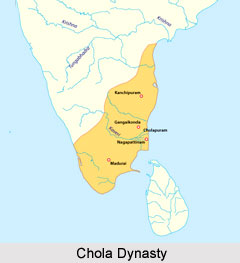
Chola Dynasty
Chola Dynasty is a Tamil dynasty and had longest duration of ruling in parts of South India. Chola dynasty had ruled South India successfully for a ex...
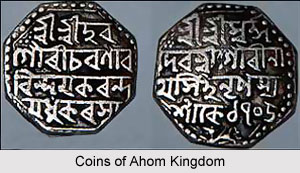
Suhungmung
Suhungmung was the fourteenth ruler of the Ahom dynasty who ruled from the period 1497 to 1539 AD. His reign was significant in terms of expansion of...
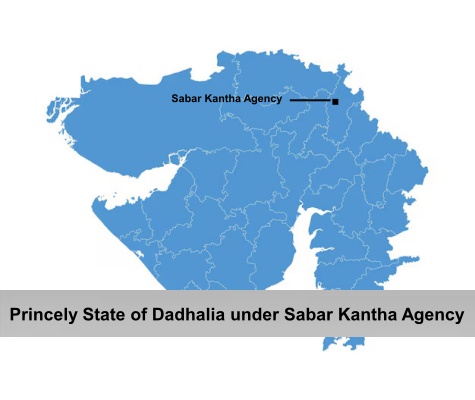
Princely State of Dadhalia
Princely State of Dadhalia was located in the present state of Gujarat. The state covered a total area of 28 sq miles and comprised of 15 villages. Th...
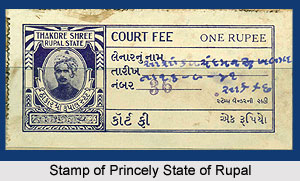
Princely State of Rupal
Princely State of Rupal was a part of the Baroda Agency, a sub division of Western India States Agency. It was under the administrative control of the...
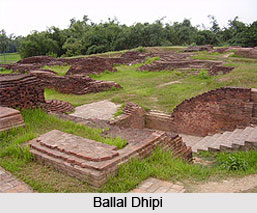
Archaeological Sites of West Bengal
Archaeological sites of West Bengal reveal several aspects of ancient India. Excavations by the Archaeological Survey of India have furnished artefact...
Related articles in History of India
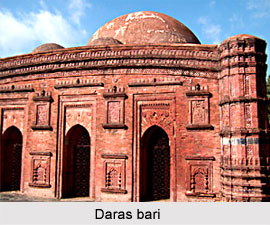
Mughal Architecture during Babur
Mughal architecture during Babur marked the foundation of a new architectural era in India, blending Timurid, Persian, and local influences. His reign...
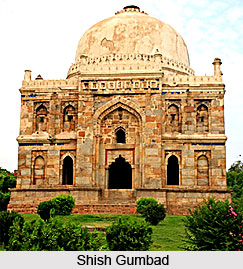
Architecture during Sayyid and Lodi Dynasty
Architectures during the Sayyid and Lodi dynasty were mainly the tombs and monuments for the dead rulers. It were carefully designed and meticulously...

Brahmanical Sources of Ancient History
Brahmanical Sources of ancient history are contained in the Vedas and they constitute one of the most important literary sources of information about...
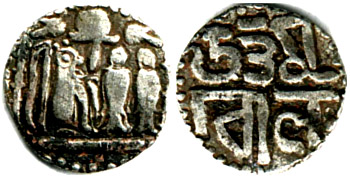
Coins of Chola Empire
Coins of Chola Empire were issued in gold, silver and copper and carried the Chola emblem.
Coins of Khilji Dynasty
Coins of Khilji Dynasty had an influential feature that was followed by the other dynasties.