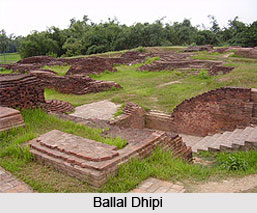
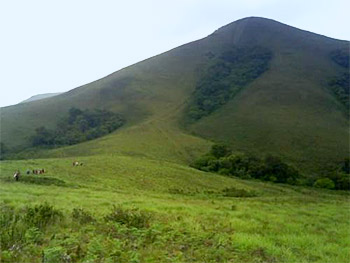
 Rock edicts of Emperor Ashoka have been unearthed in Brahmagiri. These edicts of Ashoka indicate that the locality was termed as Isila. This denotes that this was the southernmost extent of the Mauryan Empire. The site of Brahmagiri is a granite outcrop that was elevated about 180 m. This site is well known for large amount of megalithic monuments.
Several excavations have been conducted here. Several medieval stone temples, pottery, terracotta beads and figurines, semiprecious stones and megalithic structures have been found. Microlithic, Neolithic, Iron Age, Maurya and Chalukya-Hoysala culture have also survived here.
Thereafter ten domestic structures have been found. This site also contains a mortuary of 300 tombs with burials made in rectangular cists, cist-circles and pit-circles. Other objects that were found include a large number of polished stone axes made of dolerite, microliths like crescents, gravers and blades made of jasper, agate carnelian and opal, and ornaments worn by humans like bronze rings and beads of magnetite, agate and shell. Handmade vessels composed of coarse grey fabric and with shapes like globular vase, shallow bowl and spouted bowl were found.
Thereafter it was found that the humans who inhabited Brahmagiri used iron for agricultural tools like sickles spears, swords and arrowheads. Pottery were made in hemi-spherical deep bowl, funnel shaped lid, shallow dish and three-legged shapes. Vessels were either polished black and red ware, all-black ware, or bright and coarse dull-red ware.
Later it has been discovered that sophisticated pottery was made with the help of fast wheels. The vessels were like shallow dish, cups and vases, coated in a russet colour and painted with geometrical designs in white colour. Bangles made of shell, clay; bones, glass and gold, and beads of magnetite, agate, carnelian and terracotta were the ornaments that were unearthed.
This article is a stub. You can enrich by adding more information to it. Send your Write Up to content@indianetzone.com