
Babu Navincandra Rai born on 1838 is regarded to be one of the most important figures in the new educated elite of the Punjab. He has gained popularity as the foremost leader of Brahmo Samaj in Punjab and as an active social reformer and educator. Furthermore, his name finds a place among the pioneers of modem Hindi prose. His role in the propagation of Hindi in the Punjab has gathered a renowned position. Navincandra Rai had started his career as a civil servant working for the British colonial administration. He earned fame as a prolific writer and author of a number of school textbooks in Hindi. Navincandra Rai became famous for being a pioneer of female education in the Punjab.
Navincandra Rai hailed from a Bengali Brahmin family but was in the town of Meerut. Little is known about his childhood and education, his father, Pandit Rammohan Rai, died when Navincandra was still an infant. Thus at a very young age he had to leave school to support the family. Despite difficult circumstances, he managed to learn Hindi, Sanskrit, and English and received training in civil engineering, seemingly at the Lahore School of Engineering.
In 1863 he was recruited for government employment by the Punjab Public Works Department in Lahore and given the post of assistant accountant in the Controller`s Office of the Public Works Accounts Department. Subsequently, he acquired the important position of paymaster of the North-Western Railway. It was in 1863 Navincandra Rai together with six other Bengalis and a small group of Punjabi Hindus, founded the first Brahmo Samaj of the Punjab in Lahore. He was regarded to be a dynamic missionary, powerful speaker and prolific author. He became the most prominent spokesman of the Brahmo Samaj in Punjab. In this role he helped establish further branches of the Samaj in the Punjab.In 1873 he became the minister of the first temple of Brahmo Samaj in Lahore.
Babu Navincandra Rai became a valuable collaborator in the Punjab government`s efforts at promoting education. His growing influence with the colonial educational administration is demonstrated by the fact that he was appointed a member of the Senate of the Punjab University College. In 1875 Navincandra was transferred to Agra where he continued to work for the cause of the Samaj. His service to the society is reflected through the establishment of an asylum for orphans and destitute children. The asylum provided shelter and basic vocational training to a number of young boys. In this influential position, Babu Navincandra Rai temporarily acted as officiating principal of the Oriental College.
Navincandra was a man of action and intellect, with a unique personality. He was renowned for his dynamic leadership that appealed to the liberal and progressive forces. Furthermore, he had made contributions to the society and created an impact in the minds of the youth of the society. He left no stones unturned to regenerate India by the building of a national creed.
Navincandra retired from public service and left Lahore some time after 1886 to spend his last years in Brahmo Gram established by him. Babu Navincandra Rai died in Calcutta on 28 August 1890.
Babu Navincandra Rai
Babu Navincandra Rai, an active social reformer and educator belonged to the new educated elite class of the Punjab.
Recently updated articles in History of India
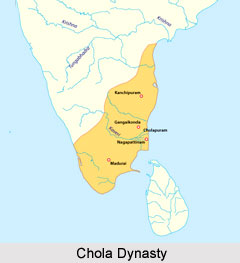
Chola Dynasty
Chola Dynasty is a Tamil dynasty and had longest duration of ruling in parts of South India. Chola dynasty had ruled South India successfully for a ex...
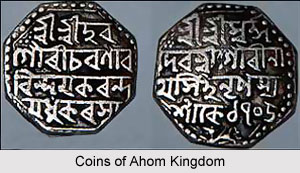
Suhungmung
Suhungmung was the fourteenth ruler of the Ahom dynasty who ruled from the period 1497 to 1539 AD. His reign was significant in terms of expansion of...
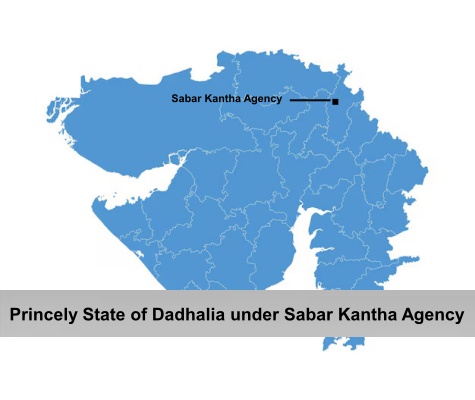
Princely State of Dadhalia
Princely State of Dadhalia was located in the present state of Gujarat. The state covered a total area of 28 sq miles and comprised of 15 villages. Th...
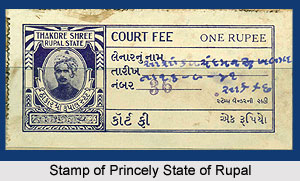
Princely State of Rupal
Princely State of Rupal was a part of the Baroda Agency, a sub division of Western India States Agency. It was under the administrative control of the...
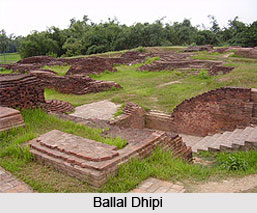
Archaeological Sites of West Bengal
Archaeological sites of West Bengal reveal several aspects of ancient India. Excavations by the Archaeological Survey of India have furnished artefact...
Related articles in History of India
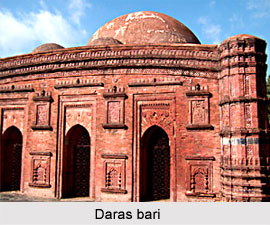
Mughal Architecture during Babur
Mughal architecture during Babur marked the foundation of a new architectural era in India, blending Timurid, Persian, and local influences. His reign...
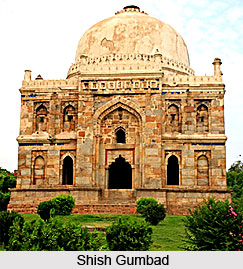
Architecture during Sayyid and Lodi Dynasty
Architectures during the Sayyid and Lodi dynasty were mainly the tombs and monuments for the dead rulers. It were carefully designed and meticulously...
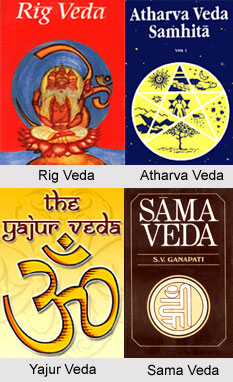
Brahmanical Sources of Ancient History
Brahmanical Sources of ancient history are contained in the Vedas and they constitute one of the most important literary sources of information about...
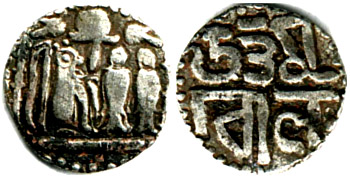
Coins of Chola Empire
Coins of Chola Empire were issued in gold, silver and copper and carried the Chola emblem.
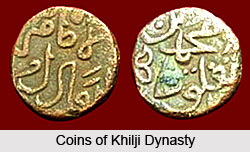
Coins of Khilji Dynasty
Coins of Khilji Dynasty had an influential feature that was followed by the other dynasties.