
The convocation of an assembly at Kannauj was one of the most significant events of the reign of Harsha. The purpose of this assembly was to simplify the doctrines of Mahayanism. This assembly was convened in 643 A.D. It was attended by kings of eighteen countries, 3000 Brahmanas and Jains, 3000 Buddhist monks of Mahayan and Hinayan sects and 1000 Buddhist monks of Nalanda Vihara. The famous Chinese traveler, Hiuen Tsang was also present and presided the assembly.
According to historians Harsha had built a special building for the purpose of assembly.
The proceedings of assembly started with a procession, which was led by a statue of Buddha and Harsha and Bhaskarvarman, were walking serving the statue of Buddha in the form of Sakra and Brahma. They were followed by Hiuen Tsang and other scholars. When this procession reached the assembly house the statue of Buddha was established at a high place and it was worshipped.
Thereafter Hiuen Tsang was appointed as the president of the assembly and the proceedings began when the discussions took a bad trend, Hiuen Tsang stated, "If there is any one who can find a single word in the proposition contrary to reason or is above the entangled or argument then at the request of the support. I offer my head as a recompense."
This created turmoil in the assembly and none dared to challenge the Chinese travelers. It is obvious that Hiuen Tsang had full support of Harsha who had declared that any one harming the Dharmacharya would be beheaded and any one speaking against him will lose his tongue. Thus out of fear of Harsha, none spoke against the said declaration.
After the assembly was concluded, a procession was again taken out. Hiuen Tsang was shown great reverence and was referred as `Mahayana deva` and `Moksha deva`.
Assembly of Kannauj
The convocation of an assembly at Kannauj was one of the most significant events of the reign of Harsha.
Recently updated articles in History of India
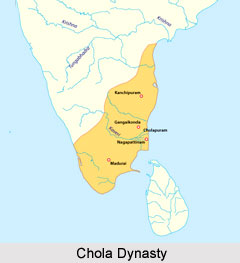
Chola Dynasty
Chola Dynasty is a Tamil dynasty and had longest duration of ruling in parts of South India. Chola dynasty had ruled South India successfully for a ex...
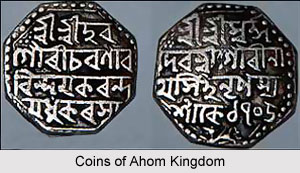
Suhungmung
Suhungmung was the fourteenth ruler of the Ahom dynasty who ruled from the period 1497 to 1539 AD. His reign was significant in terms of expansion of...
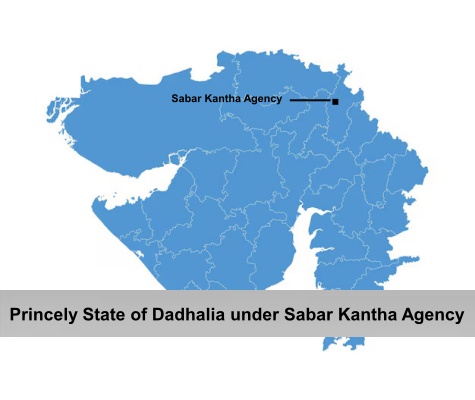
Princely State of Dadhalia
Princely State of Dadhalia was located in the present state of Gujarat. The state covered a total area of 28 sq miles and comprised of 15 villages. Th...
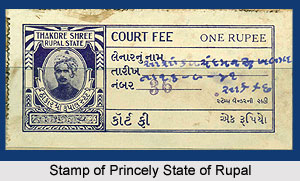
Princely State of Rupal
Princely State of Rupal was a part of the Baroda Agency, a sub division of Western India States Agency. It was under the administrative control of the...
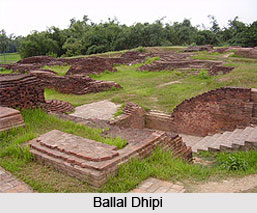
Archaeological Sites of West Bengal
Archaeological sites of West Bengal reveal several aspects of ancient India. Excavations by the Archaeological Survey of India have furnished artefact...
Related articles in History of India

Mughal Architecture during Babur
Mughal architecture during Babur marked the foundation of a new architectural era in India, blending Timurid, Persian, and local influences. His reign...

Architecture during Sayyid and Lodi Dynasty
Architectures during the Sayyid and Lodi dynasty were mainly the tombs and monuments for the dead rulers. It were carefully designed and meticulously...

Brahmanical Sources of Ancient History
Brahmanical Sources of ancient history are contained in the Vedas and they constitute one of the most important literary sources of information about...

Coins of Chola Empire
Coins of Chola Empire were issued in gold, silver and copper and carried the Chola emblem.

Coins of Khilji Dynasty
Coins of Khilji Dynasty had an influential feature that was followed by the other dynasties.