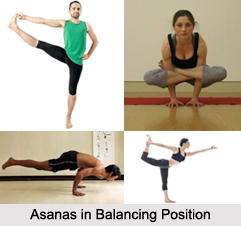
 Balancing is one of the hardest, but most rewarding parts of the yoga practice. Balance poses are difficult to master not only because they require strength and flexibility of the body, but also because they are dependent upon the focus and persistence of the mind. They challenge one to be relaxed, strong and centered at the same time. Yoga asanas are done to attain steady pose, good health and overall physical lightness. All Yoga poses are designed to calm mind. True balance in yoga means physical, mental, and emotional stability.
List of Asanas in Balancing Position
Asanas in balancing position include a wide range of poses. Some commonly used balance poses in yoga include;
•Adho Mukha Purvottanasana (Downward Facing Plank)
•Bakasana (Crow Pose)
•Vrksasana (Tree Pose)
•Garudasana (Eagle Pose)
•Malasana (Garland Pose)
•Natarajasana (Dancers Pose)
•Naukasana (Boat Pose)
•Urdhva Mukha Purvottanasana (Upwards Facing Plank)
•Utkatasana (Chair Pose)
•Utthita Hasta Padangustasana (Hand to Big Toe)
Benefits of Asanas in Balancing Position
The purpose and intent of all Yoga poses is to recondition one"s system, both physically and mentally and to build up the nervous and glandular systems. Asanas in balancing position bring balance to physical and mental strength, pacify and still the mind. It develops self-assurance physically and mentally and builds up strength, agility, overall harmony and stamina. They build up heat levels in the body, particularly abdominal fire.
Cautions for Practicing Asanas in Balancing Position
Due to the balancing nature of the yoga asanas, one must not practice this sequence if one is currently experiencing headaches, insomnia and low blood pressure. Always work within ones range of limits and abilities.
This article is a stub. You can enrich by adding more information to it. Send your Write Up to content@indianetzone.com