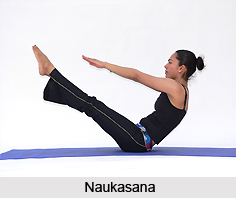
 In modern yoga, Naukasana or Navasana is a seated asana and is beneficial to cure many physical disorders. Naukasana is a cultural yoga asana with a fairly recent history, first being described in a 19th century text. It is a fixture of contemporary yoga programs.
Etymology of Naukasana
Naukasana comes from the two Sanskrit words `nauka` which means `boat` and `asana` meaning `posture` or `seat`. It is a posture in which our body takes the shape of a boat.
Variations of Naukasana
During the Naukasana, the person has to balance entirely on their buttocks and the body forms into a V shape. Other variations of the Naukasana include the Ardha Navasana which is half boat pose and the Ekapada Navasana which is the one legged boat pose. There is also another variation to this called the Paripurna Navasana, where the legs and back are lifted high and the arms extend forward and parallel to the ground. While in the Arda Navasana, hands interlace behind the neck and both back and shoulders are closer to the ground.
Practise of Naukasana
1. Lie straight on the abdomen and chest with the forehead resting on the floor.
2. Keep the feet together and the arms on the sides.
3. Stretch out the arms on both sides of the head and keep them parallel.
4. Turn down the palms on the floor with fingers close together.
5. Keep the forehead on the floor between the upper arms.
6. Inhaling, raise the arms, head, neck, shoulders, trunk and legs all together slowly and simultaneously as high as possible without bending the knees and elbows and without any jerk.
7. While doing this, keep the upper arms touching the ears and the feet together.
8. Bring the head up as high as possible and keep it between the raised upper arms.
9. Bend the extremities as far back as possible, and the back should be well arched.
10. The whole body should be curved from the fingertips to the toes, both of which should be on the same level.
11. Balance the entire weight of the body on the lower part of the abdomen which alone should touch the ground.
12. Maintain the posture motionlessly, as long as the breath can be held comfortably.
13. Exhaling return slowly to the starting position.
Benefits of Naukasana
The Naukasana helps in strengthening the abdominal muscles, the legs and the lower back. It improves the health of all organs in the abdomen especially the liver, pancreas and kidneys. Naukasana helps in regulating blood flow at sugar level and toughens muscles of neck, shoulder and the legs. The stretching, compressing and relaxation of the abdominal region involved with Naukasana is a really good and effective way of burning belly fat if practiced on a regular basis. This asana is more useful in diabetes and dyspepsia; most importantly it acts as a distress tool, keeping one"s mind free and peaceful.
Precautions of Naukasana
1. Do not bend legs at the knee.
2. Release the Asana before there is any pain in abdominal muscles.
3. Those suffering from hypertension, heart disease and lumbar spondylosis should not practice it.