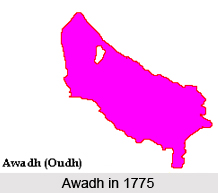
 Lord Dalhousie decided to tackle the problem of Oudh. In 1848, Sleeman was sent to Lucknow as a Resident to undertake the reconstruction of the oppressed country. In 1849, he was instructed to make a tour and report on the conditions prevailing in the country. His report was that the people killed their female children and buried them alive. Lucknow was in perpetual turmoil of processions, illuminations and festivities. The only companions of the king were fiddlers and buffoons. The ambition of the king was limited to the reputation of being known as the best drum-beater, dancer and poet of the day. Most of his associates were out-castes from the low classes. He was always in need of money and used the army to squeeze as much as possible.
The condition of the peasantry in Oudh was miserable. The governing classes had no sympathy for the subjects who suffered terribly under their tyranny. The officials took delight in plundering the peasants. Although the condition of Oudh was not satisfactory, Sleeman was opposed to its annexation.
In 1851 Dalhousie himself journeyed on the borders of Oudh and heard the use of heavy cannon for the purpose of collecting revenues by the servants of the king. In spite of that, Dalhousie hesitated to take action. In 1854, Sleeman was replaced by Outram as Resident. The new Resident reported that the administration of the country was an orgy of massacre and corruption set to music.
The recommendation of Dalhousie was that while Wajid Ali Shah, the ruler of Oudh, be allowed to retain his title, the entire administration of the country be taken over by the English Company. On account of the loyalty of the king, Dalhousie did not recommend his forcible abduction and annexation of his territory. The members of the Executive were divided.
In January 1856, Dalhousie got the orders of the Court of Directors with regard to the future of Oudh. He was to offer to the king a kind of Vatican sovereignty, the title of the king, adequate funds and full jurisdiction. Outram was sent back to Lucknow and a brigade followed him. The king refused to accept the new position and was deposed. He was sent to Calcutta (Kolkata) and he died in 1857.
Sleeman believed that the annexation of Oudh was a political blunder. The English used their giant`s strength and had injured their reputation in the eyes of the Indians. During the Revolt of 1857, the sepoys of Oudh had brought about havoc and had added to the difficulties of the British. It is said that the forced abduction of Wajid Ali Shah and annexation of Oudh were offences against good faith and public conscience.