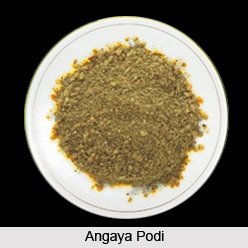
 Angaya Podi is an ancient recipe that has been used in many households of Tamil Nadu for years. This podi is a felicitous combination of spices and herbs. Many Tamil Brahmin homes have their own recipes handed down from their grandmothers. Even though it is used as a part of normal diet, it has its own medicinal value. This podi is great for post-partum and lactating mothers for diabetics and for those who need a digestive aid. The podi is eaten with really hot rice and ghee or gingelly oil.
Health Benefits of Angaya Podi
Coriander is an anti-oxidant, has cholesterol reducing properties, and is an anti-bacterial and a diuretic. Dried Neem flowers helps improve eyesight and helps in the treatment of digestive disorders especially those relating to the liver. It is traditionally used for expelling intestinal worms. Sundaikkai and Manathakkali Vattal when fried and eaten help in reducing gas. Sundaikkai is said to have anti-bacterial and anti-microbial properties. Manathakkali is a rich source of Vitamin B and the leaves are often cooked and eaten to treat mouth ulcers. It is excellent for maintaining the health of the liver. Curry leaves and coriander contain large amounts of fibre. Curry leaves are rich in iron, is anti-diabetic and also an anti-oxidant. It prevents premature greying of hair. Cumin again is useful in treating flatulence and is a good digestive aid. Cumin is also lactagogue and increases lactation. It also reduces nausea during pregnancy. Dried ginger and asafoetida are very good digestives and useful in treating vata conditions. Angaya Podi is one Podi that should be made in households where there are new mothers.
Ingredients for Angaya Podi:
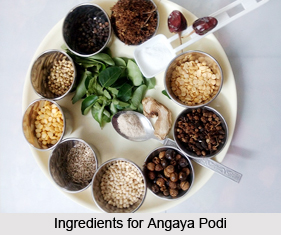
•Toor Dal - 200 gms
•Bengal Gram Dal - 200 gms
•Urad Dal - 50 gms
•Coriander Seeds - 1/2 cup
•Dried Neem Flowers - 1/4 cup
•Sundaikkai Vattal (dried Turkey Berries) - 20 to 30 berries
•Manathakkali Vattal (dried Black Nightshade Berries) - 1/4 cup
•Curry Leaves - 1/2 cup
•Black Pepper - 3 tsp
•Long Pepper - 1 inch stick
•Red Chilli - 1
•Cumin Seeds - 3 tsp
•Ajwain Seeds - 1 tsp
•Dried Ginger - a small piece
•Asafoetida - a small piece
•Rock Salt - 1 to 2 tsp
Method:
1. Heat the fry pan and dry fry toor dal, bengal gram dal and urad dal one by one, separately till they becomes light brown in colour and keep it aside.
2. In a frying pan, add all the ingredients except salt and dry on low flame for 2 minutes.
3. Remove from the flame and let it cool down completely.
4. Add all the ingredients with salt in a blender and grind it until it becomes a smooth powder.
5. Spread the powder on a newspaper and let it cool down completely before storing in an airtight container.
Related Articles
Indian Food
History of Indian Food
Food in Ancient India
Food in Vedic Period
Cuisines of Tamil Nadu