
Agriculture in post Mauryan period saw the extension of area of cultivation. The state had less control over the agricultural sector. According to Milindapanha the person who brings the land under use is known as the owner of the land. As per Manu, land belongs to him who clears it first. The Divyavadana refers to individual farmers working hard and engaged in agriculture. It is presumed that the private ownership of land was accepted by this time.
Power of gift, sale and mortgage are the requisites of ownership. According to literal evidences there prevailed the right of alienation of land to individuals and a number of inscriptions record gifts of land given by private individuals.
Theoretically the state was the owner of everything situated on earth which shows territorial sovereignty. Lands could be granted by the king to any person or organization.
Initially the administrative rights were first abandoned by the Satavahana ruler Gautamiputra Satakarni. There were few grants that were meant to bring the uncultivated land under cultivation.
State adopted measures at times in order to increase land productivity. Kharavela in Kalinga extended an old canal and Rudradaman repaired a large lake in Saurashtra. It is believed that the tanks were constructed by Sakas and Kushana chiefs in north-western India.
Those who stole the agricultural tools would be punished by the King. Mutilation is provided for selling false seeds, for taking out seed already sown and for destroying boundary marks. During the rule of Satavahana and Kushana there was a land system called Akshayanivi. A Nasik inscription records the king giving away land according to the akshayanivi.
There has been no reference to middlemen in the agrarian system. No grants of land have been the responsibility of administrative officers. The assignment of land is believed to be the responsibility of revenue officials who are in charge of one, ten, twenty, a hundred, or a thousand villages. Agricultural revenue was collected by the officials with the help of village headmen.
The revenue amount collected varied. The king could take as annual revenue 1/6, 1/8 or 1/12 part of the produce. In ancient India 1/6 of the crops was the rate of taxation for a long time and the king was addressed as sadbhagin. Kara was probably a periodical tax that was imposed on agricultural land. Pratibhaga was a gift consisting of fruits, flowers, roots.
Agriculture in Post Mauryan period
Agriculture in post Mauryan period did witness some important changes. State control over agriculture minimised in this period.
Recently updated articles in History of India
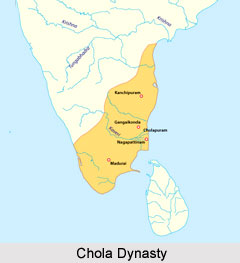
Chola Dynasty
Chola Dynasty is a Tamil dynasty and had longest duration of ruling in parts of South India. Chola dynasty had ruled South India successfully for a ex...

Suhungmung
Suhungmung was the fourteenth ruler of the Ahom dynasty who ruled from the period 1497 to 1539 AD. His reign was significant in terms of expansion of...

Princely State of Dadhalia
Princely State of Dadhalia was located in the present state of Gujarat. The state covered a total area of 28 sq miles and comprised of 15 villages. Th...

Princely State of Rupal
Princely State of Rupal was a part of the Baroda Agency, a sub division of Western India States Agency. It was under the administrative control of the...

Archaeological Sites of West Bengal
Archaeological sites of West Bengal reveal several aspects of ancient India. Excavations by the Archaeological Survey of India have furnished artefact...
Related articles in History of India

Mughal Architecture during Babur
Mughal architecture during Babur marked the foundation of a new architectural era in India, blending Timurid, Persian, and local influences. His reign...

Architecture during Sayyid and Lodi Dynasty
Architectures during the Sayyid and Lodi dynasty were mainly the tombs and monuments for the dead rulers. It were carefully designed and meticulously...

Brahmanical Sources of Ancient History
Brahmanical Sources of ancient history are contained in the Vedas and they constitute one of the most important literary sources of information about...

Coins of Chola Empire
Coins of Chola Empire were issued in gold, silver and copper and carried the Chola emblem.

Coins of Khilji Dynasty
Coins of Khilji Dynasty had an influential feature that was followed by the other dynasties.