
The Mauryan dynasty under the tremendous and able hands of Chandragupta Maurya or Ashoka, had witnessed a smooth run of administration and competent reign of rulers. The government was based on the system of hierarchy and centralisation, ensuring hiring of loads of staff, to guarantee that work was carried on efficiently and resourcefully. Taxes were collected in regular basis, trade and commerce went on in a hassle free manner, subjects were taken care of and the military wing was ever ready to fight out any kind of external antagonism or hazard. Every province possessed its own officials who dealt with administration at grassroots level. The economy of Mauryan Empire was fundamentally based upon agrarian outputs and the primary profession of people was agriculture and farming. The stately city of the Mauryas, Magadha was wondrously embellished and was equipped with every kind of facility that any modern city could possess.
Administration of Mauryan dynasty was in a lot ways, pretty similar to the present day Indian administration. The empire was basically divided into four provinces, with the royal capital based at Pataliputra. The Ashokan edicts further add information of the names of the other four provincial capitals, being Tosali in the east, Ujjain in the west, Suvarnagiri in the south and Taxila in the north. The Kumara or royal prince served as the head of the provincial administration, who ruled over the provinces as the `king`s representative`. The kumara was additionally aided on by Mahamatyas and a council of ministers. Officials called pradeshikas or Sthanikas were appointed in charge of the districts. The Gramanis acted as chiefs of the villages. This administrational structure was revealed at the grand level, with the Emperor and his Mantriparishad, or Council of Ministers. Though he was an absolute ruler and wielded absolute power, he was answerable to his subjects. His majesty was the supreme head of the army; he was also the chief justice of the country. And in his work and profession, the emperor was assisted by the Yuvaraja.
According to a historian`s view, the administration of the Mauryan dynasty was in line with the panoptic bureaucracy delineated by Kautilya in his Arthashastra. Mauryan Empire emoted a classy and chic civil service, governing everything from municipal sanitation to international dealings. The rise and further rise and defence of the empire was made possible by what comes along to have been the biggest standing army of its time. According to Megasthenese, Mauryan dynasty handled and dealt with a military prowess of 600,000 infantry, 30,000 cavalry and 9,000 combating elephants. An incredible espionage system gathered intelligence information for both internal and external safekeeping functions. There also lies proof that women were included as spies in the intelligence system. Having abdicated odious warfare and expansionism, Ashoka nonetheless continued to sustain this enormous army, to shield the Empire and ingrain stability and peace throughout West and South Asia.
Administration of Pataliputra
Pataliputra served as the capital city of the Mauryan Empire. Hence, administration under Mauryan dynasty of this highly legendary and functional city called for sensitivity. Six boards or departments looked after the municipal administration of the city. Every board further possessed five members. These boards looked after the commercial domains like industries, census, trade, manufactures and their sale, collection of taxes and well-being of non-citizens living in the city.
Administration of Justice
The emperor`s court at Pataliputra served the highest court of Justice. Judicial courts were also bui8ldet up in all parts of the country, to ensure a successful dispensation. Petty cases were determined by the gram panchayats; punishments inflicted were stern. The judicial officers were known as rajukas.
Administration of Mauryan Dynasty
Administration of Mauryan dynasty was confidently branched into central and provincial governments, ensuing hassle-free
Recently updated articles in History of India
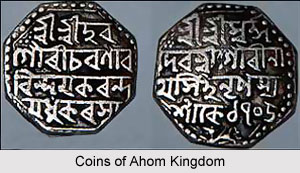
Suhungmung
Suhungmung was the fourteenth ruler of the Ahom dynasty who ruled from the period 1497 to 1539 AD. His reign was significant in terms of expansion of...
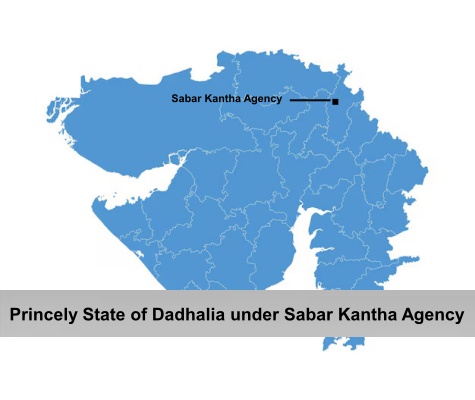
Princely State of Dadhalia
Princely State of Dadhalia was located in the present state of Gujarat. The state covered a total area of 28 sq miles and comprised of 15 villages. Th...
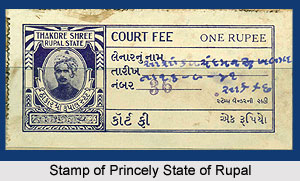
Princely State of Rupal
Princely State of Rupal was a part of the Baroda Agency, a sub division of Western India States Agency. It was under the administrative control of the...
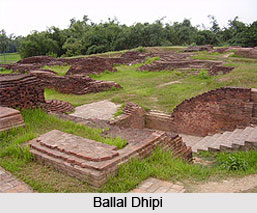
Archaeological Sites of West Bengal
Archaeological sites of West Bengal reveal several aspects of ancient India. Excavations by the Archaeological Survey of India have furnished artefact...

Princely State of Gabat
Princely State of Gabat was one of the native states of India during the Brtish period. Thakors were the native rulers of this state. After India gain...
Related articles in History of India
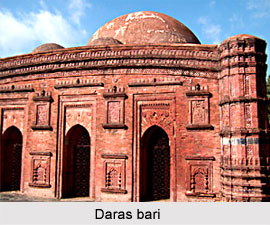
Mughal Architecture during Babur
Mughal architecture during Babur marked the foundation of a new architectural era in India, blending Timurid, Persian, and local influences. His reign...
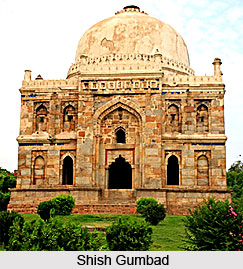
Architecture during Sayyid and Lodi Dynasty
Architectures during the Sayyid and Lodi dynasty were mainly the tombs and monuments for the dead rulers. It were carefully designed and meticulously...

Brahmanical Sources of Ancient History
Brahmanical Sources of ancient history are contained in the Vedas and they constitute one of the most important literary sources of information about...
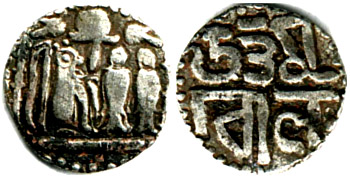
Coins of Chola Empire
Coins of Chola Empire were issued in gold, silver and copper and carried the Chola emblem.
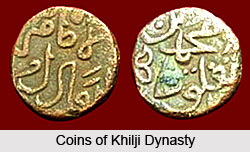
Coins of Khilji Dynasty
Coins of Khilji Dynasty had an influential feature that was followed by the other dynasties.