
Administration under the Gupta Empire was carried out in a systematic way. The pattern of administration was based on hierarchy from top to bottom. The king was the supreme head of the state. The administration was carried on with the advice of his ministers. Some of them combined civil and military functions. There was an efficient organized bureaucracy. Criminal law was however mild. The basis of finance was land revenue. As the royal officers were paid servants they did not had to depend on the on the people. Kingship was also based on hereditary.
Role of King in Administration
The king was considered as an incarnation of Vishnu. He was the chief head of all administrative machinery. His main task was to defend the country against foreign invasions. He administered justice, led troops and had the largest share in the formulation of state policy. He was assisted by a council of Ministers that ranged from (a) Mantrin (the confidential adviser), (b) Sandhivigrahika (Minister incharge of war and peace), (c) Akshapatala-dhikrita (Minister in charge of records), (d) Mahaba-ladhikrita and (e) Mahadandanayak. There was a special class of officials known as Kumaramatyas.
Justice was administered by the king and his officials. In the district headquarter, the Judges were helped by Seths and Kayasthas and other representatives. The village council was responsible for the judicial administration in the villages. The principal source of king`s revenue was one-sixth of the land produce. Taxes were often collected in kind. Forced labour was also practiced. Extra taxes were also levied for special purposes.
Role of Government in Administration
For administrative convenience the empire was divided into several provinces also known as Desa or Bhukti. They were placed under the governor or the princes of royal blood. The provinces were divided into districts. The local and provincial governments were carried on by regular bureaucracy. Tirabhukti was one of the important administrative centres.
The excavations at Basarh give a glimpse of the system of provincial administration as carried on in Tirabhukti, which was the provincial capital of Vaishali and Mithila. As per the excavations it is presumed that Govindagupta was the governor of the province during the lifetime of his father. From a seal of a general belonging to the establishment of the heir-apparent, it is seen that the Yuvaraja had his separate military establishment; The guilds commanded respect and were autonomous bodies. They had their own rules and they looked to the management of the temple. It is evident from the Basarh seals in Tirabhukti, Kumaramatyif were entrusted with the district administration in subordination to the provincial governor called Uparika. Various treatises on law were written and the most important were Yajnavalkya and Narada Smritis.
Yajnavalkya paid more attention to the legal matters and improved his views regarding the rights of women whom he permitted to inherit equally with men. He elaborated the subject of trade and ownership and recognised the written documents in evidence.
From the above discussion it is clear that the district administration was carried on by the Kuma-ramatyas. According to Damodarpur copper plates and Basarh seals, the district officers were responsible to the provincial governors. The district officers were assisted by a council comprising of representative of the principal local interest, viz., bankers, the chief merchants, artisans and the chief scribe. The important functionaries were the record-keepers. Village was the lowest unit of administration and it was carried on by a village Panchayat. The village headman maintained peace and security within his jurisdiction.
Administration of Gupta Empire
Administration of Gupta Empire emphasized upon the role of the king and the Government officials about the functioning of the state.
Recently updated articles in History of India
Chola Dynasty
Chola Dynasty is a Tamil dynasty and had longest duration of ruling in parts of South India. Chola dynasty had ruled South India successfully for a ex...
Suhungmung
Suhungmung was the fourteenth ruler of the Ahom dynasty who ruled from the period 1497 to 1539 AD. His reign was significant in terms of expansion of...
Princely State of Dadhalia
Princely State of Dadhalia was located in the present state of Gujarat. The state covered a total area of 28 sq miles and comprised of 15 villages. Th...
Princely State of Rupal
Princely State of Rupal was a part of the Baroda Agency, a sub division of Western India States Agency. It was under the administrative control of the...
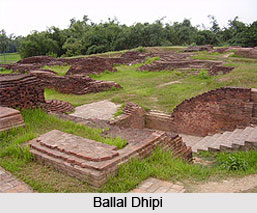
Archaeological Sites of West Bengal
Archaeological sites of West Bengal reveal several aspects of ancient India. Excavations by the Archaeological Survey of India have furnished artefact...
Related articles in History of India
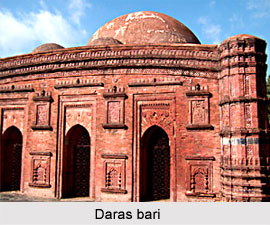
Mughal Architecture during Babur
Mughal architecture during Babur marked the foundation of a new architectural era in India, blending Timurid, Persian, and local influences. His reign...
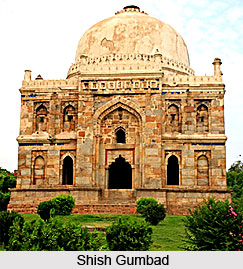
Architecture during Sayyid and Lodi Dynasty
Architectures during the Sayyid and Lodi dynasty were mainly the tombs and monuments for the dead rulers. It were carefully designed and meticulously...
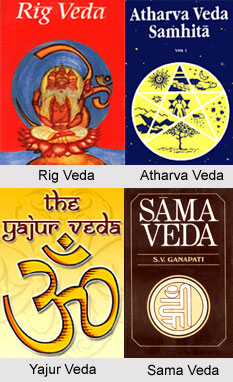
Brahmanical Sources of Ancient History
Brahmanical Sources of ancient history are contained in the Vedas and they constitute one of the most important literary sources of information about...
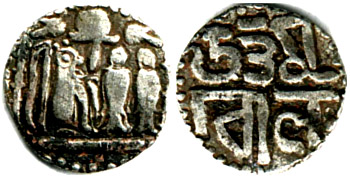
Coins of Chola Empire
Coins of Chola Empire were issued in gold, silver and copper and carried the Chola emblem.
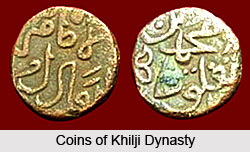
Coins of Khilji Dynasty
Coins of Khilji Dynasty had an influential feature that was followed by the other dynasties.