 Administration of Chandragupta II witnessed a mix of Mauryan and Scythian principles. The territory was divided into many provinces which were ruled by independent governors. The provinces were divided into districts. Land revenue was the major source of income of the state and was normally one-sixth of the produce of the land. Council of Ministers was often hereditary. Ministers combined many offices very often. Some ministers accompanied the king to the battles. The ministry was headed by the Chief Ministers. Among the other things, he reported about the absence of capital punishment, the lack of a poll-tax and land tax.
As far as provincial administration is concerned Chandragupta II followed a model which was a mixture of Mauryan and Scythian ideals. The Prince-viceroy ship was undoubtedly a conjugation of the Mauryan system. A yuvaraja was the chief minister or the head of the army while maharaja was the governor - this shows the influence of the Scythian ideal in which a ruler was associated with a satrap who is usually the former`s eldest son.
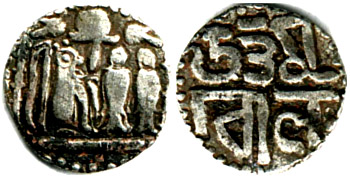
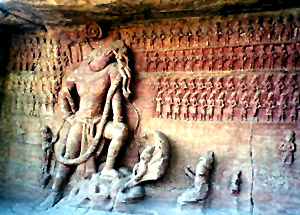
The seals of Chandragupta II throw some light on the district and the local administrations of the province. For example a seal refers to the parted or the Municipal Committee of the city of Udanakupa. It can be assumed that similar system of administration prevailed in other provinces of the empire. Some regions were under the rule of feudatory princes who held offices by hereditary rights. The Udayagiri Cave inscriptions of 401 A.D. refer to three generations of feudatory rulers -maharaja Chagalaga, his son maharaja Visnudasa and his son maharaja Sanakanika.
This article is a stub. You can enrich by adding more information to it. Send your Write Up to content@indianetzone.com