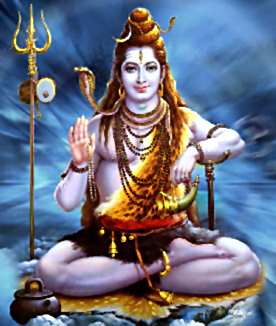
 The Adisaivas are also known as the `first Shaivas`. They are also sometimes known as Sivacharyas, Sivabrahmanas or Sivadvijas. The Adisaivas rank second to Lord Shiva himself and therefore they are considered above other Brahmans and members of lower castes. Adisaivas are regarded to be the lineal descendants of five sages who had emerged from the mouths of the five faces of Lord Shiva. Among the hierarchy of Shaivite priests Lord Siva himself comes first, then comes the Adi Saivan. Adisaiva is a priest who belongs to the South Indian Shaiva Siddhanta tradition.
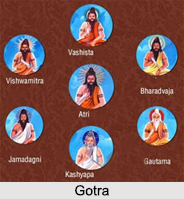
These sages who had descended from Shiva`s mouth are called Kashyapa, Kausika, Bharadvaja, Gautama and Atreya. All descendants of one sage are members of one eponymous patriline. As per the agamic tradition the Adisaivas ability to serve as priests of Shiva temples is said to have been derived directly from their unique descent from the god himself. This claim has never been questioned.
To perform the public worship in a Lord Siva temple it is not sufficient to be born as an Adisaiva. A man needs to be sanctified and it is known as the acharyabhiseka. Only an Acharya can do the worship and bless other priests. Before a man can be sanctified, he needs to receive the three Shaiva initiations: the `regular initiation`, the `special initiation` and the `liberating initiation`.
The consecration is a simple ceremony, in which the central act is the besprinkling of the beginner with water into which the power of Siva has been invoked by chanting mantras. The god`s power is transferred on to the new priest, who can begin to perform the public worship. In the consecration, new priests are publicly displayed as forms of Lord Shiva. The consecration is a public ritual of office that admits a man into the temple priesthood. This function is important at the heart of the agamic initiation rites. Consecration is a ritual that is conducted by the priests to create new priests from their own community. This stresses the fact that they form a self-perpetuating body.
An Adisaiva, who has not been sanctified is in practice in the same position as an ordinary devotee and cannot perform any of the rituals.