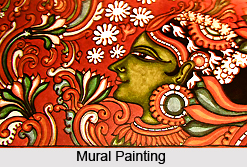
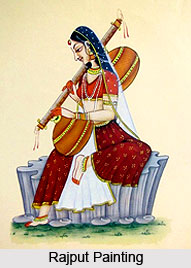
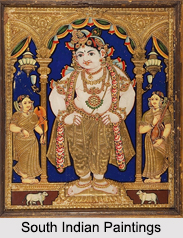
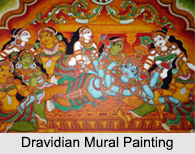
 Dravidian mural paintings are unique frescos drawn on the walls of temples and churches in South India, predominant in Kerala. The themes of the paintings are largely drawn from mythology and legends. These paintings are largely found in the churches, palaces, and temples constructed between the 9th to 12th centuries AD when this art form enjoyed majestic support.
Antique temples, churches and palaces in Kerala present a complete tradition of mural paintings, chiefly dating back between the 9th to 12th centuries CE when this structure of art enjoyed Royal support.
History of Dravidian Mural Painting
The origins of the present fresco practice of Kerala could be drawn as far back as the 7th and 8th century AD. The early Kerala murals along with its architecture came greatly in persuade of Pallava art. The oldest murals in Kerala were determined in the rock-cut cave temple of Thirunandikkara, which is at present in the Kanyakumari region of Tamil Nadu.
However, at present, just rough outlines have endured the way of years. Srikumara"s Silparatna, a 16th century Sanskrit manuscript on painting and connected themes must have been extremely helpful to modern and later artists. The wall paintings of Kanthaloor temple in Thiruvananthapuram district, Pisharikavu and Kaliampalli in Kozhikode district are the oldest existing temple frescoes of Kerala. The palaces at Padmanabhapuram, Krishnapuram and Mattancheri are the significant sites of Kerala Murals. The temples at Panayannarkavu, Pundareekapuram, Pandavam, Trissoor, Chemmanthitta, Kaliampally and Thodeekkalm are evenly renowned for its frescoes.
Features of Dravidian Mural Painting
An important feature of this art form is that it is based on the principles of the Shilparatna, which is an important text describing the various techniques on Indian paintings. The fresco paintings of Kerala are called `Fresco secco`. The painting is done on walls only after it gets completely dry and the medium used is lime. Traditional paintings were made on walls but today any surface like paper, canvas, cardboard, plywood and terracotta can be used for murals. The process of painting is a laborious as it involves minute detailing. The outlines of the traditional paintings were made using a pencil called Kittalekhini. The ancient art form Kalamezhuthu is the source of this art form. It espouses that white, yellow ochre, Indian red, lampblack, Indigo and green are pure colours and these colours are to be used or combined with other colours to make murals. Blue, the one among the primary colours, is given less importance in mural paintings. Painting brushes are made from a grass called `Eyyam Pullu` in Kerala, which is shaped like an arrow, which grow on the riverbanks. The brushes are adjusted according to needs. The traditional style mural art form used natural pigments and vegetable colours. The new generation artists adhere to this tradition.
The human and divine forms are drawn in a stylized form. Elongated eyes, painted lips and finely drawn eyebrows are the characteristics of these paintings. Hand gestures are depicted with running curves and over ornamentation are other features. Figures of animals and birds are also present in the painting. The characters were coloured according to the characteristics as defined in the Bhagavad Gita. The characters which were spiritual, divine and dharmic (Satva Guna) were painted in shades of green. Characters drawn towards power and materialistic wealth (Rajo Guna) were painted in shades of red to golden yellow. The evil wicked and mean characters (Tamo Guna) were painted in white or black.
They had the artistic expertise to fill every accessible room with as many details as promising and also the ability to identify on one or two crucial details and leave the rest to the thoughts. This trend for detailed embellishment is also a characterise feature of Koodiyattam, the ancient temple theatre of Kerala. Another later but frequent characteristic of the murals of Kerala are the beaded or decorative outlines not only around each panel but also around individual figures.
The most significant drawback of the Kerala mural tradition was that it confined itself with in the stipulations of Iconography. However no other mural tradition has been able to match the linear accuracy of Kerala murals. The mural artists of the mediaeval period invariably hailed from the upper castes. They belonged either to the Brahman, Nair or Ambalavasi communities.