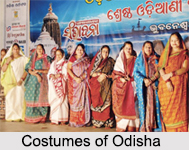
In Odisha, women wear different types
of sarees. Famous sarees include Kataki Saree, Bomkai Saree
and Sambalpuri Saree, though western attire has increasingly gained popularity
among younger women in urban and semi-urban areas. These are adorned by females
in Odisha during festivals, marriage and
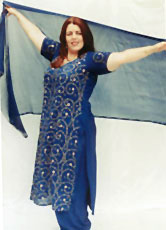
other special events. Salwar Kameez is also worn by the
girls and women. They like to beautify themselves with a lot of jewelleries and
ornaments.
Sarees of Odisha:
The sarees of Odisha enjoy strong demand not only within the
state but also across the world, admired for their craftsmanship, vibrant
colours, and cultural significance. The wide range of hues and styles available
in Odia sarees contributes greatly to their appeal among women. Odisha’s
handloom sarees are broadly categorized into four major types: Sambalpuri
Kapta, Sambalpuri Bandha, Sambalpuri Bomkai, and Sambalpuri Saptaper. Each
variety reflects distinct weaving traditions and aesthetic expressions rooted
in regional heritage. A defining feature of these sarees is the tie-and-dye
technique employed by Odishan weavers to create intricate motifs.
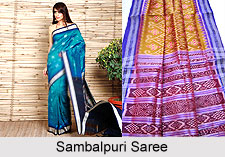
Sambalpuri Saree: The Sambalpuri saree is widely
regarded as one of Odisha’s most iconic traditional garments. Crafted using the
Ikat technique, these sarees are produced by tie-dyeing the yarns before
weaving, a meticulous process that results in intricate and well-defined
patterns. They are commonly made from cotton or silk and are often referred to
as Sambalpuri silk sarees when woven in silk. Characterized by their geometric
designs, Sambalpuri sarees frequently incorporate traditional motifs such as wheels,
flowers, and shells. Their vibrant colours and striking contrasting borders
further enhance their visual appeal.
Kataki Saree: Another well-known saree from Odisha is
the Kataki saree, which originates from the city of Cuttack. These sarees are
distinguished by their intricate craftsmanship and the rich use of silver and
gold zari work. Typically woven from fine natural fibres such as cotton or
silk, Kataki sarees reflect both elegance and durability. The designs featured
on Kataki sarees draw inspiration from a wide range of sources, including
temple architecture, animals, floral patterns, and other traditional motifs.
Pasapalli Saree: The Pasapalli saree, also crafted
using the Ikat technique, derives its name from its distinctive pattern that
resembles the squares of a chessboard, with pasa meaning dice in the Odia
language. These sarees are characterized by alternating squares in contrasting
colours, most commonly combinations such as black and white or red and white.
Intricately designed borders further enhance the visual appeal, giving the
Pasapalli saree a bold and recognizable identity within Odisha’s textile tradition.
Khandua Saree: The Khandua saree is a traditional
handwoven silk saree that holds particular prominence in the temple town of
Puri. Also known as Kenduli Khandua, it takes its name from Kenduli village and
carries strong religious and cultural associations. The saree is often worn by
temple priests or offered to Lord Jagannath as part of ritual practices. Woven
from fine silk yarns, Khandua sarees are celebrated for their refined
craftsmanship and symbolic designs. Common motifs include elephants, lotus flowers,
and inscriptions rendered in ancient Odia script.
Bomkai Saree: The Bomkai saree, also known as the
Sonepuri saree, is another prominent traditional saree from Odisha, originating
in the Ganjam district. This textile form is distinguished by its unique fusion
of traditional tribal art with refined Ikat weaving techniques. Bomkai sarees
are produced in cotton for everyday wear and in silk for ceremonial and special
occasions. Their designs frequently feature tribal-inspired motifs such as
birds, fish, and floral patterns, complemented by intricately woven borders in
contrasting colours.
Pattachitra Saree: Pattachitra is a traditional
painting style native to Odisha, and over time, this art form has been
seamlessly adapted into textile traditions, particularly sarees. Pattachitra
sarees are distinguished by their hand-painted surfaces, which showcase mythological
narratives and motifs inspired by the state’s renowned temple art. These sarees
often depict scenes from the Mahabharata and the Ramayana, along with visual
representations of Lord Jagannath, Lord Krishna, and other Hindu deities.
Dupatta or Uttariyo: The dupatta holds an important
place in traditional attire, and an ensemble is often considered incomplete
without it. Another essential element of an Odia bride’s dress is the uttariyo,
a large piece of fabric used to cover the head. This cloth is noted for its
delicate beauty, enhanced by intricate zari embroidery. The overall bridal
attire is further elevated by the addition of a matching headpiece, creating a
cohesive and visually striking appearance.