
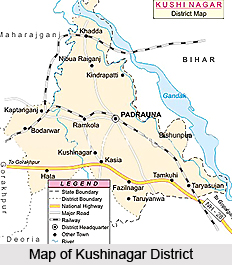
 Kushinagar District of Uttar Pradesh situated at around 53 kms east from Gorakhpur. This district lies between latitude 26 degree 45 minutes north and 83 degree 24 minutes east longitude. Padrauna is the district headquarters. It is 71 kms from Gorakhpur and 336 kms from Lucknow. It is a terai area covering a geographical area of 2873.5 sq kms. Kushinagar District is bounded by districts of Mahrajganj in the west, Gorakhpur District in the southern-west, Deoria District in the south and Bihar in the east.
Kushinagar District has its own cultural and historical importance.
Kushinagar District of Uttar Pradesh situated at around 53 kms east from Gorakhpur. This district lies between latitude 26 degree 45 minutes north and 83 degree 24 minutes east longitude. Padrauna is the district headquarters. It is 71 kms from Gorakhpur and 336 kms from Lucknow. It is a terai area covering a geographical area of 2873.5 sq kms. Kushinagar District is bounded by districts of Mahrajganj in the west, Gorakhpur District in the southern-west, Deoria District in the south and Bihar in the east.
Kushinagar District has its own cultural and historical importance.
Kushinagar District
Kushinagar District is a part of the Gorakhpur Division and it came into being on 13th May, 1994. Kushinagar District is associated with Lord Buddha and Lord Mahavira.
Introduction
Kushinagar District of Uttar Pradesh situated at around 53 kms east from Gorakhpur. This district lies between latitude 26 degree 45 minutes north and 83 degree 24 minutes east longitude. Padrauna is the district headquarters. It is 71 kms from Gorakhpur and 336 kms from Lucknow. It is a terai area covering a geographical area of 2873.5 sq kms. Kushinagar District is bounded by districts of Mahrajganj in the west, Gorakhpur District in the southern-west, Deoria District in the south and Bihar in the east.
Kushinagar District has its own cultural and historical importance.
History of Kushinagar District
Kushinagar District is named after the sacred place of attainment of Mahaparinirvana of Buddha in 483 BC. Kushinagar is identified with Kushawati (in pre-Buddha period) and Kushinara (in Buddha period). Kushinara was the capital of Mallas which was one of the sixteen mahajanapadas of 6th Century BC. According to Ramayana, Mallas was earlier part of Kosala Janpad. Kushawati capital was built by Kusha, son of Lord Rama. As per Buddha Pali literature, Kushawati was named after king Kusha. The naming of Kushawati was due to abundance of Kusha, sacrificial grass found in this region. Since then, it remained an integral part of the erstwhile Maurya Empire, Shunga Dynasty, Kushana Empire, Gupta and Harsha dynasties. Further, according to the history of Kushinagar District, Kushinara continued to be a living city till the 12th Century AD and was thereafter lost into oblivion. However, modern Kushinagar came into prominence in the 19th Century. After independence, Kushinagar remained a part of Deoria District. On 13th of May, 1994, it came into being as a new district of Uttar Pradesh.
Administration of Kushinagar District
Administration of Kushinagar District is divided into four Tehsils (Revenue Sub- Divisions) presided over by a Sub-Divisional Magistrate. The four sub-divisions of Kushinagar District are Tamkuhi, Kasia, Padrauna and Hata. Tehsils are further sub-divided into 14 Development Blocks, Blocks into 140 Nyay Panchayat and these Nyay Panchayats into 944 Gram Sabhas which consists of 1620 Revenue villages. The 14 Development Blocks are Tamkuhi, Dudahi, Seorahi, Kasia, Fazilnagar, Padrauna, Nebua Naurangia, Vishunpura, Khadda, Kaptanganj, Ramkola, Motichak, Sukrauli and Hata.
Tourism in Kushinagar District
 Tourism in Kushinagar District includes visits to various archaeological and religious sites. This district of Uttar Pradesh is known for its several Buddhist temples. People from all parts of the world come and explore the Buddhist sites offered by Kushinagar District.
Some of the main tourist spots of Kushinagar District are mentioned below -
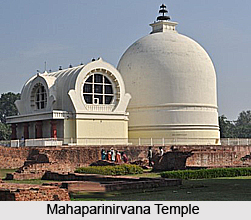
Mahaparinirvana Temple: This temple stands on the same plinth as the main Nirvana Stupa behind it. The reclining Nirvana statue of Lord Buddha inside the temple is around 6.10 metres long and it is made of monolith red - sandstone. It represents the Buddha reclining on his right side with his face towards the west. It is placed on a large brick-pedestal with stone-posts at the corners. There is an inscription datable to 5th Century AD.
Nirvana Chaitya (Main Stupa): Nirvana Chaitya is located just behind the Main Mahaparinirvana Temple. It was excavated by Carlleyle in the year 1876. During excavations, a copper-plate was found, which contained the text of the `Nidana-Sutra`. A copper vessel was also recovered which contained silver coins of Kumar Gupta, emperor of Gupta Empire in India.
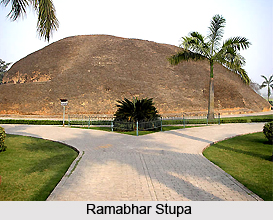
Ramabhar Stupa: Ramabhar Stupa, also called a Mukutbandhan-Chaitya, is the cremation place of Lord Buddha. This site is located at 1.5 km east of the main Nirvana Temple on Kushinagar-Deoria road. This Stupa has a huge circular drum with a diameter of near about 34.14 metres on the top consisting of two or more terraces and is 47.24 meters in diametre at the base.
 Matha Kuar Shrine: A huge statue of Lord Buddha is installed here, which represents Buddha seated under the `Bodhi Tree` in a pose popularly known as `Bhumi Sparsh Mudra` (Earth touching pose). The inscription at the base of statue is datable to the 10th or 11th Century AD.
Meditation Park: Recently developed near the main Nirvana Temple, this park has artificial water bodies with raised lush-green platforms for meditation surrounded by Sal-trees. It is representing a complete Buddhist-ambience.
Indo-Japan-Srilanka Temple: Indo-Japan-Srilanka temple is a marvel of Buddhist architectural grandeur of modern times.
Wat Thai Temple: It is a huge complex built in a typical Thai-Buddhist architectural fashion.
State Museum: Built by the state government, this museum represents Buddhist-architectural ambience. Ancient archaeological discoveries and antiquities are displayed in this museum.
Ruins and Brick Structures: Ruins and ancient brick structures near Mahaparinirvana Temple are the remains of various monasteries of different sizes constructed from time to time in the ancient period.
Apart from these major attractions there are several other nearby temples that are worth seeing like Linh Son Chinese Temple, Myan Mar (Burmese) Temple, Birla Hindu Buddha temple, Japanese Stupa, Korean Temple, Shiva temple, Ram Janaki Temple, etc.
Recently updated articles in States of India
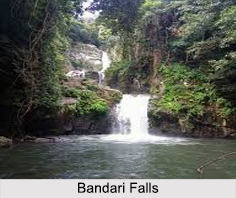
Bandare Waterfalls, Meghalaya
Bandare Waterfalls in South Garo Hills, Meghalaya, is a secluded natural attraction surrounded by dense subtropical forests and rugged mountain terrai...
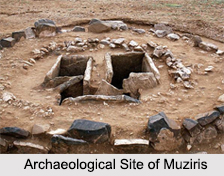
History of Thissur District
Early History of Thissur District explains flourishing of the port cities. Now these port cities are transformed into archaeological sites.
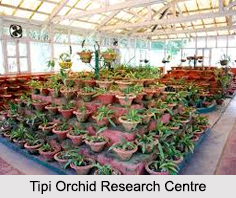
Tippi Orchid Research Centre, Arunachal Pradesh
Tippi Orchid Research Centre in Arunachal Pradesh is renowned for its rich collection of exotic and endangered orchids. Surrounded by lush rainforest...
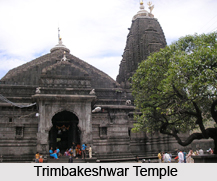
Tourism in Nashik District
Pilgrimage tourism in Nashik district involves visiting the various places of Hindu and Jain worship located here. Some of the holiest sites for Hind...
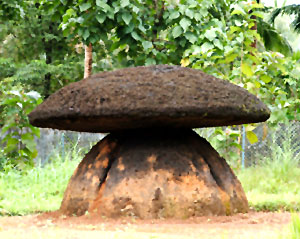
Mangadu, Kerala
Mangadu in Kerala’s Kollam district is a significant megalithic site known for its urn burials, cist burials, menhirs, and stone circles. Excavations...
Related articles in States of India
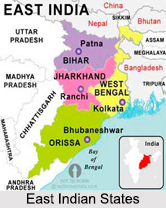
East Indian States
East Indian States comprises of Bihar, Jharkhand, West Bengal, Odisha and also the Union Territory of Andaman and Nicobar Islands. It defines the cult...
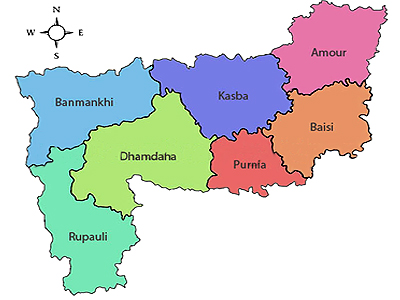
Purnia District in Bihar
Purnia District is located in Bihar and extends from River Ganga to Nepal. The district has a rich Hindu history and glorious past.
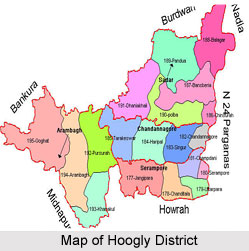
Hooghly district
Hooghly District along the bank of the river Hooghly is one of the principal trading ports of West Bengal.
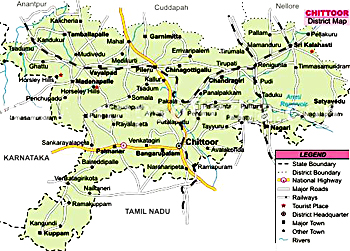
Geography Of Chittoor District
Geography of Chittoor district is spread along the topography of the land which is divided into two natural divisions; Chittoor has a dry and healthy...
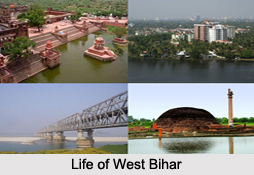
Districts of West Bihar
Districts of West Bihar is comprised of medieval monuments that were built by the different governors of Mughal era.