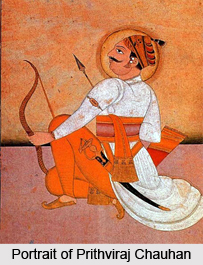
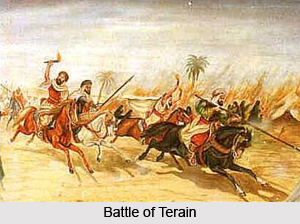
 History of Jhajjar District says that this region was inhabited about eight hundred years ago. Jhajjar city has many pages of history engulfed in it. The historical buildings and mausoleums give the reflection of the historical tradition of this city. It is said that around 1191 AD, the area surrounding Jhajjar was a deserted forest. There was a town named Malokan towards the east of Jhajjar city, mostly inhabited by the Jat. Further, Delhi and its adjoining areas were affected because of the battle between Muhammad Ghori and Prithviraj Chauhan. Most of the villages were deserted and Malokan was also among them. The rule of Ghori was well established in Delhi.
According to the history of Jhajjar District, Chajju Jat, a resident of Malokan village made an appeal to Emperor Ghori to rehabilitate the village. During the medieval period, in the rule of Delhi Sultanate and Tughlaq Dynasty, this area was given as feudatory to the different regional feudal lords. During this period Sultanate and Mughal rulers started invading areas of Haryana. During the rule of Akbar, this area was a part of Delhi province. Moreover, after the fall of the Mughal Empire, there was again an atmosphere of political turmoil in the region.
 Most of the area of present Haryana including Rohtak came under the control of the Nawab`s family of Farrukhnagar. During this period, the Jats defeated the Nawab of Farrukhnagar and established their rule. After that, from 1785 to 1803, it was the period of instability. On one hand, Muslim rulers and Nawabs were making efforts to maintain their rule and on the other hand they had to face the attacks of the Jats, Marathas and Sikhs constantly.
George Thomas had a great impact in the history of Jhajjar District. In the due course of time, George Thomas made Jhajjar his headquarters. With the aim to establish his independent rule in whole of Haryana, he changed his capital from Jhajjar to Hansi. However, George left his rule and went to Kolkata in 1801. Nawab Nijabat Ali Khan handed over the responsibility of the administration of Jhajjar to his son Faiz Muhammad Khan in 1813. Several forts and buildings were constructed at this period. In 1857 the collectors of Rohtak requested the Nawab for military help to crush the revolutionists. British rulers captured Delhi again. The Nawabs had to surrender before these rulers.
Modern history of Jhajjar District states that after the struggle of 1857, Jhajjar came under the British Rule. After that the provinces and districts were reconstituted and Jhajjar was reconstituted as a new district which consisted of the area of Narnaul and Dadri. But after sometime, its status as a separate district was forfeited and as a tehsil it was annexed to Rohtak District. Again, Jhajjar District was made a separate district by carving out of Rohtak District on 15 July, 1997.