
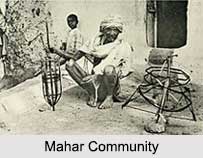
 Mahar Community is a significant group residing in the state of Maharashtra. The Mahars form around 9 percent of the total population of Maharashtra. In the year 1956, over 80 percent Mahars turned to Buddhism, under the leadership of Dr. B.R. Ambedkar, to free themselves from the shackles of caste and to remove the stigma of untouchability by building a new religious and cultural identity for them. They are mostly found in Wardha District, Nagpur District and Bhandara District. However, considerable colonies of Mahars are found in Chhindwara, Betul and Balaghat. People of Mahar community largely speak Marathi language. In the state of Gujarat, they also have some surnames like Panwar, Solanki, Rathor and Chauhan. There are references that recognise Mahar community as the oldest resident of the regions of Nagpur and Berar.
Mahar Community
Mahar Community was the earliest settlers in Maharashtra. Mahars are also considered as pre-Aryan or aboriginal tribes.
Introduction
Mahar Community is a significant group residing in the state of Maharashtra. The Mahars form around 9 percent of the total population of Maharashtra. In the year 1956, over 80 percent Mahars turned to Buddhism, under the leadership of Dr. B.R. Ambedkar, to free themselves from the shackles of caste and to remove the stigma of untouchability by building a new religious and cultural identity for them. They are mostly found in Wardha District, Nagpur District and Bhandara District. However, considerable colonies of Mahars are found in Chhindwara, Betul and Balaghat. People of Mahar community largely speak Marathi language. In the state of Gujarat, they also have some surnames like Panwar, Solanki, Rathor and Chauhan. There are references that recognise Mahar community as the oldest resident of the regions of Nagpur and Berar.History of Mahar Community
It has been claimed that the Mahars were the earliest settlers in Maharashtra but were pushed out by the invading Aryans. They belong to the early marital race of the country. Mahars claim that they are the descendents of "Mahamuni", an orphan picked up by Goddess Parvati from the banks of Ganga River.
 Society of Mahar Community
Mahars have a well-organised society. Mahar community has several sub-divisions basically of a territorial or local type such as Daharia, residents of Dahar, Baonia of Berar, Khandeshi from Khandesh and Nemadya from Nimar. The highest division in their society are the Somvanshis. Further, there are certain exogamous groups in Mahar community, whose names are derived from animals, plants and other natural objects. Some of the interesting names are Darpan, Khanda Phari, Aglavi, Andhare, Khobragade, Bhajikhai and so on. A man is not allowed to marry within his own clan. Regarding funeral rites, Mahars either bury or burn the dead. A new born baby is named either on the 7th or the 12th day. They celebrate various festivals like Nagpanchami, Dussehra, Holi and more.
Society of Mahar Community
Mahars have a well-organised society. Mahar community has several sub-divisions basically of a territorial or local type such as Daharia, residents of Dahar, Baonia of Berar, Khandeshi from Khandesh and Nemadya from Nimar. The highest division in their society are the Somvanshis. Further, there are certain exogamous groups in Mahar community, whose names are derived from animals, plants and other natural objects. Some of the interesting names are Darpan, Khanda Phari, Aglavi, Andhare, Khobragade, Bhajikhai and so on. A man is not allowed to marry within his own clan. Regarding funeral rites, Mahars either bury or burn the dead. A new born baby is named either on the 7th or the 12th day. They celebrate various festivals like Nagpanchami, Dussehra, Holi and more.
Profession of Mahar Community
The main occupation of the people belonging to Mahar community is weaving. However, in the present times, they have also started working in mills. In the 14th century, a Mahar poet named Chokhamela joined the ranks of the cult`s pantheon of saints. His poems and those of his wife and son are sung even today by devout bhaktas. In appearance the Mahars look much like the agriculturists of Maharashtra, the Marathas.
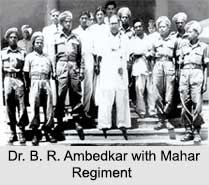
Mahar Regiment was one of the prominent infantry of the national army of independent India. In many ways, the long struggle for a self respecting identity has finally led the Mahars into the mainstream of Indian life.
Mahar Regiment was one of the prominent infantry of the national army of independent India. In many ways, the long struggle for a self respecting identity has finally led the Mahars into the mainstream of Indian life.
Society of Mahar Community
One of the traditional duties of the village Mahar was making decisions about boundaries in land dispute cases. His other job included repair of the village wall, assisting the police or government officials, being a watchman at the village gate, summoning villagers to hear announcements, carrying messages, bringing fuel to the burning ghat and dragging dead animals out of the village.
With modern times, this traditional work became less important and they moved into occupations like road building, railway work, dock work, menial jobs in factories and mills and into the army and others. Mahars had served with Shivaji and the Peshwa`s armies but it was service in the armies of the British that started the Mahar movement for attaining a higher status.
In the late 19th and early 20th centuries, the Mahars were already beginning to become organised. They petitioned to re-enter the British Army, held conferences to protest against the practice of untouchability and started hostels and a few schools.
With the coming of education and political awakening in the twentieth century, there came a desire to participate more fully in Hinduism. In the 1920s Mahars tried to participate in the Ganapati festival in Bombay and they held satyagraha in Amravati and Poona for temple entry. From 1930 to 1935 a massive satyagraha was held at Nasik in a futile effort to get the famous Kalaram temple opened to the untouchable castes and Mahatma Gandhi began his temple entry campaigns in the 1930s.
After attempting to participate in the Ganapati festival and watching the failure of temple entry attempts, Ambedkar called a conference in 1936 to consider the question of religion. The Mahar conference declared its intention of giving up Hinduism after an impassioned speech by Ambedkar.
Two months before his death, Ambedkar called his followers to Nagpur and was converted to Buddhism by the oldest Buddhist bhikshu in India, Mahasthaveer Chandramani. On 14 October, 1956, five lakh people, including many Mahars, joined Ambedkar.
With modern times, this traditional work became less important and they moved into occupations like road building, railway work, dock work, menial jobs in factories and mills and into the army and others. Mahars had served with Shivaji and the Peshwa`s armies but it was service in the armies of the British that started the Mahar movement for attaining a higher status.
In the late 19th and early 20th centuries, the Mahars were already beginning to become organised. They petitioned to re-enter the British Army, held conferences to protest against the practice of untouchability and started hostels and a few schools.
With the coming of education and political awakening in the twentieth century, there came a desire to participate more fully in Hinduism. In the 1920s Mahars tried to participate in the Ganapati festival in Bombay and they held satyagraha in Amravati and Poona for temple entry. From 1930 to 1935 a massive satyagraha was held at Nasik in a futile effort to get the famous Kalaram temple opened to the untouchable castes and Mahatma Gandhi began his temple entry campaigns in the 1930s.
After attempting to participate in the Ganapati festival and watching the failure of temple entry attempts, Ambedkar called a conference in 1936 to consider the question of religion. The Mahar conference declared its intention of giving up Hinduism after an impassioned speech by Ambedkar.
Two months before his death, Ambedkar called his followers to Nagpur and was converted to Buddhism by the oldest Buddhist bhikshu in India, Mahasthaveer Chandramani. On 14 October, 1956, five lakh people, including many Mahars, joined Ambedkar.
Recently updated articles in Religion in India
Vigneswara, A Form of Lord Ganesha
Lord Vigneswara is another form of Lord Ganesha or Vinayaka, prominently worshipped as the God of intelligence and good luck in the Indian subcontinen...
Maheswara
Maheswara, meaning “the Great Lord,” is a revered name of Lord Shiva in Hindu tradition. It represents Shiva’s supreme authority over creation, preser...
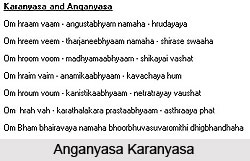
Anganyasa and Karanyasa
Anganyasa and Karanyasa are preparatory rituals in Hindu worship that sanctify the body and hands through the recitation of sacred mantras and symboli...
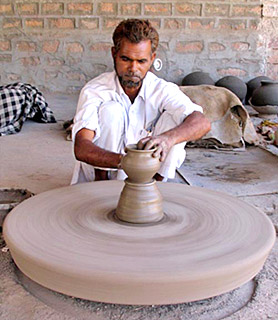
Kumbhakar / Kumhar Caste
Kumbhakar or Kumhar caste is a traditional artisan community in India known for pottery making. Derived from Sanskrit word Kumbhakar, meaning potter,...
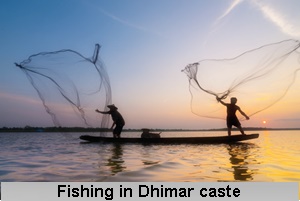
Dhimar Caste
The Dhimar caste, predominantly residing in the Central Provinces of India, is a distinct Hindu community with a rich heritage and diverse occupationa...
Related articles in Religion in India
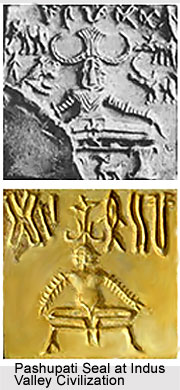
Religion in Indus Valley Civilization
Religion in Indus Valley Civilisation included Hinduism, Buddhism and Jainism. Details about the religion in Indus Valley Civilization have been gathe...
Iyer Brahmin
Iyer Brahmins are originally from Tamil Nadu of South India. They are known for their adherence to Advaita philosophy and Smarta traditions. Tradition...
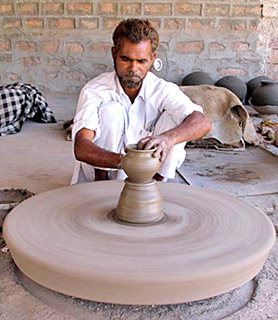
Kumbhakar / Kumhar Caste
Kumbhakar or Kumhar caste is a traditional artisan community in India known for pottery making. Derived from Sanskrit word Kumbhakar, meaning potter,...

Gujjars in Mughal Era
Gujjars in the Mughal era enjoyed great power. Further their power increased with the decline of Aurangzeb, Mughal emperor.
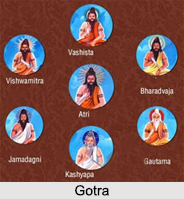
Gotra in Hinduism
In Hinduism, gotra refers to a lineage system tracing descent from ancient sages, primarily through the paternal line. Originating from Vedic traditio...