 Started mainly as a political campaign, in the yea 1919, the Khilafat movement was mainly launched by the Muslims in order to influence the British whilst protecting the Ottoman Empire after the devastating aftermath of the Ist Worls War.
During this time a third great wrong was added to the Rowlett acts and Punjab atrocities. This was the harsh treatment meted out to Turkey after its defeat till the First World War. The sultan of turkey, who was the ruler of the Ottoman Empire, was considered by many to be the caliph i.e. khalif or successor of the prophet Muhammad. He was looked on as the head of the world wide Muslim community. His dominion i.e. the caliphate is actually called Khilafat in India. It was greatly reduced by the terms of the treaty ending the war. Many Turkish territories, including certain sacred places of Islam, were taken away from the caliph.
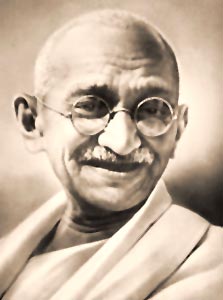
India`s Muslims were outraged over this attack on the integrity of their religion. A khilafat movement started and soon gathered momentum. Mahatma Gandhi embraced the cause of his Muslim fellow-countrymen, and in November 1919 he was elected president of the all-India Khilafat conference. The next month he persuaded congress to back the khilafat movement. Gandhiji saw that the movement provided an opportunity for uniting Hindus and Muslims that might not come again for a hundred years. At this time three Muslim leaders had been worked during the war. The names can be mentioned as Shaukat Ali, his brother Muhammad Ali, and Maulana Abul Kalam azad. They were released from detention. They took charge of the Khilafat movement and introduced Gandhiji to the Muslim masses. A new era of Hindu Muslim co operation began. Cries of `Hindu-Musalman-ki jai` and `Hindu-Musalman ek hai` resounded through the air. As the year 1920 opened, it was evident that India was gearing itself up for an unprecedented effort.