Introduction
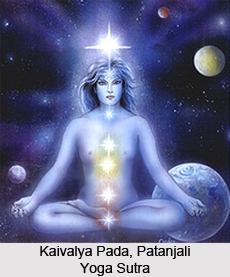
Samadhi Pada is the first chapter of Patanjali’s Yoga Sutra. Samadhi is described as a state of direct, dependable perception (pramaṇa) in which the “seer” (Purusa—pure consciousness, the true Self) rests fully in its own nature. It is the primary method a yogi uses to control the fluctuations of the mind, ultimately leading to the complete separation of the seer from the impurities and activities of the mind. In this chapter, comprising 51 sutras, Maharshi Patanjali explains the essence of yoga, the nature of samadhi, and the means by which this state can be achieved. It is directed towards those who are already highly evolved to enable them to maintain their advanced state of higher consciousness. The core idea of this pada is “citta-vṛtti-nirodha,” the calming or restraint of the mind.
Samadhi Pada includes the following:
Yoga / The Path to Achieve Higher Consciousness
Yoga is cessation of the distractions of mind. It means reaching a state where the practitioner’s mind, physical body, and soul are in the same level or same point. Yoga helps in reducing fluctuations in mind and achieving calmness. When a yogi reached a state where seer (self) gets established in his self-pristine form which is Purusha. This point is called culmination of Yoga.
Purusha or Seer- Eternal
Consciousness: Purusha is pure consciousness of the soul or the divine self
of a person. When fluctuations or modifications in mind are not controlled the
soul behave according to the distractions of the mind. It perceives whatever
the mind sees, hears, and understands from the external world.
Vrittis/ Changes Impacting Mind
The modifications in mind that impact the balance of purusha or restrains the yogi from achieving the true nature of Purusha are called vrittis. There are five types of vrittis, divided into two categories based on their nature - Kalisht (unpleasant) and akalisht (pleasant).
Five types of Vrittis are:
1.
Pramana - sources of right knowledge
2.
Viparyaya - misconception
3.
Vikalpa – unfounded belief
4.
Nidra – state of sleep
5. Smriti – memory
Removing the Vrittis
According to Samadhi Pada, a yogi can overcome the vrittis to reach Purusha in its true form through Abhyasa and Vairagya. Abhyasa means constant practice and Vairagya means detachment.
Abhyasa: The meditator has to be alert to practice calming the mind. There multiple ways of abhyasa such as regular mediation to increase spiritual power, practicing yoga, embracing vegetarianism, nurture clean thoughts and ideas, be kind to others, etc. Positive practices will result in positive influence on the mind, helping the yogi move forward in the path of yoga.
Abhyasa becomes a steady and reliable practice when it is done with reverence over a long period, enriched by celibacy, devotion, knowledge, and faith.
Vairagya: Lack of craving for anything in life, enables the yogi to acquire a state of desirelessness and complete control over senses. This level of desirelessness is called vairagya. It is a state where the mind loses all desire for worldly pleasures or temptations. . It is called Apara vairagya in Yoga Darshana and it is the way to attain sampragyat Samadhi. Apars vairagya is the lower form of vairagya whereas Para/ Supreme vairagya is the higher form of vairagya.
In Para vairagya, there is cessation of the least desires
for Gunas related to awareness of the Purusa, It is a state where the meditator
is in deep concentration and attains wisdom. The seeker realizes that except
the inner spirit, every experience is just an external title. Therefore, he is
detached from everything out of spirit.
Reaching Samadhi After Removal of Vrittis
Once the mind gets rid of all the vrittis or modifications,
it reaches the state of complete calmness called Samadhi which helps
in proceeding in the path of yoga.
Samprajnata Samadhi: Samprajnata Samadhi is attained by controlling or preventing thoughts with the help of practice and vairagya. It is the result of apara vairagya.
Asamprajnata Samadhi: After reaching a stage where the practitioner controls all modifications and with continuous practice experiences a complete stillness of mind with no thoughts arising, then he is left only with mental impressions. This stage is called Asampragyat Samadhi. Past merits or virtues from previous births are needed to attain asamprajnata samadhi.
Other Merits needed for Asampragyat Samadhi are:
Intensity or Eagerness toward Yoga
The eagerness of the yogi will decide how sooner or later he will attain Samadhi. There are three degrees of eagerness or intensity towards yoga.
·
Mild or mridu
·
Medium or middle order
· Supreme or teevra
There is no time limit to attain Samadhi if the meditator is moving forward in the path of sadhana with high level of detachment and intense practice with full concentration.
Devotion to Ishwara
According to Maharshi Patanjali, Samadhi can also be attained faster by complete surrender to Ishwara. Ishwara Pranidhan or surrender to the divine power is the purest system of devotion without any propensity.
Attributes of Ishwara: Ishwara is extraordinary force which is completely free from five types of klesha (ignorance or misconceptions), three types of deeds, and all types of ashayas (desires). In Īshwara there is the unsurpassable seed of omniscience, that is, the highest perfection. He is the one whose knowledge never increases or decreases and no one’s knowledge is greater than or equal to that of Ishwara.
Ishwara as Jagat Guru: Ishwara is the Guru of all the ancient teachers and knowers of Brahman or the universe, because He, being a special Puruṣa, is beyond time, not bound by it. He is present in every period so he called the Guru or all gurus.
Ishwara as Pranava: Maharshi Patanjali refers to Ishwara as Praṇava, that is, Om. Omkara itself is also called the primordial sound. The sound of ‘Om’ is resonating throughout the entire universe. The whole of creation, this universe itself, is uttering the name of Ishwara.
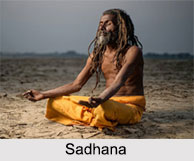
Sadhana for Ishwara:
Sadhana or reverence of Ishwara should be done through Japa. The japa of that
Praṇava, that is, Om, should be done repeatedly with feeling, together with the
meaning contained in the word Praṇava. In different traditions, there are many
kinds of japa.
Fruit of Sadhana
When Sadhana is done through japa with meaning and feeling, or through devotion to Īshwara, the practitioner attains self-knowledge, and also becomes free from the obstacles that arise on the path of Yoga. Initially, with japa, the practitioner starts experiencing the reality of his own existence. This experience will help in progressing further in the path of yoga. Through Sadhana, the practitioner will also attain self knowledge and freedom from obstacles in the path of yoga.
Obstacles in the Yoga Path
There are nine types of obstacles describes in the Samdhi pada in yoga Sutra.
1. Vyadhi (disease)
2. Styāna (not practicing Yoga despite the desire to do so.)
3. Saṃaaya (doubt whether liberation will be attained
through Yoga)
4. Pramada (unwillingness of the mind to practice Yoga)
5. Alasya (not practicing Yoga due to heaviness in the body)
6. Avirati (attached to pleasures, lack of dispassion)
7. Bhrantidarsana (wrong knowledge or false understanding)
8. Alabdhabhumikatva (failure to continue on the path of
Yoga)
9. Anavasthitatva (Unable to continue after attaining Samadhi).
Other Obstacles: Along with these nine obstacles, certain negative consequences also arise. Thus, the afflictions of obstacles increase in four additional ways. Hence, the obstacles are not merely nine but become thirteen.
·
Sorrow (Duhkha)
·
Despondency (Daurmanasya)
·
Trembling of the limbs (Angamejayatva)
· Irregular breathing (Shvāsa-prasvasa)
Removal of Obstacles
To completely remove these distractions, one must practice ekatattva, which means following any one of the methods or principles.
Obstacles can be removed:
·
By one-pointedness
·
Or by cultivating opposite virtues
·
Or by controlling prana
·
Or by observing sense experience
·
Or by inner illumination
·
Or by detachment from matter
·
Or by knowledge of dream and sleep
·
Or by meditation as desired
Fruits of Meditation
By continuously practicing any of the above-mentioned methods for removing obstacles, the yogi can calm, purify, and stabilize his mind. With this practice, the yogi comes to know even the subtlest of subtle objects, as well as the greatest or the most supreme substances and also gains mastery over them.
Oneness of Chitta:
When a yogi’s mental modifications (vṛttis) are no longer influenced by rajas
(passion, activity) and tamas (inertia, ignorance), and only the influence of
sattva (purity, clarity) remains, then the yogi’s mind becomes as clear and
pure. This state of mind is called oneness of chitta. It is a level where the
perceiver, the means of perception, and the object perceived become perfectly
unified.
Attaining Samadhi
Savitarka Samadhi: The first state of the super conscious mind is called Savitkara. Savitkara Samadhi is a state in which the mind engages simultaneously with three distinct elements — the word (sabda), the meaning (artha), and the knowledge (jnana) related to that word. When a yogi reaches this state he can separate word, meaning, and knowledge in deep meditation achieving higher clarity and purity of mind.
Nirvitarka Samadhi: When memory becomes purified and the modifications (vṛttis) of the mind lose their own form, and the mind begins to illuminate only the meaning of the object, such a state of mental absorption is called Nirvitarka Samadhi. At this point, even the word and the knowledge of the word disappear, only the bare meaning remains.
Other forms of
Samadhi
After Nirvitarka Samadhi, there are four other stages of Samadhi namely Savichara, Nirvichara, Ananda, and Asmita. In these forms of Samadhi, the object of fusion is bliss and awareness. In savichara the whole process is through reflection; there is no form present. In this /Samadhi, the mind alternates between time, space, and ideas.
Nirvichara Samadhi is a profound meditative state where consciousness transcends subtle thoughts (vicharas) about an object, leading to direct, unmediated experience of its true nature. In Ananda Samadhi there is a feeling of absolute peace and absolute bliss. In Asmita Samadhi, the awareness is absolutely pure. There is no thought, there is no awareness of time and space and there is complete realization of that awareness.
Extent of Samadhi: The experience of Ananda and Asmita Samadhi
extends up to Alinga. Alinga in the last state where the three gunas are mixed
equally with each other. At this point, the subtle nature of objects
extends only up to Mula Prakṛti, the primal nature. The entire visible
universe, as we experience it, arises from Mula Prakṛti.
Samadhi with Seed
All these types of Samadhi- Savitarka, Nirvitarka, Savichara, Nirvichara, Ananda, and Asmita are Sabija or Salambana Samadhi, means Samadhi with seed. They depend on external support, be it an object, concept or focus.
Pure intellect or
Spiritual Light
When one practices Nirvichara Samadhi and attains mastery in
it, the result is that the seeker begins to perceive things exactly as they
truly are.
Cosmic Experience After Attaining Samadhi
When the state of Adhyatma-Prasada (spiritual clarity) is attained, a special wisdom (prajna) arises which holds only true knowledge and never accepts false or opposite knowledge. This sattvic light shines in the seeker’s intellect, giving rise to a unique wisdom that only holds truth and determines truth.
This higher form of intellect is called Ritambhara Prajna.
It provides knowledge that is distinct from verbal testimony and inference and
it grants a superior form of knowledge.
Dynamism of Consciousness in Samadhi
With the arising of Ritambhara Prajna, an indomitable
courage and inner strength awaken within the yogi. Samskaras begin to form
within him which further lead him towards self-discipline and prevent
accumulated negative impressions from manifesting into action. All obstacles to
the path of yoga are removed. His inner power becomes stronger, and being
firmly established in the witnessing attitude with the strength of sattva, He
is able to stop or dissolve afflictive tendencies, bad habits, faults, or
negative impressions.
Attaining Samadhi without Seed
When the yogi, with the samskaras born of Ritambhara Prajna,
becomes capable of completely restraining or stopping the negative impressions,
then he begins to restrain even that impression itself. When the yogi renounces
or restrains even the untainted impression or samskara produced by Ritambhara
Prajna, the state that arises is called Nirbija Samadhi or Asamprajnata Samadhi
or Samadhi without seed. This is said to be the highest state on the yogic
path, where all impressions (whether good or bad) are completely destroyed. Not
even their seed remains.