
Chandogya Upanishad is one of the oldest Upanishad written on the Vedic Brahmana period about ninth to eighth century BC. Chandogya Upanishad is associated with Sama Veda. It is ranked ninth in the Muktika canon of hundred and eight Upanishadas. The seventeenth khanda states about the penances for mistakes in the sacrifice. Prajapati reflected on regions or the worlds, and from the reflected, he extracted the essences, viz., fire (agni) from the earth, air (vayu) from the sky, and the Sun (Aditya) from heaven. Next, Prajapati reflected upon three deities and from the reflected he extracted the essences, the Rig Veda verses from fire, the Yajur Veda verses from the air and the Sama Veda verses from the sun. Prajapati again reflected upon the threefold knowledge i.e. the three Vedas; from them, thus reflected upon, he extracted the essences; Bhuh from the Rig verses, Bhuvah from the Yajur verses and Svah from the Sama verses.
While performing a religious ceremony if a Rig hymn is misused or injured then the performer of that sacrifice should offer an oblation to the Garhapatya (household) fire reciting mantras, `Bhuh Svaha.` This helps in healing the harm caused. The Rig in this case by its essence and majesty corrects all the impurities of the yagya by means of the essence and the power of the Rik hymns themselves. If a sacrifice is injured or affected with regard to the Yajur Veda verses, then one must offer an oblation to the Southern (Dakshina) Fire reciting the mantras `Bhuvah Svaha.` This helps in healing the harm caused. The Yajur in this case by its essence and majesty heals all the impurities of the yagya by means of the essence and the power of the Yajur hymns themselves. If a sacrifice is injured or affected with regard to the Sama verses, then the sacrificer must offer an oblation to the Ahavaniya Fire reciting the mantras `Svah Svaha.` This helps in healing the harm caused. The Sama in this case by its essence and majesty heals all the impurities of the yagya by means of the essence and the power of the Sama hymns themselves.
As gold is fastened with the help of borax, silver is fastened by means of by gold, tin is bonded by means of silver, lead by with the help of tin, iron by with the help of lead, and wood by means of iron or leather, likewise one purifies and heals the harm caused to the sacrifice with the help of the power of the regions, of these gods and of these three systems of knowledge. The sacrifice is healed and becomes effective in which the Brahma is aware of all this. The sacrifice inclines to the north of which the Brahma priest knows this. The Brahma priest who knows all this has been described in a verse which states that whenever any flaw occurs in a ceremony the knowledge of the Brahma sets everything perfect.
Such a willing Brahma is essentially the chief priest. As warriors are defended by their mares, so does a knowledgeable Brahma preserve the sacrifice, its institutor, and all the officiating priests. Thus, such a knowledgeable Brahrna should be selected to perform ceremonies and not those who are unaware of their duties and knowledge.
17th Khanda of Chapter Four
17th Khanda of Chapter Four of Chandogya Upanishad states about the penances for mistakes in the sacrifice that can be purified by the knowledge of the Brahma priest.
Recently updated articles in Indian Philosophy
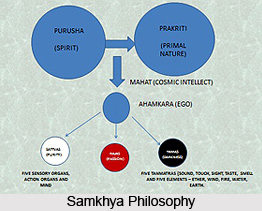
Samkhya Philosophy
Samkhya philosophy is one of India’s oldest intellectual traditions, explaining reality through the interplay of Puruṣha (pure consciousness) and Prak...
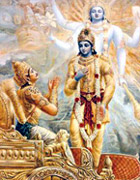
Maya, Prakriti in Hinduism
Maya or illusion is a very potent instrument of the Divine Prakriti, the Primal nature. In Hinduism one must be able to come out of Maya in order to a...
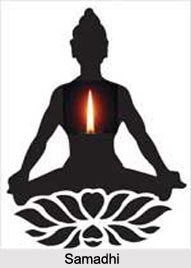
Samadhi in Hinduism
Samadhi is the result of meditation or that state of mind when there is an absence of all idea of individuality.
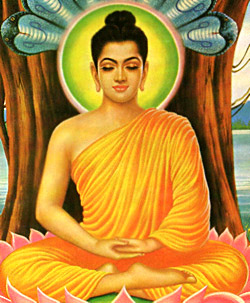
Samadhi in Buddhism
According to Buddhism, oen can only achieve samadhi through strict meditation and right concentration.
Abdul Rehman Jilani Dehlvi
Syed Abdul Rehman Jilani Dehlvi was a renowned Sufi saint of the Qadri Order in India.
Related articles in Indian Philosophy

Ajivika Philosophy
Ajivika philosophy is different from the mainstream religion
Indian Philosophy In The Vedic Period
Indian Philosophy in the Vedic Period was primarily based on the concepts of nature worship.
Achintya Bheda Abheda Philosophy
Achintya-Bheda-Abheda is a School of Vedanta that represents the philosophy of unimaginable one-ness and difference in relation to the power creation...
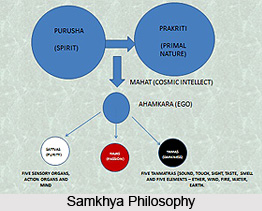
Samkhya Philosophy
Samkhya philosophy is one of India’s oldest intellectual traditions, explaining reality through the interplay of Puruṣha (pure consciousness) and Prak...
Charvaka Philosophy
The Charvaka Philosophy believes that only those things that can be perceived is the ultimate reality.