Introduction
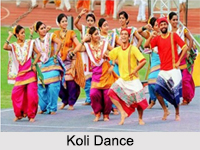
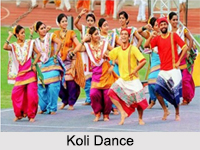
Koli dance is a folk dance performed in the Maharashtra state of India. Koli dance is practiced by the Koli community of Maharashtra, a community known for their ethnicity and tradition. This colourful dance has several variations in its dance patterns which are performed in different parts of the land. These dances are either performed by only men or by both men and women folk together. The Koli Dance mainly reflects the rhythm of the sea waves, and the Koli community celebrates all of its festivals such as wedding and social events, with this vibrant traditional dance.

Kolis of Maharashtra
The Koli community are the fishing folks residing in the coastal areas of Maharashtra. The Koli community is recognized for its distinct identity which also reflects in their dance. The dance focuses on their lifestyle and occupation which is fishing. Through the performance of this lively Koli Dance, the Kolis forget the many hardships that their occupation brings to them on a daily basis. The Koli Dance incorporates elements that this community is most familiar with - sea and fishing.
Performance of Koli Dance
The performance of Koli dance starts with a slow and rhythmic beat. Gradually, the movements turn to a fast-paced and energetic tempo, creating a lively performance. The fishermen and women while performing the Koli Dance stand in two rows holding small oars (important equipment for rowing boats) in their hands. They move these oars in sync with the harmony imitating the movement of rowing a boat. The Kolis also sway the oars forwards and backwards creating an illusion of rowing a boat which is tossing on the waves of the sea. The fisherwomen stand in a separate row holding each other’s arms and advance towards the men dancing with them.
In another form, the dancers stand in a circle, holding each
other’s hand and rhythmically move towards the center of the of circle. The
movements usually includes jumps, turns, slow walks, and claps, all perfectly
synchronized with the music. In every form of Koli dance, the movement of the
dancers in unison shows the movement of the rowing boat and the act of fishing.
Music of Koli Dance
Traditional musical instruments play a vital role in enhancing the energy and cultural richness of the Koli folk dance. This folk dance is usually accompanied by lively music played using traditional music instruments of Maharashtra such as dhol, cymbals, and tasha. However, in modern times, some more instruments are played to enhance the liveliness of the performance. Among them is the amounts, a brass-like instrument known for its loud and clear tone, which is commonly played during festivals to create a lively and festive atmosphere.
The halgi, a traditional percussion instrument, is played by striking it with a stick to produce rhythmic patterns that complement the movements of the dance. Another important instrument is the zanj, a metal cymbal-like instrument that creates a ringing sound and adds musical depth to Koli folk performances. The tuntuna, a string instrument similar to a guitar or mandolin, contributes melody and harmony to the music when played with a pick. Together, these instruments create the vibrant musical foundation of the dance.
Koli folk dance songs, which are primarily sung in Marathi, reflect the cultural stories, experiences, and emotions of the Koli community, preserving their rich heritage through music and performance. Some of the famous songs that accompany this dance are Me Dolker, Aga Pori Sambhaal, Dol Doltai, Paru Go Paru and Valav Re Nakva. These songs are mainly based on the day-to-day lives of the Koli community and their activities. They highlight fishing, love, and traditional values of the community.

Costumes of Koli Dance
Both male and female dancers wear colorful costumes adorned with sequins and beads, which add to the vibrancy of the dance. The female dancers of the Koli Dance are generally dressed in traditional green-coloured sarees that are draped up to their knee. These sarees are either made of cotton or silk. They also adorn themselves with ornaments like necklace, ear ring and bangles.
The male performers of Koli dance traditionally wear attire that reflects the rich cultural heritage of the Koli community. They mainly wear lungis around their waists that form a triangular shape. The male dancers also wear the dhoti kurta, a classic traditional outfit consisting of a long kurta paired with a dhoti, a long piece of cloth wrapped around the waist and legs. Usually made from white or light-colored fabric, the attire is often embellished with gold or silver threadwork, further highlighting the grace and vibrancy of the Koli dance tradition.
One of the most significant elements of the costume is the pheta, a turban-like headgear made from cotton or silk, commonly seen in white or red shades. Often adorned with gold or silver threads, the pheta adds elegance and cultural significance to the dancers’ appearance. Another important accessory is the Koli topi, a traditional cap crafted from cotton or silk and typically designed in red or white colors. Decorated with beads, sequins, and other embellishments, the Koli topi enhances the visual appeal and charm of the traditional costume.