Jaishankar Prasad was a Hindi author. He acquired respect for knowledge, religion, and the arts. He is a well-known figure in modern Hindi literature as well as Hindi theatre. He started writing poetry with the pen name of "Kaladhar". The earliest collection of poem written by Jai Shankar Prasad was "Chitradhar". It was written in "Braj" dialect of Hindi but his later works are in "Khadi" dialect. As a poet he earned a lot of fame. From his young age he started writing poetry. He was one of the pillars of "Chhayavad" movement in Hindi Literature along with Sumitranandan Pant, Mahadevi Verma and Suryakant Tripathi `Nirala`.
Early Life of Jaishankar Prasad
Jaishankar Prasad was born in 1890. He was born in a rich Vaisya household of Varanasi. His father Babu Devki Prasad was a businessman. He was also known as Sunghani Sahu. He lost his parents and elder brother by the time he was 16, which brought the entire responsibility of the family business and family feuds on him, making him introverted but mature at an early age. Jaishankar Prasad was very interested in learning. He soon acquired proficiency in Sanskrit, Urdu, Bengali, and English, and did extensive reading in archaeology and history. He was greatly influenced by Vedas. He had also inclination towards ancient relics. All these knowledge reflected in his playwriting subsequently.
Literary Works of Jaishankar Prasad
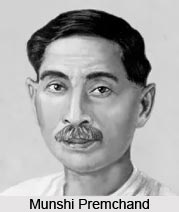
Jaishankar Prasad is known primarily as a pioneer of "chhayavadi" or romantic poetry of great sensitivity to nature and human emotions. His long poem "Kamayani" in 1935 remains unparalleled for its cosmic questions. His deep understanding of the Indian people, psyche, and way of life also made him a leading fictionist, along with Munsi Premchand.
As a dramatist and successor of Bharatendu Harishchandra, he was profoundly inspired by D. L. Roy, whose historical plays modelled on Western dramaturgy. Idealism and nationalism governed his choice of plots, their treatment, and their Indian world-view. He composed his first one-act play, "Sajjan" i.e. `Noble` in 1911. This was based on the Mahabharata with prose dialogue in Hindi and verse in "Brajbhasha" like Bharatendu. He used Sanskrit theatre conventions like the "nandi", "bharatavakya", and "sutradhara". In 1915, he wrote his first significant drama. That was the historical "Rajyasri", in modern idiom and structure, but emphasizing history and establishing the greatness of Indian culture through the protagonist. There followed a series of plays. The names can be mentioned as "Visakh" in 1921, "Ajatsatru" in 1922, "Jamnejaya ka nagyajna" or `Janmejaya`s Nag Sacrifice` in 1926, "Kamna" or `Desire` in 1927, "Skandagupta" in 1928, "Chandragupta" in 1931, "Dhruvswamini" in 1932. All these displayed a staggering range of the social, religious, political, and personal issues of his times.
An interweaving of cultural nuances, ramifications of contemporary political upheavals within the historical framework can be found. Prasad`s poetic sensibility imparted a complex philosophical view and a sensitive, multilayered portrayal of the characters and their conflicts. Although very close to Indian tradition in vision and purpose, he was also influenced by Western dramaturgy in language, structure, and treatment, which appear reminiscent of Shakespeare. His diction exalts his dramatis personae above the ordinary, includes nature in the human drama, and provides the rare insights into situations and emotions that only great poetry can offer. His portrayal of strong women was quite unusual for his times. Ironically, while he reacted vehemently against the sensationalism and superficiality of Parsi theatre, he unconsciously resorted to many of its stage devices.
He crafted Vedas philosophy and art in his writings. He mixed mainly "Tatsam" and "Tatdbhav" words in his poetry, which was considered as Khadi dialect or Sanskritized Hindi. He wrote poems in various subjects. His patriotic poem, `Himadri Tung Shring Se` was very popular during the Freedom Movement in India. But his best work in poetry was Kamayani. It got several literally acclaim. It is considered as one of the best works in Hindi epic poetry.
Unfortunately, Prasad`s plays were not performed in his lifetime because they had too vast a canvas for amateur groups to afford, and too serious a scope for the resourceful Parsi theatre to attempt.
Personal Life of Jaishankar Prasad
Apart from Jaishankar Prasad"s writing he was a philosopher, historian and a sculptor. He had also great interest in chess, gardening, shashtrarth and poetry recitation. He passed away on January 14, 1937.