 Indian Trees are well known throughout the world for their magnificence and opulence. Trees are considered to be the green pearl in the crown of the country. They hold a special position in the history and literature of India. There is a description in the Hindu literature about a celestial tree which has its roots cemented in the heaven and its branches spread in the underworld, which connects and unites beings of all kinds. Banyan Tree has been designated as the national tree of India, mainly because of its availability in all parts of the country. Most of the trees found in India are native to India. But various trees have been brought to India for cultivation. These trees have to adjust to the Indian climate for normal growth.
Classification of Indian Trees
Indian Trees can be classified in different ways. These trees are categorized according to their valuable properties and usages into decorative or gardening trees, timber trees, medicinal trees, etc. Indian medicinal trees have valuable medicinal properties and they are commonly used in the traditional treatment methods like Ayurvedic, Homoeopathic and Unani treatments. Indian Trees can also be classified according to the duration of leaf on the tree. Such trees are evergreen trees and deciduous trees. Evergreen trees have leaves throughout the year, whereas deciduous trees shed their leaves and turn dormant in winter. India has flowering trees as well as flowerless trees. Indian trees can also be grouped as coastal trees that grow in the coastal regions of India.
 Types of Indian Trees
India is a home to wide variety of trees, for example, peepul tree, banyan tree (bodhi tree), banana tree, neem tree, tamarind tree, dhak tree, coconut palm tree, mango tree, jujube tree, portia tree, casuarina tree, Gulmohar tree, coralwood tree, jasmine tree, mandara tree, rubber tree, cashew tree, devil`s tree, bilimbi tree, bel tree, arjun tree, khajur tree, supari tree, mohwa tree, papaya tree, Indian rosewood tree, kikar tree, sal tree, cork tree, khair tree, debdaru tree, amla tree, sandalwood tree, jamun tree, madras thorn tree, nagalingam tree, etc. Some of the Indian Trees are as follows:
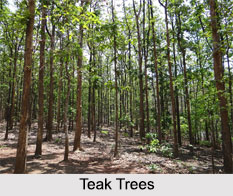
Indian Teak Tree: Teak Tree (Tectona Grandis) is an all around premiere timber with many favourable properties. This tree has been and will continue to be one of the most admired and precious timber tree species in the world.
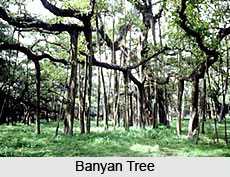
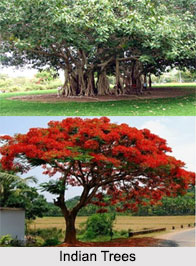
Banyan Tree: Banyan Tree (Ficus Bengalensis) is one of the most venerated trees in India. It has the ability to survive and grow for centuries and is often compared to the shelter given by God to his devotees.
Gulmohar Tree: Gulmohar Tree (Delonix Regia) is one of the prettiest trees in the world. It is also known as "flame of the forest" as the orange-red colors of this tree"s flowers are so intense, that it looks like it is on fire.
Tamarind Tree: Tamarind Tree (Tamarindus Indica) is a medium-sized fruit tree with a round-shaped crown. It grows best on sandy soil near the sea, but nowhere does it grow as well as in India.
Peepal Tree: Peepal Tree (Ficus Religiosa) is a tree worshipped since the dawn of civilization and has great medicinal value apart from religious significance. This tree is a deciduous tree that is native to India and is sacred in Buddhism.
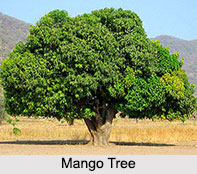
Mango Tree: Mango Tree (Mangifera Indica) is a fruiting tree native to South Asia and the fruit is national fruit of India. Its fruit and leaves are used in several religious ceremonies of Hindus.
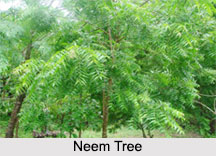
Neem Tree: Neem Tree (Azadirachta Indica) is native to India and associated with Hindu festivals of Ugadi and Gudi Padwa. Neem leafs are traditionally recommended during early summer in Ayurveda.
Jamun Tree: Jamun Tree (Syzygium Cumini) is native to India and a very popular seasonal fruit tree with immense health benefits. This tropical black berry has a unique taste, colour and flavour.
Sal Tree: Sal Tree (Shorea Robusta) is a large sub deciduous tree. It is worshiped among the Buddhist and Hindus in India. It is mentioned in many scriptures that Lord Buddha was born and died under the Sal tree. It is found in almost all the parts of India.
Eucalyptus Tree: Eucalyptus Tree (Eucalyptus Globulus) is the tall evergreen tree. There are more than 700 species of Eucalyptus all over the world. Eucalyptus is mainly used as the pulpwood in the manufacturing of the paper as well as raw material.
 Significance of Indian Trees
Indian trees are vital constituents of nature. Almost all parts of trees like bark, leaves, roots, fruit and timber have usage in India. These trees are a major source of fruits and wood. They purvey a specific weather-sheltered ecosystem, in and under their foliage. They absorb carbon dioxide, thus purifying air and reducing global warming. With the absorption of rainwater, trees in India help in the prevention of floods, soil erosion and landslides. They provide habitat to species like bats, tawny owls and woodpeckers. Different Indian trees have different values. Some have high medicinal values, while others have religious and cultural values.
Indian trees play an important role in beautifying the nation. They form an essential part of the culture and heritage of India.