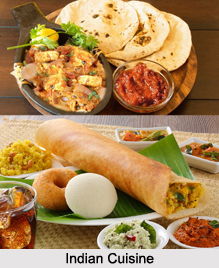
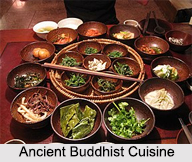
 Food in Gupta Period is mainly discussed in the early texts of the Gupta Empire which includes the writings of Kalidasa, Angavijja and the Bharata Samhita. Texts of the Gupta period enlist a number of vegetarian food items which became popular under the influence of rising Buddhism and Jainism. Vegetarian food became the norm for as much as half of the population. In the Gupta Empire, they mostly ate vegetables, cereals, fruits, breads and drank milk.
The Gupta Empire (320 AD - 500 AD) existed at about the same time as the Roman Empire. It dominated northern India. Food in Gupta Period was an important source that reflected culture of the society. Along with this, food of Gupta Period has been used for medical purposes as well. The Puranas and Samhitas of this period along with Astanga Samgraha and other related texts describe the utility of various food items and recipes useful for medical purposes. Overall the food in Gupta period mainly included types of cereals and pulses, dairy products, meat preparations, honey and sweet preparations, spices along with salt and various kinds of oils and oil seeds and fruits and vegetables common in ancient India. The concept of breakfast did not exist. In earlier times, meals were both vegetarian and non-vegetarian, depending upon religious beliefs.
Several Food Preparations of Gupta Period
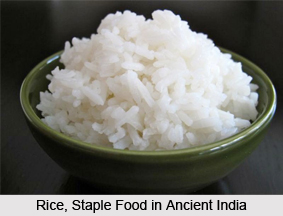
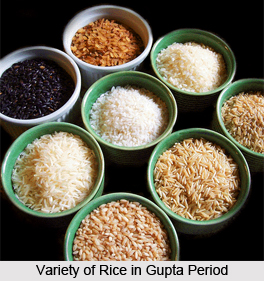
Gupta period also demarcates a number of rice preparations. Sali rice which was grown in Bengal was available in various parts of the kingdom. Sastika rice was considered to be one of the most nourished varieties of rice. Mahavrihi variety was mainly grown in Magadha was used for religious purposes and offered to the king and distinguished persons. For medical purposes, red variety of salt rice was considered to be the best. Rice was taken along with curd, milk, clarified butter, molasses and pulses. A special variety of milk rice was also popular among the Brahmins. In the Gupta period, around 650 AD, Hindus began to worship a Mother Goddess. Cows were sacred to her, and so Hindus stopped eating beef pretty much completely.
 Food in Gupta Period along with this also included dairy products. While cow"s milk was considered to be the best, the period also included the milk of elephants, buffaloes, camel, goat, sheep and mares. Apart from milk, other products like curd, creme of curd and butter milk were equally popular. Along with this the Gupta Period also included some meat preparations which were as popular as the vegetarian delicacies.
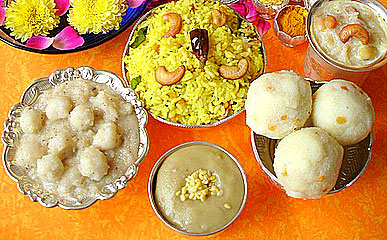
The food in Gupta Period included extensive use of honey in preparing sweet items. Four varieties of honey have been mentioned in the medical works of early Gupta period. About the same time, Indian scientists invented a way to make sugarcane juice into sugar cubes, so more people began to eat more sugar and sugary desserts. The most popular sweet dishes of the Gupta Period include Krsara, Modakas, Utkarika, Samydva, Pupa, Phenaka, Payasa, Abhyusa and Gudaudana, along with some new preparations like Morendaka. Along with this food in Gupta Period also included a number of salts and spices like dry ginger, Cumin, Mustard, Coriander, Myrobalan, long pepper, black pepper, Clove, cardamom and Turmeric which was grown in the sea side while Asafoetida and bahlika was imported from Afghanistan.
By 900 AD, new Central Asian fruits and vegetables, lemons and purple carrots, reached India too. Fruits and vegetables of Gupta Period included Kashmir pears, plums, peaches, apricots and grapes which were planted in specific areas and Pomegranates and melons were grown everywhere. Along with this it also included a large variety of vegetables, pumpkins and so on.
Beverages in Gupta Period
A number of intoxicating drinks has been mentioned in Matsya Purana and Vayu Purana, said to be prepared from grapes, sugarcane, honey and rice. It also included types of wine which was flavoured with mango juice and patala flower. The Shastras of the Gupta age did not consider drinking by women as a sin and so did not prohibit drinking for women. Rather it was believed that drinking would charm women and so it was very popular among the women of royal families.
Cooking Methods in Gupta Period
While the food of the Gupta age was light and clean, it was cooked in vessels made up of gold, silver and other metals reflecting the progress of Indian civilization from Stone Age to Bronze Age.
Related Articles
History of Indian Food
Food in Ancient India
Gupta Empire
Indian Food
Matsya Purana
Vayu Purana
Kalidasa
Indian Puranas