





 Patanjali Yoga Sutras is the ancient treasure narrating how to keep the body healthy. This yoga sutra is now one of the most acclaimed elements of everyday life. Yoga is an art, a science and a philosophy that touches the life of man at every level, bodily, intellectually and spiritually. Patanjali Yoga Sutras is the ancient treasure narrating how to keep the body healthy. This yoga sutra is now one of the most acclaimed elements of everyday life. Yoga is an art, a science and a philosophy that touches the life of man at every level, bodily, intellectually and spiritually.
All yoga as practiced today is based on Patanjali Yoga Sutras, a collection of aphorisms offered more than 2000 years ago by the Indian sage, Patanjali. Patanjali Yoga Sutras by Maharshi Patanjali is the foundational text for Yoga. Historically, it is believed that Maharshi Patanjali may have lived in around 500 BC to 2000 BC and has compiled mainly three subjects of Patanjali Yoga Sutras namely, grammar, medicine and yoga. Patanjali's three works together deal with man's development as a whole in thought, speech and action. 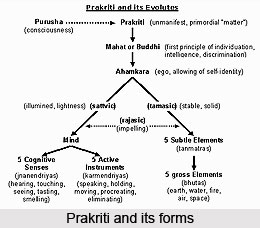 Divisions of Patanjali Yoga Sutras Divisions of Patanjali Yoga Sutras
Patanjali Yoga Sutra consists of 196 sutras which are divided into four chapters or padas. Each sutra consists of Sanskrit words that are written in one or two lines. The 196 sutras are precise, reflective and pious in approach. Each of the sutras contains a wealth of ideas and wisdom towards full knowledge of his real nature. The Patanjali Yoga Sutra state, through proper practice one can radiate grace, disposition and compassion. The four chapters or padas of the yoga sutras correspond to the four stages of life. The ultimate achievement of following the path of Patanjali Yoga Sutra is to experience the effortless, indivisible state of the prophet. The four chapters of Patanjanli Yoga Sutras include, Samadhi Pada, Sadhana Pada, Vibhuti Pada and Kaivalya Pada. Samadhi Pada in Patanjali Yoga Sutras Samadhi Pada is the first chapter of Patanjanli Yoga Sutra that defines yoga and the movement of the mind and how to reach samadhi state. It is directed towards the individuals who were already highly evolved to enable them to uphold their advanced state of cultured, mature aptitude and wisdom. It is assumed that Patanjali's aim, in beginning was to attract those rare souls who were already on the brisk of self-realisation. In Samadhi Pada, Patanjali defines the yoga as "Citta Vritti Nirodha", meaning to stop the movement of Citta or mind. Sadhana Pada in Patanjali Yoga Sutras Sadhana Pada is the second chapter of Patanjali Yoga Sutra, where Patanjali comes down to the level of those who are not spiritually evolved. Patanjali in this chapter identifies that Avidya or spiritual ignorance as the source of all sorrow and unhappiness. Here he coins the word, Kriya Yoga. Kriya means action and KriyaYoga emphasizes the energetic effort to be made by the aspirant. First, he explains the concept of Kriya Yoga, which is the yoga of action and has three tiers, namely tapas, svadhyaya and Isvarapranidhana. In the chapter of Sadhana pada, Patanjali explains the journey from yama to pratyahara, which is the connection between external and internal. 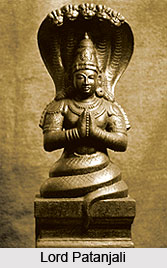 Vibhuti Pada in Patanjali Yoga Sutras Vibhuti Pada in Patanjali Yoga Sutras
Vibhuti Pada is the next chapter of Patanjali Yoga Sutra. Vibhuti is the Sanskrit word for "power" or "manifestation". This chapter speaks of the divine effects of yoga sadhana. When a sadhaka attains expertise in the steps of the first 5 steps, he acquires the 8 supernatural powers or siddhis. However, Patanjali cautions that the temptation of these powers should be avoided and the attention should be fixed only on liberation. He then explains that Dharana or concentration, Dhyana or meditation, which comes from repeated concentration and Samadhi, which comes from deep absorption. Kaivalya Pada in Patanjali Yoga Sutra Kaivalya Pada is the fourth chapter of Patanjali Yoga Sutra and literally means "isolation", but as used in the Sutras depicts the idea of liberation or moksha, which is the intention of Yoga. The Kaivalya Pada describes the nature of liberation and the reality of the transcendental self. In this chapter, Patanjali distinguishes kaivalya from Samadhi. In Samadhi pada, the aspirant experiences a passive state where he can see his soul and in kaivalya he lives above the tamasic, rajasic and sattvic influences of the three gunas of nature (the primary qualities of Nature). 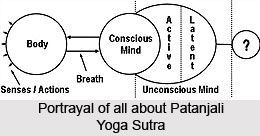 Eight Components of Patanjali Yoga Sutra Eight Components of Patanjali Yoga Sutra
The 8 components of Patanjali Yoga Sutra are mainly Yamas, Niyama, Asana, Pranayama, Pratyahara, Dharana, Dhyana and Samadhi. The Yamas are basically the ethical rules in Hinduism and can be thought of as moral imperatives, which are further subdivided into 5 yamas known as Ahimsa, Satya, Asteya, Brahmacharya and Apagriha which roughly translates to non violence, truthfulness, non-stealing, chastity and non avarice respectively. The second component of Patanjali Yoga Sutra is the Niyama, which includes virtuous habits, behaviours and observances. Then there is the Asana, according to Sage Patanjali, Asana is a posture that one can hold for a period of time, staying relaxed, steady, comfortable and motionless. He does not list any specific asana, except the terse suggestion, "Posture one can hold with comfort and motionlessness." The word Pranayama is an amalgamation of 2 Sanskrit words: Prana meaning breath and Ayama meaning the act of extending or stretching. It is the practise of consciously regulating breath and is done in several ways. After this is the Pratyahara, which is drawing within one's awareness. It is a process of retracting the sensory experience from external objects and is a step of self extraction and abstraction. Pratyahara is not consciously closing one's eyes to the sensory world; it is consciously closing one's mind processes to the sensory world. It empowers one to stop being controlled by the external world, fetch one's attention to seek self-knowledge and experience the freedom innate in one's inner world.  The sixth limb of the yoga is Dharana, which is holding one's mind onto a particular inner state, subject or topic of one's mind. The seventh is Dhyana which literally means profound contemplation or reflection and abstract meditation. And lastly, is the Samadhi which is basically becoming one with the subject of meditation. Samadhi is divided into 2 types: Samprajnata Samadhi and Asamprajanata Samadhi. The sixth limb of the yoga is Dharana, which is holding one's mind onto a particular inner state, subject or topic of one's mind. The seventh is Dhyana which literally means profound contemplation or reflection and abstract meditation. And lastly, is the Samadhi which is basically becoming one with the subject of meditation. Samadhi is divided into 2 types: Samprajnata Samadhi and Asamprajanata Samadhi.
Explanations of Patanjali Yoga Sutra Patanjali Yoga Sutra explains that the soul is pure and divine, provided it is unblemished by action. Man may make or ruin his progress through good deeds or bad, the yogic action leads to a religious life and non-yogic actions bind one to the world. With yogic practices the sadhaka is freed from the reactions of his actions and engrossed in Kaivalya. The Patanjali Yoga Sutra state, through proper practice one can radiate goodwill, friendliness and compassion. The four chapters or padas of the yoga sutras correspond to the four stages of life. The ultimate achievement of following the path of Patanjali yoga sutra is to experience the effortless, indivisible state of the prophet. Science of Patanjali Yoga Sutra Patanjali Yoga Sutra stands as the non-theistic doctrine of Yoga Sutra. There is not even the slightest suggestion of worshipping idols, deities, gurus, or sacred books; but at the same time, Patanjali Yoga Sutra does not even contain any atheistic doctrine either. Amidst the four chapters, Patanjali Yoga sutra affirms that yogic practice is the path to experience the ultimate reality. Thus, Patanjali Yoga Sutras is a complete guide or path to achieve Kaivalya whether the sadhaka is spiritually evolved or not. |
| ||||||||||||||||||||||||||||

