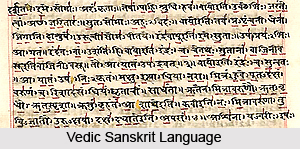
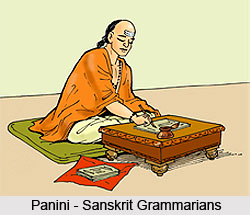
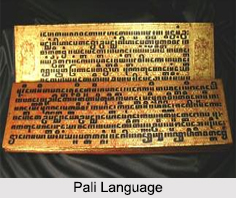
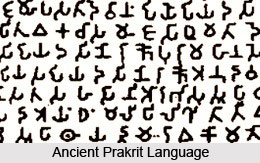
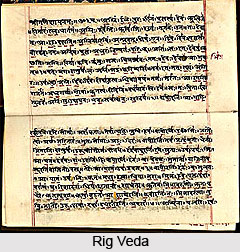
 Sanskrit Language is a historical and outstandingly legend-borne Indo-Aryan language, which has since prehistoric times been considered as one of the liturgical languages of Hinduism and Buddhism. Classical Sanskrit, the period in which the language began to spread amongst the common masses, is the `standard register` as represented in the grammar of Panini, approximately around 4th century B.C.E. Its status in the societies and customs of South and Southeast Asia runs almost parallel with that of Latin and Greek in Europe and has profoundly charmed and determined most modern languages of Nepal and India. The pre-Classical form of Sanskrit is referred to as Vedic Sanskrit, with the language of the Rig Veda being the oldest and most antiquated stage preserved to this date.
Sanskrit language applies itself as a member of the Indo-Iranian sub-family of the Indo-European family of languages. Its nearest ancient kin comprise the Iranian languages Old Persian and Avestan. Within the more panoptic Indo-European language family, Sanskrit shares distinctive sound modulations with the Satem languages and also with Greek.
As regards with the origin of Sanskrit language in India, scholars and researchers stand once more in argument with the purpose of explaining common features shared by Sanskrit and other Indo-European languages. Many have proposed the `migration hypotheses` laying stress on the fact that the original speakers of what became Sanskrit arrived in what is presently India and Pakistan from the north-west, some time during the early second millennium B.C.E.
The earliest authenticated and documented Sanskrit texts comprise Hindu texts of the Rig Veda, which are hypothesized to be located in the Punjab region and dated to the mid-to-late second millennium B.C.E. However, written records of any kind from such an early period fail to survive. The oldest surviving Sanskrit grammar is Panini`s Astadhyayi, legendary for its meticulous yet sophisticated handling by such a calculative man, translated to English as "Eight-Chapter Grammar". The text is essentially a prescriptive grammar.
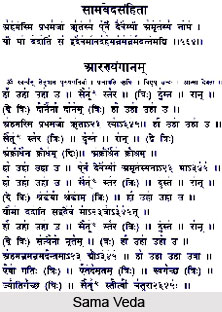 In this context of Sanskrit language and its ancient usage in India, the term "Sanskrit" was not looked upon as a definitive language sequestered from other languages, but rather as a specially polished or perfected style of speaking. Knowledge of Sanskrit was a an authentic stamp of social class and educational accomplishment in ancient India and the language was taught principally to members of the higher castes, through close scrutiny of Sanskrit grammarians as was Panini. Sanskrit, as the learned language of Ancient India, thus existed together with the Prakrits (vernaculars), which thus germinated into the Middle Indic dialects and eventually into contemporary modern Indo-Aryan languages.
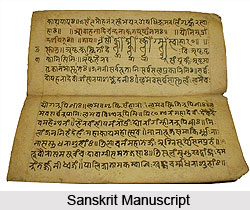 Origin of Sanskrit Language reveals that it is a member of the Indo-Iranian sub-family of the Indo-European family of languages. In the second millennium B.C Indo-European tribes had occupied some areas in Iran, Asia Minor and north-west India. On linguistic grounds the speech of Aryan group can be regarded as the precursor of the speeches of India and Iran. The oldest evidence of use of Indian Language is the Rig-Veda. The language used was formal and conventional.
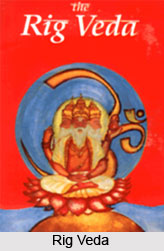 Development of Sanskrit Language hows that it has evolved out of the earlier Vedic form. The corpus of Sanskrit language and literature comprehends an enriched tradition of poetry and drama as also including scientific, technical, philosophical and Hindu religious texts. In contemporary times, Sanskrit continues to be extensively used as a ceremonial language in Hindu sacred rituals in the kinds of hymns and mantras. Sanskrit pronunciation is still in use in a few traditional institutions in India.
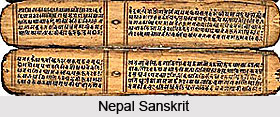 For almost 2000 years, a cultural order was in vogue that wielded influence across South Asia, Inner Asia and Southeast Asia and to a definite extent, East Asia. A noteworthy form of post-Vedic Sanskrit is determined in the Sanskrit of the Hindu Epics, the