Judicial Administration of Maharaja Ranjit Singh
Judicial Administration of Maharaja Ranjit Singh was both simple and crude at the same time. There was a system of pure and unmitigated despotism during the time of Ranjit Singh.

Share this Article:

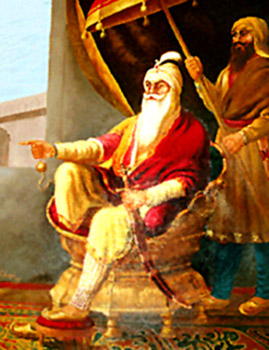
Maharaja Ranjit SinghJudicial Administration of Maharaja Ranjit Singh had no written laws. Judicial decisions were made in accordance with customary principles. The judicial procedure was crude and simple and no distinction was made between civil and criminal cases. The settlement of disputes rested with the Panchayat, which was like an arbitration court. The decisions of the Panchayats were revised by Kardars whenever they were not accepted by either party. In towns justice was administered by Kardars who decided important cases within their jurisdiction. In the cities, cases were decided by Nazim or by important Kardars. Sometimes separate officials were appointed to do only judicial work and they were known as Adaltis. A distinct court was set up at the capital known as Adalat-i-Ala.

Civil cases were of different kinds. Some of them were concerned with matrimonial matters while others were concerned with breaches of contract, sales on credit etc. Great importance was attached to the sworn testimony of witness. The government levied fees on the successful party. Civil cases concerning the landed property were decided on evidences obtained from records which were regularly kept in Qazi Khanas. As regards criminal cases, the infliction of capital punishments was reserved for the Maharaja himself. Punishment for murder or other physical injuries was meted out to offenders more often in the form of fine than bodily chastisement. Mutilation was employed in exceptional circumstances. The rigour of punishment depended upon the nature of the crime, the personal disposition of the Magistrate and the likelihood of his action being reported to the Maharaja. Though to all intents and purposes the judicial system of Ramjit Singh was crude and simple, it was suited to the social and political environments of the people of the Punjab. The abuse of authority by local officials was curbed in many ways.

Maharaja Ramjit Singh had established in Punjab a pure and unmitigated despotism. He transformed the Constitution of the Sikhs from an irregular commonwealth of a loose federal type into a military monarchy based on the personal rule. Under Ranjit Singh, the people of Punjab were governed in a manner which generally suited the existing state of the society.

Village life was not interfered with. Its local affairs were mostly in the hands of the Panchayats. Under Ranjit Singh the Sikhs achieved brilliant triumphs. The despotism of Ranjit Singh may be described as benevolent. He was not an alien ruler from the point of view of race and religion. Under his authority, the economic resources were fully utilised in the kingdom. During his rule the people of Punjab evolved a degree of law and order and entered upon a period of peace and prosperity which had not been enjoyed for several generations.


Share this Article:

Related Articles

More Articles in History of India


History of Uttar Pradesh
The state was the heart of Mahabharata war and the history of Uttar Pradesh is very much the history of India. The place finds its mentions in Hindu epics Ramayana and Mahabharata.
History Of Archaeology In India
History of archaeology in India contributes a lot to define the past history and the social life of India.
Mughal Architecture during Babur
Mughal architecture during Babur marked the foundation of a new architectural era in India, blending Timurid, Persian, and local influences. His reign emphasized garden design, notably the Charbagh layout, and modest yet elegant structures. As the first Mughal emperor in India who introduced this architecture during 16th century Babur’s creations reflected symmetry, functionality, and a deep appreciation for nature.
Princely State of Patdi
The Princely State of Patdi was one of the many princely states under the British Raj, ruled by local Kadva Patidar leaders under indirect British control. Known for its strategic location near the Little Rann of Kutch, Patdi played an important role in salt production and regional trade. Princely State of Patdi or Patri was incorporated as a part of the Baroda Agency, which was a sub division of Western India States Agency.
Architecture during Sayyid and Lodi Dynasty
Architectures during the Sayyid and Lodi dynasty were mainly the tombs and monuments for the dead rulers. It were carefully designed and meticulously constructed.
Brahmanical Sources of Ancient History
Brahmanical Sources of ancient history are contained in the Vedas and they constitute one of the most important literary sources of information about ancient India.
Female Education In British India
The over brimming enthusiasm among zealous Hindu reformers welcomed female education in British India.
Revenue System of Mauryan Empire
Revenue system of Mauryan Empire can be divided into eight categories. The principal revenue of the state was the land revenue, taxes from traders, artisans and professional taxes were also collected.
Mughal Architecture During Jahangir
Mughal architecture during Jahangir`s period was relative dull in comparison to that of Akbar dynasty.
Princely State of Satlasna
Princely State of Satlasna was amongst the former native states of India that was appointed as one of the Indian princely states during the early 19th century.
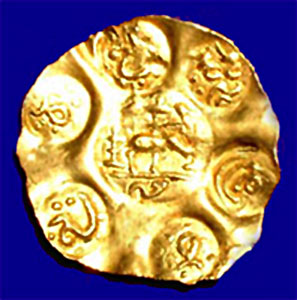
Coins of Chola Empire
Coins of Chola Empire were issued in gold, silver and copper and carried the Chola emblem.
Social Life during the Pala Period
Religious toleration and simple living were the characteristics of social life during the Pala period.
Coins of the Chalukya Dynasty
Coins of the Chalukya Dynasty was reintroduced in the South India after a brief break of coinage less period of nearly three century. Chalukyas issued coins only in gold and they exhibit a brilliant artistic skill of the engraver.
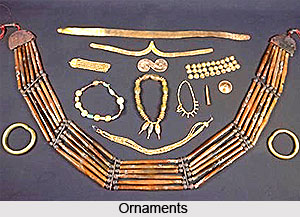
Costumes of Indus Valley Civilisation
Costumes of Indus valley Civilization have been considered as the basis for Indian clothes. Sophisticated ornaments and make up were used during that age.
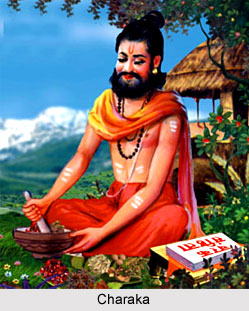
Development of Science under Gupta Empire
Development of Science under Gupta Empire was progressive and it had attained considerable perfection. Mathematics, astronomy, medicine, chemistry, physics and metallurgy were the most prominent of the sciences at that time.
Culture under Delhi Sultanate
Culture under Delhi Sultanate had enduring aspects to it. It included the society, the religious condition, literature and art and architecture of that period.
Princely State of Hapa
Princely State of Hapa was incorporated as a part of the Baroda Agency, which was under the administrative control of the Western India States Agency.
Economy Under Chola Dynasty
Economy under Chola dynasty was strong and well developed. The economic life of the people of the Chola Kingdom was well balanced with their social life.
Coins of Khilji Dynasty
Coins of Khilji Dynasty had an influential feature that was followed by the other dynasties.
Religion During Mauryan Dynasty
Religion during Mauryan dynasty became a considerable episode in Indian history with an esteemed lineage of rulers.