Introduction
 Sikar district, located in the state of Rajasthan, has a great historical past. The district headquarters is at Sikar city. Sikar district presents a good many facts for the tourists. Sikar is as much a part of Shekhawati as Jhunjhunu. It was the biggest Thikana (Estate) of the state of Jaipur. It lies on the highway 11, midway on route Bikaner to Agra. It is 116 kilometres away from Jaipur, 320 kilometres from Jodhpur 240 Kms from Bikaner and 301 Kms. from Delhi. Sikar was the capital town of the Thikana Sikar. The total population of the district is around 2287229. Further details about the Sikar district are furnished below.
Location of Sikar District
 Sikar district covers a total area of 7742.44 Sq.Kms. It lies between the longitudes of 74.44 degrees to 75.25 degrees, and the latitudes of East 27.21 degrees to 28.12 degrees north.
History of Sikar District
The primitive name of Sikar was `Beer Bhan Ka Bass`. In order to mitigate the enmity on account of the murder of Daulat Singh`s father Jaswant Singh, Bahadur Singh, the raja of Khandela gifted the village to Daulat Singh. He laid down the foundation stone of the fort on the raised ground of this village. Later on his son Shiv Singh who was a very strong and clever ruler, made a magnificent fort on it, and Sikar is still surrounded by high walls comprising of seven gates. Shiv Singh was the most prominent Rao Raja of Sikar. He developed the village into a beautiful town. It is surrounded by a strong boundary wall.
Geography of Sikar District
 The region has a rather hot summer and extremely cold winter. During summer the maximum temperature reaches 48 degree Celsius, while winter temperature dips to a minimum of 1 degree Celsius. The average rainfall received in the region is 45.98 cms. The best season to visit the district, when the temperature is most pleasant is between October and March.
Administration of Sikar District
 Administration of Sikar district is carried out by the District Collector who is the head of District administration here. There is one Additional District Magistrate who helps the Collector in discharging administrative duties.
Sub Divisions of Sikar District : Six Sub Divisional Officers (SDO`s) work at the sub division to provide administrative support at the local level. Sikar district has six sub-divisions which are: Sikar, Fatehpur, Laxmangarh, Dantaramgarh, Shri Madhopur and Neem Ka Thana.
Tehsils of Sikar District : There are six tehsil headquarters and one additional Tehsil and two sub Tehsil in this district. Each one has a Tehsildar or Nayab Tehsildar as the administrative officer, who works in accordance with the land-record system to serve rural farmers and land-holders. The tehsils of the district are: Sikar, Fatehpur, Laxmangarh, Dantaramgarh, Shri Madhopur and Neem Ka Thana. There is an additional tehsil at Ramgarh (Shekhawati), and a sub tehsil at Khandela and Palsana. A tehsil contains a number of Patwar-Mandals, each of which has a `Patwari` to serve the landholders and farmers at the village level.
Zila Parishad of Sikar District : Zila Parishad is an apex elected body which looks after and monitors the development works at the district level. Zila Pramukh is the head of the body. Chief Executive Officer and Additional Chief Executive Officer help the Zila Pramukh in the management of development works.
Blocks (Panchayat Samitis) in Sikar District : Sikar district is divided into 8 blocks (Panchayat Samitis) which are the developmental units. Each block has a BDO (Block Development Officer) who takes care of all development work at the Block level. Dhod, Piprali, Fatehpur, Laxmangarh, Dantaramgarh, Shri Madhopur, Khandela and Neem Ka Thana are the eight blocks of the Sikar district. Various development works and projects at the rural level (Gram Panchayat Level) are run through Block offices. One Gram Sevak is appointed at each Gram Panchayat to keep a record of the development works and to project required development works. `Gram Sabha` is organized at fixed intervals to discuss about the development of villages.
Tourism in Sikar district
Tourism in the district of Sikar revolves around the many ancient temples located here. Apart from being religiously significant, these temples also hold a great amount of historical importance due to the time and circumstances of their construction. The various places of tourist interest here include Ganeswar, Jeen Mataji Temple, Harshnath Temple and the Khatushyamji Temple.
Pilgrimage Tourism in Sikar District
 Pilgrimage tourism in Sikar district comprises visiting the various ancient temples located here. The temples here not only have significance for being religious monuments, but they also have a long history behind their establishment and construction. Legends associated with the temples date right back to the ancient times of the Mahabharata as well as the reigns of ancient Kingdoms. Ganeswar, which is located here, doubles as a picturesque picnic spot apart from being a place of pilgrimage. The various places of pilgrimage tourism in the district of Sikar are discussed below.
Khatushyamji Temple : Khatushyamji is located 65 Km. away from Sikar and 80 Km. from Jaipur via Reengus.
This little village is famous for the Shyamji Temple built completely in white marble. Ponds for holy dip and Shyam garden is worth visiting. The legend of this immensely popular temple of Lord Krishna can be traced back to the time of the Mahabharata when Barbareek the son of great the Bhim from the Pandavas of Mahabharat, was asked to sacrifice his head for charity, because otherwise the victory of the Pandavas would not be possible since he possessed the Teen Bans given to him by Lord Shiva. His head was buried at Khatu, where the king had a dream and was inspired to construct a temple and place the head in a religious manner. To this date, devotees believe that they will be blessed by just pronouncing his name from the bottom of their heart with true `Samarpan.` The devotees from all around the world visit this pilgrimage temple at the time of the mela in the Falgunsudi Ekadasi (Kartik) month. The temple today is run by trust and the offerings of the devotees are for the Kripa which the god bestows on his devotees.
Ganeswar : Ganeshwar and Baleswar are both situated 15 kms away from Neem ka Thana on different roads and 80 km. from Sikar via Udaipurwati. Ganeshwar is a pilgrimage as well as a salubrious picnic spot. The hot sulphur springs here are a major draw.
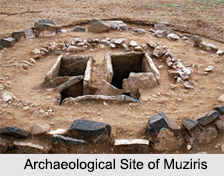
 A dip in the spring, it is believed, cures skin diseases. It is an ancient site. Excavations in the Ganeshwar areas have revealed the remains of a 4000 year old civilization. Close by is Baleshwar, yet another site worth visiting. Found here is and old temple dedicated to Lord Shiva, along with some water bodies surrounded by the Aravalli mountain ranges.
Jeen Mataji Temple : Jeen Mata temple is 30 Kms. away from Sikar. There is an ancient Temple dedicated to Jeen Mata (Goddess of Power). It is said that this temple was built a thousand years ago. Lacs of devotees congregate here every year in the month of Chaitra and Ashwin at the time of Navaratra fairs. There are a number of Dharamshalas to accommodate large number of visitors. Legend has it that Jeen is the daughter of King Ghangh and an Apsara that he is believed to have loved and married. The Apsara fled the palace where she used to stay with her two children, and the place where she abandoned them is the site where the temple now stands. It was a ruler of the Chauhan dynasty who built the temple at that place. Goddess Jeen Mata is the Devi herself, the very embodiment of divine cosmic power. The deity is Mahishasura Mardini Durga. Here Jeen Mata is worshipped in her eight-armed form. The temple has been constructed in the style of architecture adopted by Pratihar and Chauhan clans of Rajputs. There are twenty four pillars with panels of figures finely carved on them. The main temple has a very high Shikhar (pinnacle) in the midst .This is a unique temple from every point of view. It is believed that the Pandavas of Mahabharata during their exile from Hastinapur came to the thick forests of this place where they spent their period here incognito. The place has acquired a great religious importance and is held sacred by all. Nestled amongst the high Aravalli hills, the idyllic surroundings lend this sacred place a natural grace of serenity and lush green vegetation with fauna and flora.
Harshnath Temple : Harshnath Temple is 14 kms away from Sikar. It is an ancient site famous for the ruins of an old Shiva Temple believed to have been constructed sometime in the 10th century. The temple is located high on the hills of the Aravalli mountain range. The architectural display of the old temple is breathtaking. There is another Shiva temple found here, built by Shiv Singh of Sikar in the 18th century.
These are the various places of pilgrimage tourism located in the district of Sikar.