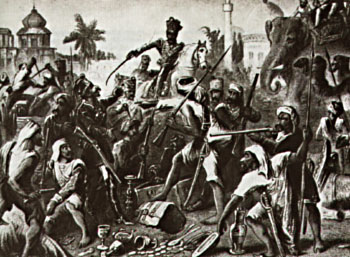
 The condition of the peasants under the British rule had been a prime cause of sepoy mutiny in India. During the early part of the nineteenth century, land was of major importance to almost all the people of the Indian soil because most of them depended on cultivation for their subsistence. The main reason, which led to a deep-rooted dissatisfaction within the farmers, was that they had to pay a tribute in the form of rent to the British government for the land, which they tilled themselves. An important feature of the British period was that there was more of agricultural land than the number of cultivators to cultivate it.
During this time that is in the year 1833, the British Government had decided that it would extract two-thirds of the economic rental value of the land with the help of settlement officials. As a result, the land proprietors were ready to give land on rent to the non-proprietors at the same rate of the revenue that they paid to the government officials. Moreover the condition was such that major portions of the land were transferred to the moneyed class who came to be known as Mahajans. On the other hand the mediocre or the ordinary landlords found it difficult to match with the demands of the British and consequently they had to carry forward their interest payments till the next harvest which escalated in leaps and bounds with passing time. Moreover it can be said that during the British reign the conditions of the farmers were such that they experienced an alienation from their land and the source of their alienation was the uprising of a new class known by the name moneylenders. At the same time it can be said that it was during the British rule agriculture started becoming commercialized. Interference of the money lenders made the backward agricultural regions commercialized in nature. Some historians are of the opinion that the emergence of the new money lending class was the route to all the uprisings that took place in the Indian soil in and around 1857.
None of the agriculturalists wanted to give revenue to the British governments and they protested accordingly. For instance, sixteen large Jat villages of the Naultha district protested against the revenue system. They forcefully ousted the government officials from the village. The members of the villages had joined the disturbance of the Rohtak district and had visited Delhi. They had also threatened that continuation of such an activity will make them attack the Collectors Office. Nineteen other villages from the Bhalsi and the Korana district also rioted and attacked the government establishments. All these happened because the majority farmers refused to pay the rent. Even the Gujjars were not far behind and they plundered about in the country.
Not only the revenue system did originate massive protests against the British but it also created an enmity between the Jats, the Gujjars and the other classes. The clash which had taken place between the two communities was mainly due to the rivalry regarding the ownership of land. Especially, the zamindars, of various regions could not easily accept the fact that the ownership of their lands would be bestowed on the British government in reality.
Discontentment within the peasant class gradually took a huge size and a number of rebellions took place in various regions of the Indian sub-continent. The peasant class had brought about rebellion against the British because they wanted to protest against the alienated conditions to which they were subjected to by the British government. They wanted to maintain the ownership of their land and could not accept the supremacy of the money lenders.