 The acceptance of the Mountbatten Plan regarding the partition of India and its implementation resulted in inevitable consequences. The major problem faced due to partition was the Division of the Indian Armed Forces. According to the partition of India, both the Congress and the Muslim League insisted that they must have their own armed forces under their control before 15 August. Thus the Indian Armed Forces were divided into two sets of armed forces. According to Baldev Singh, the Defence Minister, put forth that following the decision to partition the country, the Army had to be divide and the reconstitution to be done. The division included the breaking up of battalions, regiments, installations, training institutions.
The main problem regarding the division of the Indian armed forces was the question whether the division should be on a communal or on a territorial basis. Kripalani, the Congress President and Jinnah considered the division connected with that of nationality. Thus, the division was done on the basis of citizenship and which in turn was based on geographical considerations. In addition to that an opportunity was provided to those who belonged to the minority community in a particular Indian region. They were given the opportunity to transfer their citizenship and residence to the other part.
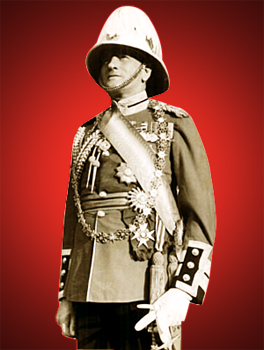
However, the Partition Council decided that from 15th of August the Indian Union and Pakistan would each have within its own territories forces under its own operational control. The forces would be composed predominantly of non-Muslims and Muslims respectively. In addition to that the Partition Council`s decision concerned the splitting up of the three services of the armed forces and the establishment of separate headquarters in India and Pakistan. This was done so that they might be in a position to take over their respective commands on 15th August. The existing armed forces that had to be sorted out had to remain under a single administrative control. The task of division of the armed forces was undertaken by Field Marshal Commander-in-Chief, Sir Claude Auchinleck. He was re-designated as Supreme Commander from 15th August. In turn, he worked under the direction of the Joint Defence Council, of which Lord Mountbatten was Chairman, and the Defence Ministers of India and Pakistan. This Joint Defence Council continued to function till 1st April 1948. However, the Supreme Commander ceased to be a member of it from 1st December 1947 as his post was abolished.