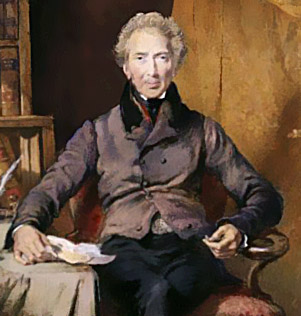
 Sir John Shore (1751-1834), who was the chief revenue adviser during the reign of Warren Hastings, became the Governor General of India during 1793-1798. Being in power, Shore introduced most of the reformations in the revenue administration between 1786 and 1790 AD.
After coming in India in 1768, Sir John Shore was appointed as a novice in the English East India Company. He also worked in the Secret Political Department of the company. Sir John Shore succeeded Cornwallis and was interested in the conservation of the Company"s power and not in its exten¬sion. The affairs of the East India Company were well settled at this time with its vast resources, sound finances, devoted allies, humbled enemies and disciplined forces.
During the governorship of Sir John shore, Tipu Sultan of Mysore was a much feared name for the British. The governor, however, maintained friendly terms with him but Tipu"s relations with the English deteriorated after 1795. Rumours spread that he was preparing for war. He was in touch with the courts of Hyderabad and Poona for an offensive alliance against the English and was preparing to build a league with Tipu to destroy British power. These reports perturbed the Governor-General who believed that the losses of 1792 had only moderated the hostility of Tipu which might be roused to a just resentment over the wrongs suffered by him if an opportunity presented itself. Sir John Shore observed that the ambition of Tipu has more and stronger motives for action than that of the Marathas. British suspicions were further increased by the rapid economic recovery of Tipu"s dominions and the Company"s own unsatisfactory military position in the Deccan. The revolu¬tions in Poona, the imprisonment of Azim-ul Umrah and the increas¬ing influence of the French at Hyderabad had tilted the balance of power in favour of Tipu.
During this time, Sir John Shore took some certain measures. He ordered the Company"s troops to be prepared for war, and dispatched them to certain strategic points. He sent reinforcements from Bengal and instructed the Madras Government in detail over the course of action to pursue. Sir John Shore took another step to frighten Tipu. He sent a joint note signed by all the three confederates complaining of his military preparations and calling for an explanation. Due to his concern about the common people and the importance of decisiveness he showed towards the East India Company, in 1793, he was elected as the Governor General of India.
After enthroning the position of Governor General of India, Sir John Shore always tried to avoid hostilities and some measures were taken to ward off the wars. Moreover, his service as an honest, dedicated and just man was remarkable and he was revered for his utter candour for the company and his job.