Royal Indian Navy Mutiny, Indian Independence Movement - Informative & researched article on Royal Indian Navy Mutiny, Indian Independence Movement
  Indianetzone: Largest Free Encyclopedia of India with thousand of articles History of India


in  
Art & Culture | Entertainment | Health | Reference | Sports | Society | Travel
Forum  | Free E-magazine
History of India : Sources of History of India l Ancient History of India l Medieval History of India l Modern History of India l Indian Historical Dynasties l Indian Battles l Sepoy Mutiny 1857 l Indian Rulers l History of India l Indian Freedom Struggle l Indian Governor- Generals l British Indian Acts l Post Independence India l Iron Age in India
Home > Reference > History of India > Indian Freedom Struggle > Royal Indian Navy Mutiny
Royal Indian Navy Mutiny, Indian Independence Movement
Royal Indian Navy Mutiny is referred to the widespread strike which was organised by the sailors of the Royal Indian.

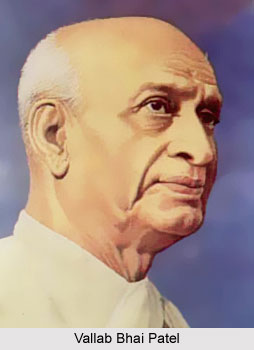
Vallab Bhai PatelThe Royal Indian Navy Mutiny or the Bombay Mutiny was the revolt of the Indian sailors. The sailors who belonged to the Royal Indian Navy on board ship and shore establishments at Bombay harbour went for a strike and organised a mutiny on 18th February 1946. The whole mutiny involved 78 ships, 20 shore establishments and 20,000 sailors. This revolt subsequently came to be known as the RIN revolt. It started as a protest against their general conditions.

The immediate reason for the outbreak of the mutiny was their pay and food. In addition to that there were more elementary matters such as racist behaviour by Royal Navy personnel towards Indian sailors, and disciplinary measures taken against the sailors who demonstrated nationalist sympathy. The R.I.N revolt started electing a Naval Central Strike committee, Signalman M.S Khan and Telegraphist Madan Singh were elected as the President and Vice-President respectively.

The Royal Indian Navy Mutiny was widely supported by the Indian population. The one day strike spread to other cities from Bombay and the Royal Indian Air Force and local police forces also joined this mutiny. Furthermore, in Madras and Pune, the British garrisons had to face revolts within the ranks of the Indian Army. The mutinying ships hoisted three flags which were tied together those of the Congress, Muslim League, and the Red Flag of the Communist Party of India (CPI). The flags signified the unity and demarginalisation of communal issues among the mutineers.

The Royal Indian Navy Mutiny was called off following a meeting between the President of the Naval Central Strike Committee (NCSC), M. S. Khan, and Vallab Bhai Patel of the Congress. Vallab Bhai Patel was sent to Bombay to settle the crisis. Thus, Patel put forth a statement calling on the strikers to end their action. Mohammed Ali Jinnah on behalf of the Muslim League also supported the statement of Patel. As a result, the strike ended and in spite of assurances of the good services there were widespread arrests of the Congress and the Muslim League. Furthermore, there were incidents of courts martial and large scale dismissals from the service. However, after independence none of the dismissed returned into either of the Indian or Pakistani navies.
(Last Updated on : 19/09/2011)
  More Articles in Indian Freedom Struggle
 
Home Rule Movement in India Struggle in Kashmir Women in Indian Freedom Struggle
Non Cooperation Movement Civil Disobedience Movement Quit India Movement
Indian National Army Kashmir Crisis Cabinet Mission
Indian Independence Act 1947 Wavell Plan,1945 The Round Table Conference
Swadeshi Movement Swaraj Party Nehru Report
Jinnah and his 14 points Provincial elections Simla Conference
Lahore Resolution Provincial Elections of 1936-1937 Kakori Train Robbery
Partition of India Provincial Elections during British India, 1946 Lucknow Pact
Demand for Purna Swaraj Amery`s Proposal Royal Indian Navy Mutiny
Causes of Indian Nationalist Movement Satyagraha  
Recently Updated Articles in History of India
  • Mughal Architecture
    Mughal architecture is a combination of Islamic, Persian, Turkish and Indian architecture. It is a style that was developed under the Mughal dynasty in the sixteenth and seventeenth centuries.
  •  
  • Mansabdari System in Mughal Dynasty
    Akbar introduced the Mansabdari System in the Mughal army which primarily meant the ranking of officers on decimal system.
  •  
     
  • Deccan Policy of Mughal Dynasty
    Deccan Policy of the Mughal dynasty was weak during the reign of Babur and Humayun but after the accession of Akbar on the throne, the political situation changed and the Deccan policy was a success.
  •  
  • Coins of Pandyas
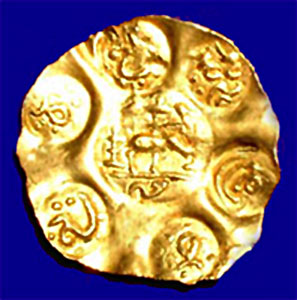
    Coins of Pandyas bear the legend of different Pandya ruler in different times.
  •  
  • Art and Architecture of Mughal Empire
    Art and architecture of Mughal Art offers an aesthetic degree to all art lovers. The subtlety of the finesse and the dazzle of the aura create huge amount of interest among tourist.
  •  
    E-mail this Article | Post a Comment
    RSS Feeds
    Forum
    Forum on History of India

    Free E-magazine
    Subscribe to Free
    E-Magazine on Indian Crafts
     
     
    Royal Indian Navy Mutiny, Indian Independence Movement - Informative & researched article on Royal Indian Navy Mutiny, Indian Independence Movement
    Sitemap
    Contact Us   |   RSS Feeds
    Copyright © 2008 Jupiter Infomedia Pvt. Ltd. All rights reserved including the right to reproduce the contents in whole or in part in any form or medium without the express written permission of Jupiter Infomedia Pvt. Ltd.