 Lucknow Pact is an agreement that took place between Indian National Congress and Muslim League in 1916. The Congress and the League held their annual sessions simultaneously in Lucknow. The falling out of the Congress and differences of views between the extremists and the moderates was posing a problem within the committee. An agreement was reached between the Congress and the League in regard to the representation of Muslims in the various legislative councils. It was embodied in the scheme of reforms prepared by the Indian National Congress and the All-India Muslim League. It provided for the representation of Muslims through separate electorates.
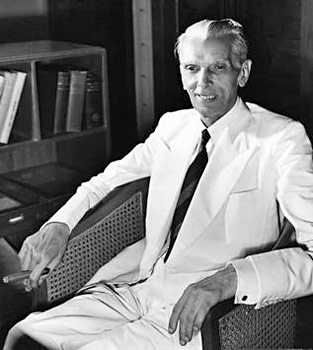
Muhammad Ali Jinnah, a member of the Muslim League negotiated with the Indian National Congress to reach an agreement in order to pressurise the British Government to have a more liberal approach towards India. They were of the opinion that the Indians should get more authority to run their country. However, it was a policy for the Muslim League as it was established to preserve Muslim interests in India.
The Lucknow Pact also manifested the establishment of cordial relations between the two prominent groups of the Indian National Congress: the extremists led by Bal Gangadhar Tilak, and the moderates led by Gopal Krishna Gokhale. The Imperial Legislative Council was of the provision that one-third of the Indian elected members should be Muslims elected by separate Muslim electorates in the several provinces in the proportion, in which they were represented in the provincial legislative councils by separate electorates. This was subjected to two conditions such as: no Muslim should participate in any of the other elections to the Imperial or provincial legislative councils, except those by electorates representing special interests like landholders, universities, and that no bill, nor any clause thereof, nor a resolution introduced by a non-official member affecting one or the other community should be proceeded with if it were opposed by three-fourths of the members of that community in the particular council, Imperial or provincial.
The main clauses of the Lucknow Pact were:
•There shall be self-government in India.
•Muslims should be given one-third representation in the central government.
•There should be separate electorates for all the communities until a community demanded for joint electorates.
•System of weightage should be adopted.
•The number of the members of Central Legislative Council should be increased to 150.
•At the provincial level, four-fifth of the members of the Legislative Councils should be elected and one-fifth should be nominated.
•The strength of Provincial legislative should not be less than 125 in the major provinces and from 50 to 75 in the minor provinces.
•All members, except those nominated, were to be elected directly on the basis of adult franchise.
•No bill concerning a community should be passed if the bill is opposed by three-fourth of the members of that community in the Legislative Council.
•Term of the Legislative Council should be five years.
•Members of Legislative Council should themselves elect their president.
•Half of the members of Imperial Legislative Council should be Indians.
•Indian Council must be abolished.
•The salaries of the Secretary of State for Indian Affairs should be paid by the British Government and not from Indian funds.
•Out of two Under Secretaries, one should be Indian.
•The Executive should be separated from the Judiciary.
Lucknow Pact
Lucknow Pact, 1916 was an agreement that took place between two major Indian parties: Congress and Muslim League.