


 Theatre personalities of ancient India enabled India to gain a unique articulate dimension amidst the artistry of Indian theatre and drama. Theatre in India is as old as the culture of India and quite ideally therefore the deep-rooted relation between Indian tradition and Indian drama has given birth to a number of eminent personalities in Indian theatre. India therefore boasts its glorious association with all the well known theatre personalities who has further reshaped and redefined the age old ethnicity of India in the most coherent way. The copious saga of Indian drama holds the fact that it is in the ancient age of the Vedic era the contour of Indian drama was delineated for the very first time. Theatre personalities of ancient India enabled India to gain a unique articulate dimension amidst the artistry of Indian theatre and drama. Theatre in India is as old as the culture of India and quite ideally therefore the deep-rooted relation between Indian tradition and Indian drama has given birth to a number of eminent personalities in Indian theatre. India therefore boasts its glorious association with all the well known theatre personalities who has further reshaped and redefined the age old ethnicity of India in the most coherent way. The copious saga of Indian drama holds the fact that it is in the ancient age of the Vedic era the contour of Indian drama was delineated for the very first time.
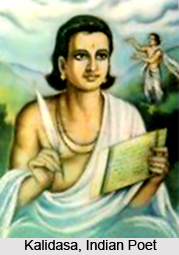
One of the most eminent personalities in Indian theatre of the ancient age was 'Bharat Muni' who was the author of the 'Natya Shastra' which is still reckoned as the well accepted doctrine on Indian drama. In Natya Shastra for the very first time Bharat Muni prefaced the term 'Roopaka' - the interpretation and depiction of the realisms of life in a rather subtle way. The beginning of theatre in ancient India has been graded as the result of the religious ritualism of the Vedic era and the personalities in Indian Theatre like the Bharata, Asvaghosa and Kalidasa carried Indian theatre to the next level of maturity. Bharata Bharata Muni was an age old Indian writer and was one of the towering personalities in Indian theatre. His creation Natya Shastra which is still regarded as the principle of Indian drama has actually redefined the very artistry of Indian art form during that era. In the thirty six chapters of his encyclopaedic works Bharata classified Sanskrit theatrical forms while adding a novel meaning to the terms like 'Natya' and Roopaka. Bharata is considered as the father of Indian theatrical art forms and was the first to structure a particular system of thought in Indian theatre. Kalidasa The method which was introduced by Bharata Muni in regard to Indian drama and theatre was further nurtured by Kalidasa who was indeed one of the great personalities in Indian theatre. 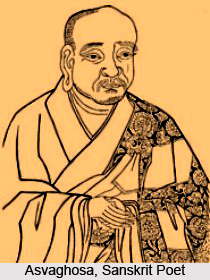 The eminent Sanskrit poet was an ardent worshipper of Shiva and quite ideally therefore most of his writings, plays, dramas and poetries reflect that deep fervour of Hindu mythology and philosophy. In the ancient age Indian theatre was mainly laced with the heroic deeds of the celestial characters and Gods and Goddesses and Kalidasa ideally echoed this very concept amidst his literary works. 'Malavikagnimitram', 'Abhijnanasakuntalam' and 'Vikramorvasiyam' are some of his well accepted plays which for the first time added that fanciful beauty, humour and poetic dimension to Indian theatre. It is in the hands of Kalidasa the 'Nine Rasas' of life gained an eloquent utterance which further aided Indian theatre to stand apart with pride even in that ancient era. The eminent Sanskrit poet was an ardent worshipper of Shiva and quite ideally therefore most of his writings, plays, dramas and poetries reflect that deep fervour of Hindu mythology and philosophy. In the ancient age Indian theatre was mainly laced with the heroic deeds of the celestial characters and Gods and Goddesses and Kalidasa ideally echoed this very concept amidst his literary works. 'Malavikagnimitram', 'Abhijnanasakuntalam' and 'Vikramorvasiyam' are some of his well accepted plays which for the first time added that fanciful beauty, humour and poetic dimension to Indian theatre. It is in the hands of Kalidasa the 'Nine Rasas' of life gained an eloquent utterance which further aided Indian theatre to stand apart with pride even in that ancient era.
Asvaghosa Not only as a great Sanskrit poet Asvaghosa was also a renowned philosopher who for the first time blended the charming essence of Buddhist philosophy in the Indian theatre in his own stylized way. Asvaghosa's three classic works 'The Buddha Charita', 'Soundarananda' and the 'Shariputra' are not only the examples of his creativity, scientific and rational approach and his interpreting mind but these works also helped in redefining the cultural artistry of Indian drama. Bhavabhuti Bhavabhuti was an ancient scholar who belonged to the 8th century and he was reputed for his creative works which included plays and poetry which were composed in the Sanskrit language. His creations are often compared to those of Kalidasa and his real name was 'Srikantha Nilakantha'. He is said to have rendered his services as the court poet of King Yashovarman of Kanauj. 'Uttararamachatira' which is a play portraying the coronation of Rama, etc., 'Mahaviracharita' or the 'Story of the highly courageous', and 'Malatimadhava' are some of the plays written by him. Bhasa Bhasa is amongst the oldest theatricians of ancient India and he had composed plays in the Sanskrit language. However, most of his plays cannot be traced presently and he lived during the 2nd century BCE and 2nd century CE. Some of his plays involve 'Duta-Vakya', 'Urubhanga', 'Panch-Ratra', 'Karna-Bhara', 'Abhisheka-Natka', 'Duta-Ghattotkacha', 'Madhyama-Vyayoga', 'Harivamsa' or 'Bala Charita', 'Kama Bhara' and so on. Some of the plays composed by Bhasa has been modified by a professor at National School of Drama, as well as a theatre director who is credited for directing Bhasa's dramas like Urubhanga or 'The Broken Thigh' and 'Madhyamavyayoga' or 'The Middle One' in Hindi language. Theatre in ancient India was thus an elegant and religious form of expression. Although started as a crude narrative art form, theatre in ancient India gradually incorporated song, mime, dance and 'Natya' coupled with the artistic gifts from the great personalities in Indian theatre to illustrate the elegiac diction into Indian Natya. |
| |||



Home > Movies & Entertainment > Indian Drama & Theatre > History Of Indian Theatre > Theatre Personalities of Ancient India
Theatre Personalities of Ancient India
| Theatre personalities of ancient India have made an enormous contribution to the sphere of Indian drama since the remote past. |
| ||||||||||||||||||||||||||||

