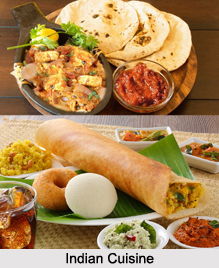
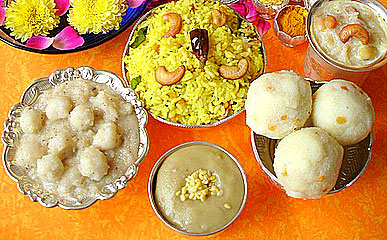
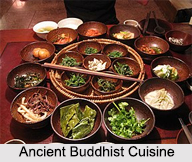
 Indian Food has been constituted depending on the percepts of Ayurveda. Ayurveda is the science of life as a whole and has much influence on the choice and style of food in India. According to this ancient Indian science of life the parameters of Indian food include taste (rasa), aftertaste (vipaka), potency (virya) and guna or property (hot-cold, heavy-light, and oily-dry). The realm of Indian Food is composed as all the components included turn their effect on the hormonal balance (dosha) of a human body.
Rasa in Indian Food is an indispensable part of the cuisine of the country. Rasa or taste is the keystone of Indian dietetics. It is mentioned that there are six rasas namely: sweet (madhura), sour (amla), salty (lavana), pungent (katu), bitter (tikta) and astringent (kasaya). Ayurveda cites that each of these tastes consist a combination of two of the five basic elements. The five essential elements in the universe are earth, water, fire, air and ether, and these pairs when combined have essential effect on the human body.
It is being observed that among the different Rasa in Indian Food, the sweet taste or madhura, constitutes a combination of earth and water. According to science of body, the sweet taste helps in building of body tissues. Moreover, these body tissues are themselves made from earth and water. The dosha kapha is also made up of earth and water, and it is believed that a sweet-tasting substance will strengthen this dosha. Whereas, this sweet-tasting substance weakens the dosha pitta which is made from the single element fire and the dosha vata is made from air and ether.
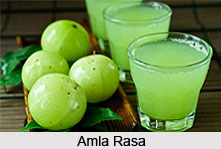
A sour substance made of earth and fire is another vital portion of the Rasa in Indian Food. This sour (amla) Rasa also similarly strengthens the kapha and pitta doshas, but weaken vata. It is also observed that the final outcome depends on the interaction of the elements which is present in the six tastes and in the three doshas in the body. Another fundamental idea inferred or derived from this specific instance is that of after taste or vipaka. This Rasa in Indian Food is left just after digestion. Further, the six original mouth tastes are reduced to just three after the process of digestion. Moreover, sweet and salt tastes both become sweet. Pungent, bitter and astringent tastes of another Rasa in Indian Food together turn into a pungent vipaka. Whereas, sour taste remains sour and a sweet vipaka strengthens kapha attributes, a pungent aftertaste vata qualities, and a sour vipaka will boost pitta characteristics.