 Vaishnava Sampradayas are the four principal disciplinal lineages within the Vaishnavites. Each Sampradaya is represented by a particular Vedic persona. These four sampradayas abide by dissimilar philosophical systems concerning the relationship between the soul (jiva) and God (Vishnu or Krishna) in an extremely subtle manner.
Origin of Vaishnava Sampradayas
The Padma Purana also stated that there existed four Vaishnava Sampradayas, enhancing the esteemed association of Vaishnavism with novel principles and aspects. The divisional system was inaugurated by Sri, Lord Brahma, Lord Rudra, one of the four Kumaras. According to scriptural sources from historians, the bunch of Lords had made an appearance in the hallowed place of Jagannatha Temple in Puri and had purified the whole earth during Kali Yuga. Sri chose Ramanuja to represent her disciplinal succession in Lakshmi Sampradaya. Similarly, Lord Brahma chose Madhvacharya in Brahma Sampradaya, Rudra chose Vishnuswami in Rudra Sampradaya and the four Kumaras chose Nimbaditya (Kumara Sampradaya or Nimbarka Sampradaya).
Four Vaishnava Sampradayas
The four Vaishnava Sampradayas can be listed as below:
Lakshmi Sampradaya
Brahma Sampradaya
Rudra Sampradaya
Kumara Sampradaya
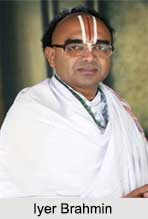
Lakshmi Sampradaya: Also admired and popular as Sri Sampradaya or Sri Vaishnavism, this section`s origin can be dated back to approximately 10th century. This wholly embraces the Philosophy of Vishishtadvaita or "qualified non-dualism" and was espoused by Ramanujacharya. Lakshmi Sampradaya"s formation is connected to a compilation of devotional hymns and songs by Alvars that was co-ordinated by Nathamuni. Nathamuni here is considered as the first guru of this foremost Vaishnava Sampradaya. He was succeeded by Yamunacharya, a distinguished personality and teacher of Ramanujacharya. Within Lakshmi Sampradaya, Vishnu is believed to be the basis of all avatars. The name of the tradition had originated from Sri, which is considered as another name of Goddess Lakshmi. Two dissimilar Tilak are worn by the representative of two different sects within the Sri Sampradaya, following Ramanujacharya. Ten-galais and Vada-galais are the two separate markings, both assigning the markings to the footprint of Lord Vishnu on the forehead.
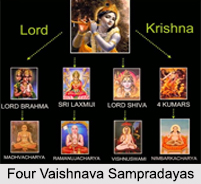 Brahma Sampradaya: The second Vaishnava Sampradaya in the division, Brahma Sampradaya refers to the disciplinal succession of gurus initiating with Brahma. This possesses the Philosophies of two thinkers, who in turn had presented two separate thoughts. Dvaita or "dualism" was espoused by Madhvacharya and Achintya Bheda Abheda or "inconceivable difference and non-difference" was espoused by Chaitanya Mahaprabhu. A number of worldwide religious movements go by this line of thinking, including ISKCON, an offshoot of Gaudiya Vaishnavism. Followers of Brahma Sampradaya believe that Vedic knowledge has come down wholly from Brahma. In the Vedic creational theory, these sampradayas had commenced at the creation of the universe and outlasted till the present moment.
Rudra Sampradaya: Rudra Sampradaya is one of four Vaishnava Sampradayas, a custom of disciplinal succession in the religion. They religiously adopt the Philosophy of Shuddhadvaita or "pure non-dualism" that was espoused by Vishnuswami and Vallabhacharya. In spite of Vishnuswami being ascribed as the creator of Rudra Sampradaya, yet, the Sampradaya is alleged to have traced its origins to Lord Shiva, also known as "Rudra". Lord Shiva had passed on the knowledge imparted to him by Vishnu (or Krishna) to humanity. According to Vaishnavism, Shiva, who possesses the Shaivism School consecrated to his worship as the Supreme, is the first and foremost Vaishnava or follower of Vishnu. The notions of this Vaishnava Sampradaya were further disseminated by Vallabhacharya. Rudra Sampradaya is further subdivided into two basic sects: Vishnuswamis, or followers of Vishnuswami and the Vallabhas or Pushtimarg sect that was instituted by Vallabhacharya.
Kumara Sampradaya: Kumara Sampradaya is popular by several other names like; Nimbarka Sampradaya, Hamsa Sampradaya, Kumara Sampradaya, Catuh Sana Sampradaya and Sanakadi Sampradaya. They successfully embraces the Philosophy of Dvaitadvaita, literally standing for "duality in unity", that was espoused by Nimbarka. This faction is one of the four authorised Vaishnava Sampradayas according to the Padma Purana.