 Middle age in India was an era of great changes. Changes in civilization, changes in dynasties, invasion all mark the middle age in India as a transition between ancient times and the modern world. India in middle age experienced a colossal change. The explosion of the Muslims and Islamic faith made India the home to a series of Arab and Turkish empires.
Medieval history of India began with the Turkish conquests led by Mohammad bin Gazni. Mohammad Ghori then following his footsteps carried on the invasions in the Indian subcontinent. The year was 1192 and in the battlefield of Tarain, Mohammad Ghori overpowered Prithviraj Chauhan, the Tomar ruler of Delhi and did indite his name in golden letters in the rich timeline of Indian history. Then he took a leave from India and his deputy, Qutubudin reigned from 1206 to 1210. Qutubudin belonged to a family of slaves and the dynasty that he built was named as the Slave Dynasty. His successor Iltutmish carried forward the legacy during his rule starting from 1210 to1236. The lineage of Indian kings , namely, Khiljis, Tughlaqs, Sayyids and Lodis valiantly adopted the footsteps of the Slave rulers. This period is known as the Delhi Sultanate. They were popular in the medieval history for their valor and statesmanship. In 1526 AD, Babur defeated Ibrahim Lodhi of the Lodhi dynasty in the First Battle of Panipat, and established Mughal rule in India.
Middle age in India unfolds the great cycle of history whilst entailing echoing themes that continued to add diversity and complexity to the cultural matrix of India. Cultural infusion and assimilation supported in setting the Indian society in medieval period as a collation of a number of geographic and cultural units rather than a complete social unit. Social hierarchy remained somewhat constant during the middle age in India. The caste system teamed with the concept of the feudalistic rulers was introduced. Middle age in India ushered in the concept of Varna whilst offering societal dominance to Brahmans and Kshatriyas. Political unification and fragmentation teamed with the very idea of religious toleration and communal harmony marked the timeline of medieval India with a definite dimension. Religious beliefs, philosophical outlook and the cultural values during the middle age in India engrafted the seed of contemporaneity whilst paving the way of the very concept "Unity in Diversity".
Amusements during the middle ages in India consisted of theatrical entertainments, dances, performances and musical concerts. Though gambling was a popular pastime, animal fighting, wrestling and athletics was no less popular in the society and was in vogue both in towns and villages. Various festivals- religious and secular also provided amusement to the people. Festivals were celebrated by wearing new dresses and eating meat and drinking wine or `sura` and chewing betel leaf or `pan`.
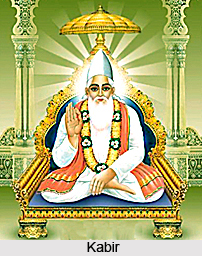
Medieval age in India was also illustrious by various social movements. These reformist movements attained considerable mass support and in the annals of history has been termed as `Bhakti Movement.` The reformist with their writings, verses, preachings and writings indeed played a great role in bridging over the emotional gap of the two predominant religions of India , Hindu and Muslim, This certainly helped the essential pluralistic trait of India to reemerge in the historical firmament. Hinduism, Islamic view, Jain view and the Buddhist view thus all amalgamated to add that desired contour to the Indian philosophy.
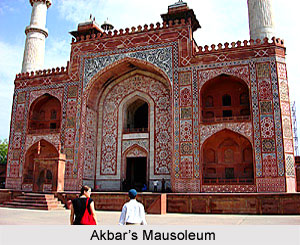
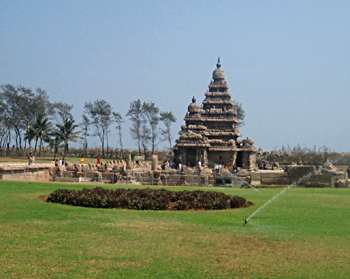
Though orthodoxy prevailed yet arts and architecture showed great development during the middle age in India. In the arena of paintings, miniature paintings were introduced during the Moghul era and authoritative biographies added glory to Indian literature. Baburnama by Babur himself, Ain-i-Akbari and Akbarnama by Abul Fazal are some of the examples of the vast body of biographies generated during middle age in India. Many regional languages like Hindi, Urdu, Marathi, Bengali, etc. also attained their distinct identities during middle age in India. The Indo Islamic architecture, the Indo Persian sculpture still stands as the specimens of wonders in the annals of the medieval history of India.
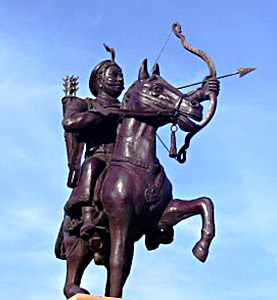
In warfare also change was witnessed in medieval India. Art of warfare, organisation of armies, size of armies were something during the Middle Ages that was taken up quite solemnly, resting importance on the consciousness of class division. The organisation of armies during the Middle Age in India was generally composed of feudal recruits. Battles were glorified during Middle Ages; hence the army equipments during middle age gained a total restructuring. The significance of defensive armour in the art of warfare in middle ages naturally increased. Indian Armies during the medieval period were also trained in the Secret warfare technique, which included identifying the treasonous elements in the forces of the enemy and attacking the portions of the enemy line. It also included instigating rebellion among enemy troops, especially by means of psychological warfare and methods of instilling terror in the enemy by means of ruses, assassins, occult practices, or elephants.
The history of medieval India unfolds the tale of gallantry and invasion. The timeline which started with Mohammad bin Gazni was ended by the British whilst ushering in the colonial era in India.