 Mauryan dynasty was that prestigious and venerated ancient realm, which can proudly call themselves the first ever potent and mastering empire to rule India triumphantly. And considering the time in which they ruled, with India still lingering in laid-back qualities and domains, the Mauryas were unusual in everything they acted. Indeed, everything they performed, touched or accomplished, turned into gold, with India shining under the incredible shadow of the Mauryas. Mauryan dynasty was initiated under the maverick Chandragupta Maurya, who had particularly risen with his utter intelligence and brilliancy to sublime heights to carry on his shoulders the terrible burden of ruling a country. Chandragupta Maurya`s successors after him, men like Bindusara and Ashoka did their ancestors absolute justice by making the Mauryan dynasty become known in international arena. Withstanding even the bravest of Roman or Greek empires, the Mauryas were influential enough to mould their countrymen according to their wish and whim. Assimilating umpteen aspects of everyday life under the Mauryan umbrella, religion during Mauryan dynasty was one considerable feature that had fetched pretty much attention from even the farthest Indian quarter.
While being extremely able administrators, paying meticulous attention to their subjects, the Mauryan rulers knew the key to unbeaten leadership. With economical ascent and political endeavours being vested and diffused upon every common capable man, the Mauryan dynasty were ardent God-fearing emperors, never for once deviating from the true line of ruling. Resorting to falsehood was not the order for these enigmatic menfolk, with religion and religious aspects and celebrations being followed zealously. In fact, religion during Mauryan dynasty witnessed the tremendous rise in faiths apart from Hinduism, like Jainism and Buddhism, with men like emperor Ashoka being in line. This flourishing in religion of the Mauryas, can also blindly be credited to Chandragupta Maurya, who had been decisive enough to make his subjects tow the line of faith and worship.
Emperor Chandragupta Maurya became the foremost significant Indian sovereign to kick off a religious renovation at the highest level when he had thoroughly espoused Jainism. During that sensitive time period, the orthodox Hindu priests attending to the royal court exceedingly objected to such a religious transformation. During his much matured age, Chandragupta had abdicated his throne and materialistic possessions to adhere himself with a nomadic group of Jain monks. Chandragupta had turned a disciple of Acharya Bhadrabahu. It is also supposed that in his last days, he had observed the rigid but self cleansing Jain ritual of santhara i.e. fast unto death, at Shravana Belagola in Karnataka. Religion during Mauryan dynasty, it can be evidently witnessed, always took a centre position, irrespective of age, time, place and status.
 However, Chandragupta Maurya`s successor, emperor Bindusara, strictly upheld Hindu traditions and remained cold and impassive towards Jain and Buddhist movements. Samprati, grandson of Ashoka even also had espoused Jainism. Samrat Samprati was profoundly charmed by the teachings of Jain monk Arya Suhasti Suri. He is believed to have erected 1,25,000 Jain temples traversing India. Some of them can still be witnessed in towns of Ahmedabad, Viramgam, Ujjain and Palitana. Unheeding of what people might think or state, religion was one aspect during Mauryan dynasty that had overshadowed even perhaps their reign and rules itself. It is also alleged that just like Ashoka, Samprati despatched messengers and preachers to Greece, Persia and middle-east for the circulation and acceptance of Jainism. Hence, Jainism had become a crucial force under the Mauryan Empire. Chandragupta and Samprati have also been acknowledged for spreading Jainism in South India. An astounding number of Jain temples and Jain stupas were sculpted during their reign. But due to dearth of royal benefaction and its strict principles, coupled with the ascension of Shankaracharya and Ramanujacharya, Jainism, once the principal religion of south India, declined miserably.
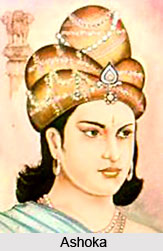
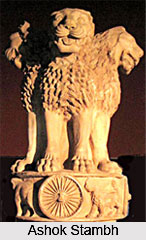
The picture in this Indian context was soon subject to change; religion during Mauryan dynasty was once more prepared to take a gigantic leap. When Ashoka embraced Buddhism, following the destiny-defying Kalinga War, he absolutely did away with expansionism and aggression. The harsher injunctions of Arthashastra pertaining to the use of force, demanding policing and pitiless measures for tax collection and against rebels were also completely abdicated. Ashoka despatched a deputation led by his son and daughter to Sri Lanka, where king Tissa was so carried away with Buddhist ethics that he espoused them himself and declared Buddhism the state religion. Ashoka, following this enthusiastic reply, sent many Buddhist deputations to West Asia, Greece and South East Asia. The emperor also had accredited the building of monasteries, schools and publication of Buddhist literature across his empire. The Mauryan emperor is conceived to have built as many as 84,000 stupas spanning India and he was incidental in increasing the wide-acceptance of Buddhism in Afghanistan. Ashoka helped in convening the Third Buddhist Council of India and South Asia`s Buddhist orders, near his capital. The Third Council had successfully undertaken incredible work of reform and expansion of the Buddhist religion.
A curious factor about emperor Ashoka is that while himself being a Buddhist, he had wholly kept back the membership of Hindu priests and ministers in his court. He had been capable enough to sustain religious freedom and permissiveness, in spite of Buddhist faith rising in popularity under his patronage. Religious zealousness, religious dependency was one coinage that had never been tracked towards a negative angle in Mauryan times. Religion during Mauryan dynasty was an overspreading and spontaneous overflowing of veneration, that had touched the simplest of society. Indian society gradually began sweeping up the philosophy of ahimsa. And given the amplified prosperity and improved law enforcement, crime and internal differences decreased drastically. Massively discouraged also was the consciousness of caste system and orthodox nepotism, as Hinduism began to assimilate the ideals and values of Jain and Buddhist teachings. Mauryan empire also encouraged social sovereignty, which began booming in an era of peace and prosperity.