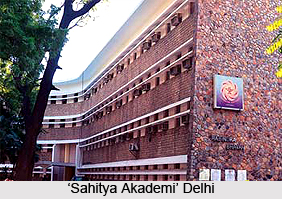
 Indian literary organisations aim to preserve and promote the indigenous literature of the country, which varies between the different Indian states, with the aide of numerous literary events and book launches. Indeed, the roots of such literary organisations in India standing for any given association which is absolutely dedicated to the mission of uplifting or upgrading or popularising the cause of Indian literature do possess their ancestry in the pre-Christian times of the Vedic period, from the times of Mahabharata or Ramayana. Some of the most important literary organisations of India include the Sahitya Akademi of Delhi, Asom Sahitya Sabha, Assam, The Poetry Society in Delhi, Kannada Sahithya Parishath in Karnataka and many more.
History of Indian Literary Organisations
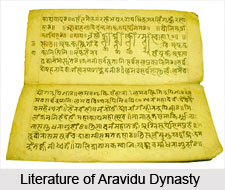
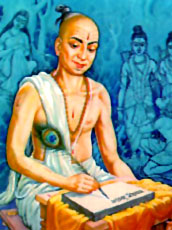
Indian literary organisations had probably commenced from the Vedic Age itself, with writers trying out to fill up the communication vacuity which might have existed due to geographical distance. The domain of Indian literature had started to take its first footsteps since the Vedic Age in the pre-Christian era, with the birth of written literature in India under the `rishis` or `sadhus`, who had been lending information from the `gurukul` to their disciples. However, in order to gift a rock solid life to such oral literature, written literature was a must which had to be formulated for the future generations to peek into the yesteryears of the highly charged and sophisticated literature in ancient India. However, the definition of Indian literary organisations does indeed owe their secured and guaranteed bloodline in the India from pre-Independence.
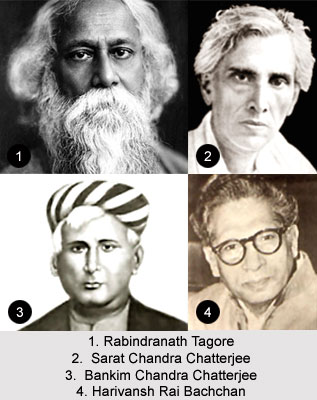
 The Indian Independence Movement was that blazing domain which had greatly provided impetus and boost to such literary organisations in India to write and popularise for a beneficial social cause, precisely for the welfare of the `natives`. The Indian subcontinent, under the domination and authority of the British, had given birth to a historic era of 200 years, which had witnessed the proliferation of an overwhelming number of freedom fighters and writers and authors, who were born for the sole cause of getting their country freed from English clutches. Consequently, besides the talented gentlemen who had sworn them as Indian nationalists: men who conceived that the sword was mightier than the pen, pre-Independent India also possessed that bunch of men who had conceived that the pen too was mightier than the sword. Such authors, all of whom were united for the cause of Indian freedom and `Swaraj`, had truly given life to memorable authorships and books, which are still highlighted for re-viewing a glorious India. In this Indian freedom movement context, the Indian literary organisations had assisted immensely.
With the advancement of time and the birth of a new India after 1947, the nation had much to accomplish in order to make its administrational base secure for the upcoming decades. However, amidst all such hullabaloo, India forever had remained fastened and protected in the form of Indian literature, which was giving birth to wondrous innovative concepts over and over. Therefore such Indian literary organisations also had begun to progress, now presenting themselves with more moneyed aims and solemn goals to make them acknowledged internationally.
Sahitya Akademi, Delhi
In this context of literary organisations in India, the Sahitya Akademi had and still do lead the exceedingly scenario of writers and their forum of excellence. The Akademi was set up by the Government of India on March 12, 1954, to promote and coordinate literary activities in all the Indian languages and to uphold through them the cultural unity of India. This Indian literary organisation was registered under the Societies Registration Act, 1860, from which period, exceptional book and their meritorious authors are awarded each year, amidst an international acclamation.
Asom Sahitya Sabha, Assam
The Asom Sahitya Sabha, a literary organisation in Assam has projected to establish a full-fledged academia to instill art, literature and culture amongst the youth of the North East of India. This organisation was established in December, 1917 in Assam aimed to propagate the local culture of Assam, throughout this Indian state and also to spread it outside the state. Its official headquarters is situated in Jorhat.
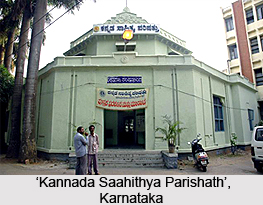
Kannada Saahithya Parishath, Karnataka
In south India, Kannada Saahithya Parishath is a Kannada literary organisation that was founded in 1915 in Bangalore. This non-profitable organisation promotes the Kannada language through publishing books, organising literary seminars. The annual conference on Kannada literature named, Kannada Sahithya Sammelana, is their sponsorship and bears a special significance on national basis. The president of Kannada Saahithya Parishath is a noted Kannada litterateur, chosen annually.
The Poetry Society, Delhi
The Poetry Society is present in Delhi and was set up in July, 1984. Its goal is to promote all kinds of poetries written by Indian authors, published in the nation and also supervises the interests of all Indian poets. This organisation translates their poems, publishes journals associated to these literary creations, conducts workshops and seminars, delivers lectures and grants awards to encourage the poets. Poetry competitions are also arranged by the members of this society.
Other Indian Literary Organisations
The numerous Indian literary organisations have valued the precious culture and literature of the nation and also do organise several motivating programmes to promote the heritage of India through pen and paper. 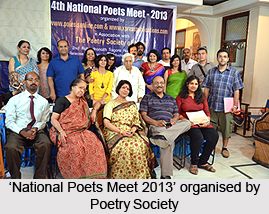 Some of the sophisticated and classy literary organisations in India from the every present do comprise names like - Academy of Indo-Asian Literature from New Delhi, Chetna Literary Group from Mangalore, Gujarat Dalit Sahitya Academy from Ahmedabad, Indian Society of Authors from New Delhi, International Poetry Society of Kolkata, Michael Madhusudan Academy from Kolkata; Madpur Sahitya Parishad from West Bengal, United Writers Association from Chennai, Sahitya Sanskruti Sansad from Odisha, The Home of Letters from Bhubaneshwar, World Literary Organization from Agartala and, Writers Club International from Chandigarh.
The present Indian literature scenario is though much different and unlike from the yesteryears of pre-Independence or the Indian of 1960s or 1970s. The Indian literary organisations of today not only publish the new books penned and sold, but they also do endeavour to keep an authentic record of books written and every minute details of every author. These organisations function from different states and deal with the regional writers and their works, besides the overwhelming response to Indian writing in English.