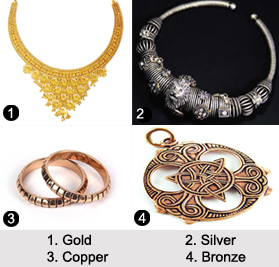
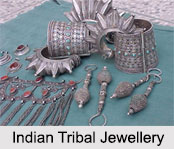
Silver Jewellery in India is popular for its versatility and elegance, and is a great choice for any occasion. Silver jewellery was generally used by the poor classes and an integral part of the attire and dress of tribal people. There are three types of silver jewellery namely; plain silver, oxidized silver and sterling silver.
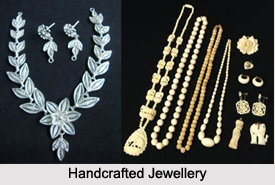
Silver jewellery studded with precious and semi-precious stones is quite popular, particularly in southern parts of India. Filigree Silver is a specialty of Kashmir, parts of West Bengal and Cuttack in Odisha. Filigree is known as "tarkashi" in Cuttack. Necklaces of filigree are admired in Lucknow and Kanpur in Uttar Pradesh and are considered as one of the most remarkable creations of the silver Jewellery art in India.
History of Silver Jewellery in India
During the ancient age in India, the Raja Maharajas established the trend of wearing heavy jewellery made of gold and silver. Jewellery was not restricted to women only but the men also preferred to adorn themselves with junk jewellery.
According to the ancient history, silver was discovered after the discovery of copper and gold metal and the silver jewelleries are sought after since the ancient era. The trend of making and beautifying vessels with silver, creating silver vessels and silver jewellery was started afresh during the time of 4th Century B.C and this trend of silver metal continued till the termination period Roman Empire. The excavations from Indus Valley Civilisation proved that silver was largely used for creating precious objects namely seals, vessels, vases, brooches and pendants. People of ancient times used silver for making their personal ornaments including some other things namely coins for monetary exchanges, weapons, bracelets, etc.
Different Types of Silver Jewellery in India
Ornaments made of silver, such as rings, bracelets, chains , necklaces, nose rings, ear rings, toe rings, heavy kadas and armlets, form integral part of Indian Jewellery. Ankle chains made of silver are worn by the common people all over India and are an example of silver Jewellery art. The ankle chains are sometime decorated with decorative bells, balls or tiny heart-shaped pendants. Apart from these, silver is also used for beautiful bangles, earrings studded with precious and semi precious stones, funky rings, trendy necklace, etc.
Due to the recent vogue of costume jewelleries, silver is also reckoned as an important and most sought after metal for creating trendy, ethnic and traditional regular jewelleries.