
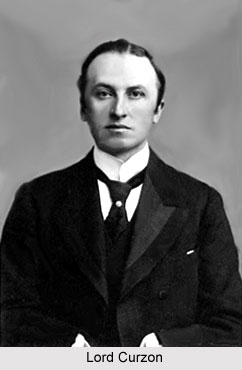
 Lord Curzon was the Governor General and Viceroy of India from 1899 to 1905. Lord Curzon had successive two terms to preside over the Indian empire. The first term (1899-1904) marked the apogee of the imperial system under his paternalist care and ended gloriously. He accepted a successive second term offer, but only to resign within a year in the face of extreme controversies resulting from his measures. As a representative of the Conservative Government, Lord Curzon was expected to serve the British Empire as its paternalist figure. Eloquent, masterful, and energetic, Curzon had previously visited India four times and had been for three years the Under-Secretary of State for Foreign Affairs.
Lord Curzon
Lord Curzon had two successive terms to preside over the Indian empire & he carried his measure of the Partition of Bengal.
Introduction
Lord Curzon was the Governor General and Viceroy of India from 1899 to 1905. Lord Curzon had successive two terms to preside over the Indian empire. The first term (1899-1904) marked the apogee of the imperial system under his paternalist care and ended gloriously. He accepted a successive second term offer, but only to resign within a year in the face of extreme controversies resulting from his measures. As a representative of the Conservative Government, Lord Curzon was expected to serve the British Empire as its paternalist figure. Eloquent, masterful, and energetic, Curzon had previously visited India four times and had been for three years the Under-Secretary of State for Foreign Affairs.Early Life of Lord Curzon
George Nathaniel Curzon, the eldest son and heir of Lord Scarsdale of Kedleston in Derbishire was born on 11 January 1859. He was educated at Wixenford Public School in Hampshire, Eton and Balliol College, Oxford. With a strong and unbroken Conservative family background, Curzon grew into an acknowledged conservative. He did not hold very many high offices before he became the Viceroy of India. Formerly, he represented Southport as an MP in the Parliament (1885-86) who was Parliamentary under Secretary for India (1891-92) and Foreign Under-Secretary (1895-98). He got utterly surprised and thrilled when Prime Minister Lord Salisbury offered him the post of Governor General and Viceroy of India.
Lord Curzon was not ignorant of Indian affairs altogether. As of Wellesley and Dalhousie before him, Curzon was not expected by parliament to found an empire, which was already there though in unsteady form, but to build it structurally on the strongest foundation.
Lord Curzon was not ignorant of Indian affairs altogether. As of Wellesley and Dalhousie before him, Curzon was not expected by parliament to found an empire, which was already there though in unsteady form, but to build it structurally on the strongest foundation.
Frontier Policy of Lord Curzon
Curzon`s earliest policy measure was to withdraw troops from Chitral, the Khyber and the Khurram valley, which were not directly governed by British India. His policy was to use the concerned tribes to protect themselves with British help, if necessary at all. This policy kept the frontier quiet until the end of the First World War. Linked with this frontier policy was the creation of the North-West Frontier Province.
Internal Administration of Lord Curzon
There was no part of the administration, from the rent assessment at village level to the expenditures in the vice regal household, into which Lord Curzon did not look over. He undertook a complete overhaul of the whole bureaucratic machine. As preludes to reform, he tried to identify weaknesses and defects of office management, department by department.
Inefficiency in work like regular delay in office attendance, slow movement of files, lengthy noting on files, writing long minutes in flamboyant style, taking the stereotype as the model, unnecessary dependence on the subordinates, tormented him. He had a very poor opinion of Indian Civil Service. Therefore, he took the most unprecedented steps by personally supervising the office improvement measures. Even the offices of the ICS officials came under his scrutiny. He asked them to take initiatives in good governance.
The civilians coldly received Curzon`s paternalistic outlook, but finally they gave in and followed him as faithfully as the British bureaucracy followed the Prime Minister. Based on the police report of 1903, Curzon reorganised the Indian and provincial police services. He also brought changes in dilatory office procedures.
Inefficiency in work like regular delay in office attendance, slow movement of files, lengthy noting on files, writing long minutes in flamboyant style, taking the stereotype as the model, unnecessary dependence on the subordinates, tormented him. He had a very poor opinion of Indian Civil Service. Therefore, he took the most unprecedented steps by personally supervising the office improvement measures. Even the offices of the ICS officials came under his scrutiny. He asked them to take initiatives in good governance.
The civilians coldly received Curzon`s paternalistic outlook, but finally they gave in and followed him as faithfully as the British bureaucracy followed the Prime Minister. Based on the police report of 1903, Curzon reorganised the Indian and provincial police services. He also brought changes in dilatory office procedures.
Administrative reforms of Lord Curzon
 Lord Curzon was appointed as the viceroy of India in 1899 in succession of lord Elgin II. As a viceroy Curzon had a clear-cut knowledge about the task he had to do as the ruler. From the very beginning of his career he was convinced of the necessity and the urgency of a thorough reforms of the entire administrative machinery. The control of administration was the sole aim of the British in India. Hence Curzon sought to introduce reforms in such a way so that he could use the administrative machinery in his own way. There was not a single department where the administrative reforms of Curzon were not introduced. Curzon aimed at the efficiency of the administration and sought to strengthen "officialization and centralization. Taking no account of the feelings and aspirations of the Indian people, Curzon wanted to establish the stronghold of the British Empire. Curzon after becoming a viceroy appointed an expert Commission to probe into the working of department and then enacted necessary legislation.
In 1902, Curzon appointed a Police commission under the President ship of sir Andrew Frazer. The police commission appointed by Curzon was entrusted with the task of enquiring the efficient functioning of the police administration of every province. The reports of the commission published in the year of 1903. According to the reports the police force was far from being efficient, defective in training and organization, inadequately supervised and oppressive. The Commission recommended the increase of salary of the police thereby strengthening the efficiency of the police department in all provinces. Moreover the commissions sought the constructions of the training schools for the officers and the constables, direct recruitments in the place of promotion in the s higher ranks. According to the reports of the Commission a provincial police service was created. Central Department of Criminal intelligence was also recommended by the Commission, which would enquire the criminal cases both in towns and the villages. Most of the recommendations of the commissions were accepted and implemented by Curzon. During the reign of Curzon there was an increase of expenditure on the Police department.
The existing system of education in India however proved faulty to Curzon. According to Curzon educational institutions in India had become the production house of the political revolutionaries. Thus the growth of the political revolutionaries in the schools would be a great threat to the British supremacy in India. Hence Curzon took the educational reforms as one of the significant part of his administrative reforms. In 1902, the university commission was appointed to enquire into the condition of s Universities in India and to recommend proposal for the improvement of the education procedure in the Universities. On the basis of the Repots approached by the Commission, the Indian universities Act (1904) was passed. The Act sought to increase the official control over the universities. In doing this, the number of fellows from the administrative body of the universities was limited, which increased the nominated elements over the elected fellows. Moreover the power of veto rested on the government. Hence only the government can only prohibit the regulation passed by the Senates. Conditions for affiliation of the private colleges were made more rigid and the periodical inspection by the syndicate was made compulsory. The universities were forced to take active part in the promotion of study and research.
The administrative reforms of Curzon also included the economic reforms. Curzon was shrewd diplomat and he could well understood that unless he controlled the financial set up properly, the company would lose its administrative hold in India. Curzon passed legislations regarding the famines, land revenues, Irrigation, Agriculture, Railways, taxation and currency. The famine and drought of 1899 had affected wide areas in the north, south central and western India. Hence a famine Commission was appointed under the President ship MacDonnell. The Commission was entrusted to enquire into the results of the famine operations. According to the reports of the Commissions the relief distributed to the famine stricken people was excessive. The commission recommended the payment by physical work by the able bodied person and laid down several rules to deal with the fodder famine.
In 1901, a Commission was appointed under the Chairmanship of Sir Colin Scott Moncrieff. This commission was entrusted with the department of irrigation. The commission recommended an additional expenditure 4 ½ crores of rupees on irrigation. The construction work on the Jhelum canal was completed and other works were taken into hand in order to develop the irrigation works. Besides for the improvement of the Indian agriculture and the livestock, scientific methods of cultivation were adopted. Moreover an Imperial Agriculture Department was set up under the direct supervision of the Inspector general.
Curzon in order to extend and strengthen his control on the trade and commerce of the country constituted a new Department of Commerce and industry. . This department was entitled to look after the entire industrial and the commercial interest in India. This department looked after the Posts and telegraphs, factories, Railway Administration, Mines, Ports, and Marine etc. the Indian coinage and the paper Currency Act of 1899 made a British sovereign legal tender in India at the rate of Rs. 15 to a sovereign. Thus India was put on a gold standard.
Curzon gave special attention to the development of the railways. The existing lines were improved while the works on new lines were taken into hand. Curzon invited Mr. Robertson from England to take advice about the working and the administration of the railways. Later Curzon developed a Railway Board to look after the matters connected with the administration and control of the state owned lines according to the recommendations of the Railway expert.
Curzon also aimed for the restructure of the judicial system of the country. Hence he introduced reforms in the existing judicial system of the country. Curzon increased the numbers of judges of the Calcutta high court in order to cope up with the increased work. He also increased the salary, pension, and benefits of the judges of the high court as well as the subordinate courts. Above all the Indian code of civil procedure was revised. However nothing substantial was done to improve the procedure followed or delay caused decision of cases.
From the very beginning of the British rule in India the army had performed a double task to protect the country from the foreign aggressions as well as maintained the internal peace and security. Curzon after becoming the viceroy of India wanted to strengthen the army so that he could hold the administrative control with the help of those armed forces. Curzon vested the duty of the reorganization of the army on lord Kitchener the Commander in chief from 1902 to 1908, under Lord Kitchener, the Indian army was grouped into two commands -the northern commands with its headquarters at Murree and the southern command with its headquarter at Poona. In each division there should be three brigades, one of British battalion and the two of the native battalion. Every brigadier was held responsible for the efficiency of his brigade. A training college for officers on the model of Camberley college of England was setup at Quetta. Better arms were supplied to the British troops. Above all every battalion of the army was subjected to a severe test called "The Kitchener Test". The reorganization of the army naturally meant an increase in expenditure on this department.
Curzon sought to undo the noble work done by lord Rippon in the field of local self-government. The Calcutta Corporation Act reduced the strength of the elected members in the local bodies. As a result the British element were increasing in definite majority both on the corporation and its various bodies. In short the corporation was reduced to an "Anglo-Indian House". The Indian members in the local bodies as well as in the Corporation were offended due to this Act and 28 members of the Calcutta Corporation resigned in protest. Curzon remained indifferent at this protest. A true imperialist lord Curzon sought to establish the British supremacy in India. He not only established the control of the Company, rather his administrative reforms proved extremely oppressive.
Land Rent Policy of Lord Curzon
Most remarkable was Curzon`s dealing with the land issues. He noticed that the rent rate of Raiyats cultivating Khas (government owned) land was much higher than that of the Zamindari peasants. He issued orders to scale down rent for land. The most famous was the Punjab Land Alienation Act, which aimed at protecting cultivators from eviction from their lands for debt and prohibiting non-agricultural people to take control of land. He created an Agricultural Department to promote scientific agriculture. An experimental farms and research institute was set up at Pusa in Bihar. A more positive measure was the establishment of co-operative societies whose aim was to emancipate the peasantry from the bondage of the Mahajans (moneylenders).
Developmental Policies of Lord Curzon
Curzon`s idea of improvement was rooted in the balanced development of agriculture, industry and communication to all of which he paid equal attention. By the end of the 19th century, India had 27000 miles of railway. Curzon added 6000 miles, a phenomenal development in terms of growth rates. For better management, railway was transferred from the public works department to a newly established Railway Board, which operated the state railways and made plans for their development. A new department of commerce and industry was created to deal with exclusively the commercial and industrial questions. Besides railways, Curzon pushed forward irrigation works with equal vigour. He set up a commission (Scott-Moncrieff Commission) which planned extension of irrigation works at a cost of Rs.40 million.
Though an arch imperialist, Lord Curzon rounded off his material development by cultural activity. He conceived and carried out the project of a monument of British rule, the Victoria Memorial Hall in Kolkata. He founded the Imperial Library to be the Bodleian of Oxford or British Museum of the East. By establishing the Department of Archaeology for the conservation of the Indian artistic heritage and the carrying out of new excavation, Lord Curzon had firmly institutionalised the pioneer work of General Cunningham and others whose initiatives were seldom followed up by required institutionalisation. He ruthlessly evicted offices and officers from the sites of historical monuments. In these works and in organising archaeology, Curzon was fortunate to find a new Cunningham in Sir John Marshall.
Though an arch imperialist, Lord Curzon rounded off his material development by cultural activity. He conceived and carried out the project of a monument of British rule, the Victoria Memorial Hall in Kolkata. He founded the Imperial Library to be the Bodleian of Oxford or British Museum of the East. By establishing the Department of Archaeology for the conservation of the Indian artistic heritage and the carrying out of new excavation, Lord Curzon had firmly institutionalised the pioneer work of General Cunningham and others whose initiatives were seldom followed up by required institutionalisation. He ruthlessly evicted offices and officers from the sites of historical monuments. In these works and in organising archaeology, Curzon was fortunate to find a new Cunningham in Sir John Marshall.
Controversial Policies of Lord Curzon
Curzon`s glorious administrative record was largely marred by two controversial policies. One was the education policy illustrated by the Universities Act, 1904. The Act aimed at reforming the University of Calcutta and its relations with other educational institutions. So long the Calcutta University had been operating only as an examining and affiliating body without any educational agenda of its own. Curzon`s reform had introduced post-graduate department in the University. To the people this reform was salutary indeed. But bitter criticisms were aroused by his other reforms affecting management of schools and colleges. Under the Universities Act, government nominees were made predominant on the governing bodies of schools and colleges. Affiliations and grants-in-aid were subjected to many stringent conditions. Curzon`s education reforms were obviously interpreted by the nationalists as an attempt to keep the educational institutions under tight imperial control.
The second and most controversial reform measure was the Partition of Bengal in the name of improving the efficiency of the traditionally neglected Bengal province, Curzon divided it into two halves (a) West Bengal and (b) East Bengal and Assam. The nationalists again interpreted this measure as a project of imperial control that was increasingly coming under threat from the Bengali nationalists. The Congress branded it as a policy of Divide and Rule. The resistance to the partition measure took the forms of Swadeshi and Terrorism, which practically shook the foundation of the British Empire in India.
The second and most controversial reform measure was the Partition of Bengal in the name of improving the efficiency of the traditionally neglected Bengal province, Curzon divided it into two halves (a) West Bengal and (b) East Bengal and Assam. The nationalists again interpreted this measure as a project of imperial control that was increasingly coming under threat from the Bengali nationalists. The Congress branded it as a policy of Divide and Rule. The resistance to the partition measure took the forms of Swadeshi and Terrorism, which practically shook the foundation of the British Empire in India.
Retirement and Death of Lord Curzon
Lord Curzon, who was once confident and boastful in dealing with the native people, had become so disgruntled and disturbed in the later stages that he was really looking forward for an opportunity to leave the job with honour. Lord Kitchener, the commander-in-chief of the Indian army, provided the opportunity. On the issue of army reforms, Curzon and Kitchener differed fundamentally. Curzon felt that the India Office was favouring Kitchener. He thus responded to the situation by his resignation in August 1905, which the India Office accepted at once. Lord Curzon died on 20 March 1925.
Foreign Policy of Curzon
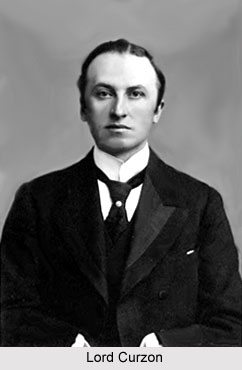 The need for suitable land frontiers had always been a keen subject for the British, colonized in India. To hold the administrative as well as the political control of India, the British viceroys from the very beginning tried to strengthen the land frontiers. Hence all of them maintained a regular foreign policy in order to build up a strong frontier. Lord Curzon being a shrewd diplomat gave to the problems of frontier a scientific basis and developed a strong British Empire in India.
Britain`s special interest in the Persian Gulf began long before in the 17th century when Britain conquered some important stations of the area and the adjoining regions. British established their colony in those regions. The British Residents in the Gulf acted as the arbitrary dictators and always with strife with the chiefs of the Arabian coasts. Later the British navy suppressed the revolt of the Arabian chiefs and established peace. Though initially Britain did not aim for any colonial empire in the Gulf, she would not tolerate the territorial interest of any other power in the Persian Gulf. In the last quarter of the 19th century the European powers were competing in the race of establishing colonies. Right at that moment Russia was trying to move southward to establish a port in the Persian Gulf. Germany was planning to extend her Berlin Baghdad railway project to the gulf. Moreover Turkey was trying to re-install her suzerainty over Kuwait. In due course France expressed its resentment against the increasing claims of England over Persian Gulf and tried to put an end to it. But England thwarted the attempts of Russia, Germany and Turkey to gain a favorable position in the Gulf. After visiting to the Persian Gulf, in 1903 Curzon declared that to let Russia to establish a port in this region was to damage the status quo of great Britain. Curzon also thwarted the Russian intrigues in the Perso-Afghan dispute about Seistan. According to the old treaty of 1857, both Persia and Afghanistan had agreed to settle their differences through the good offices of the British government. Hence on the strength of that treaty, Curzon dispatched in 1902 Sir Henry MacMahon to arbitrate in the satisfaction of both the parties. Thus Curzon subdued the growth of any power that could challenge the British supremacy in Persian Gulf.
Trade relation with the neighboring countries was also considered as one of the important foreign policy of the British. In 1774-75, Warren Hastings has sent George Bogle as the company`s envoy into Tibet to develop trade relation with the country. A second envoy was also sent in the year of 1783 for the same purpose. However the trade relation with Tibet was completely damaged after the Chinese occupation of Tibet. The Tibetan-Sikkim disputes worsened the condition. A Sino- British convention of 1890 demarcated the boundaries. The Sino-British agreement also considered the questions pertaining to the trade between India and Tibet, which took shape of the definite agreement in 1893. However nothing substantial was resulted from this Agreement. Thus when Curzon arrived in India, the relations with Tibet had reached to a point of complete deadlock. The Chinese suzerainty over Tibet was ineffective. Moreover Russian interference was increasing which alarmed Curzon. Hence he could not remain indifferent to the Russian advances in Tibet.
In such circumstances Curzon in 1903,with the permissions of the Home Authorities sent colonel Younghusband with a small Gorkha contingent on a special mission to Tibet. The motto of the mission was to somehow oblige the Tibetans to come to an agreement with the British. However the Tibetans refused to negotiate and offered non-violent resistance. Younghusband pushed his way reaching Gyantse on April 11 and Lhasa on 3rd August 1904. Consequently Tibet came into the complete control of the British. Thus Curzon strengthened their position in the northeast frontier. Later in the clause provided it was declared that Tibet would not grant any concession for railways, roads, telegraphs etc to any foreign state. However according to that very clause Great Britain was entitled to have some control over the foreign affairs of Tibet. It can be said that the vigorous and determined foreign policy of Curzon counteracted all Russian schemes in Tibet.
In his policy towards the north west frontier Curzon followed a realistic policy quite diplomatically. Curzon drafted a code of frontier policy and applied it with consistency and without violent interruptions throughout the whole region of northwestern frontier. Accordingly Curzon followed the policy of withdrawing the British force from the frontier. He then appointed the tribal forces in defence of the tribal territory. Regular British troops were withdrawn from advanced position in the Tribal areas. Moreover the tribal militia who were entrusted for the defence of the frontiers were trained and commanded by British officers. As support to these tribal levies, mobile columns of British troops were stationed in various strategic positions. Communications in these rears were highly developed to support the new policy. Also a number of strategic railway lines were laid down to build up the proper communication. Besides, a durbar was held at Peshwar in 1902, where nearly all the tribal chiefs attended. In the Durbar Curzon assured the chiefs of the peaceful and non-aggressive British policy but at the same time warned them of the consequences of violating the frontier. Curzon crowned his policy by the creation of a new northwest frontier province consisting of the districts of Hazara, Peshwar, Kohat, Bannu, Dera Ismail Khan and the trans-border tracts lying between the administrative frontiers of the Durand Line. Curzon claimed all successes for his frontier policy. However the northwest frontier policy of Curzon did not bring any long-term peace successfully.
In viceroy`s executive Council here used to be two members representing the Military department. The first one was the commandeer in chief, the executive head of the army in India and the and the second was a military member, an ordinary executive to advise the governor general on the military matters. Lord Kitchener, who came to India in1904, to hold the office of Commander in chief did not like the dual control over the Military department. In short he sought to abolish the office of military executive in the viceroy`s council. Curzon however strongly opposed the proposal-approached by Lord Kitchener. Later with the passage of time situation got worse and there was increasing differences between Lord Curzon and Home over the matters of the foreign policy of Curzon. Ultimately the circumstances led to the resignation of Lord Curzon from the office of viceroy.
Lord Curzon was a great imperialist. Curzon`s foreign and the domestic policies were guided by his dream to establish a strong British empire in India. He tried to keep India as a close preserve for Britain and save her from the onslaught of the other European aggression.
Recently updated articles in History of India
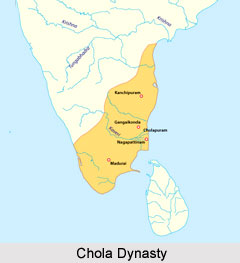
Chola Dynasty
Chola Dynasty is a Tamil dynasty and had longest duration of ruling in parts of South India. Chola dynasty had ruled South India successfully for a ex...
Suhungmung
Suhungmung was the fourteenth ruler of the Ahom dynasty who ruled from the period 1497 to 1539 AD. His reign was significant in terms of expansion of...
Princely State of Dadhalia
Princely State of Dadhalia was located in the present state of Gujarat. The state covered a total area of 28 sq miles and comprised of 15 villages. Th...
Princely State of Rupal
Princely State of Rupal was a part of the Baroda Agency, a sub division of Western India States Agency. It was under the administrative control of the...
Archaeological Sites of West Bengal
Archaeological sites of West Bengal reveal several aspects of ancient India. Excavations by the Archaeological Survey of India have furnished artefact...
Related articles in History of India
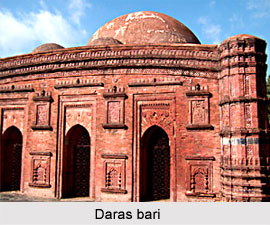
Mughal Architecture during Babur
Mughal architecture during Babur marked the foundation of a new architectural era in India, blending Timurid, Persian, and local influences. His reign...
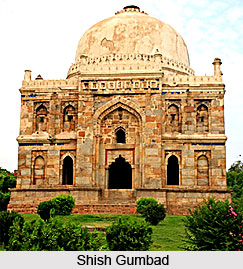
Architecture during Sayyid and Lodi Dynasty
Architectures during the Sayyid and Lodi dynasty were mainly the tombs and monuments for the dead rulers. It were carefully designed and meticulously...

Brahmanical Sources of Ancient History
Brahmanical Sources of ancient history are contained in the Vedas and they constitute one of the most important literary sources of information about...
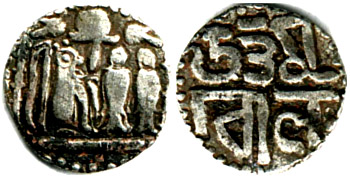
Coins of Chola Empire
Coins of Chola Empire were issued in gold, silver and copper and carried the Chola emblem.
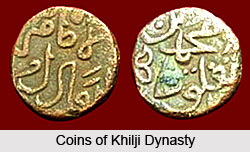
Coins of Khilji Dynasty
Coins of Khilji Dynasty had an influential feature that was followed by the other dynasties.