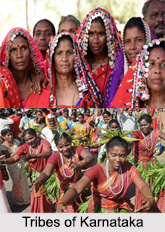
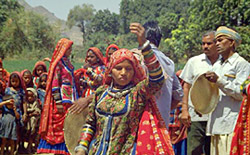
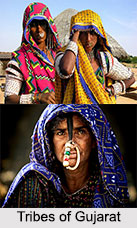
 Tribes of Gujarat inhabit the rugged terrain adjoining the Aravallis, the western ridges of the Vindhya and Satpura mountain Range and the northern slopes of the Sahyadri Ranges. The tribal belt in Gujarat consists of the districts of Dang, Surat, Broach, Baroda, Panchmahals, Sabarkantha and Banaskantha.
Various sects of Adivasis, mainly of Bhil Tribe and Konkan origin reside in this region. Tribes such as the Siddhis, Rabari tribe, Padhar tribe, Mers and Bharwads live in the coastal Saurashtra districts of Junagadh, Jamnagar and Kutch. The Rabaris and the Mers seem to have come from the Mediterranean in early times.
Tribes of Gujarat have an interesting history. The Ramayana and the Mahabharata make several references to the hill tribes.
Demographics of Tribes of Gujarat
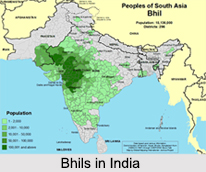
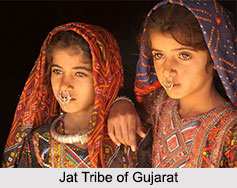 There are over 5 million Adivasis or tribal communities in Gujarat. Tribes with Bhil features account for more than 50% of the Gujarat"s Adivasi population. Most of the Adivasi sects claim descent from clans, such as, the Rathod, Solanki, Chauhan, Parmar and Makwana.
•Bhil Tribes of Gujarat: Bhil tribes ruled over the Chhota Udaipur, Rajpipla and Sagbara region of Ratanmal in the Panchamahals district, the Danta region in the Banaskantha district and over principalities around Idar.
•Barda Tribes of Gujarat: The Barda means hilly region. So people from hilly region are called Barda. They are believed to have migrated to Gujarat from the Khandesh region and are hence also known as the Khandeshi Bhil.
•Bawcha Tribes of Gujarat: Except some historical information, no written evidence is available about origin of Bawcha tribe. Bawcha must have their origin in Pandav dynasty.
•Dhodia Tribes of Gujarat: The term Dhodia has been derived from "Dhulia", a place in Maharashtra from where two Rajput princes namely Dhan Singh and Roop Singh came to this area.
•Halpati Tribes of Gujarat: Dubla in Hindi means "thin", even though physically they are stout. They claim to be the descendants of the Rajputs.
•Rabari Tribes of Gujarat: Rabari is a one who is wealthy. The word Rabari may also mean the one who is beyond rules and regulations.
•Kunbi Tribes of Gujarat: The term Kunbi means those who germinate more seeds from one seed. The community people call themselves Kunbi and others also recognize them as the same.
Culture of Tribes of Gujarat
The tribal people of Gujarat are religious and are animistic in religion. They worship animals, such as the tiger, crocodile and snake as Gods and also worship some plant Gods and a hill God (Thumbi Dev). The tribes also worship their dead ancestors.
Occupation of Tribes of Gujarat
The tribes of Gujarat are engaged in different occupations. In olden days the Bhils depended on the slash-and-burn cultivation system under which they cleared thick forests by cutting trees or burning them and cultivated crops in this land for a few years until the natural fertility of the soil was exhausted. They then moved on to new forests, leaving the land fallow for it to recover its fertility. They also lived by gathering forest produce and hunting wild beasts or fishing. Some tribes work as casual labourers, cattle breeders and find employment in the ports.
Even today the tribal groups, such as, the Koknas, Gamits, Dhodias, Vasawas, Garasias and some other Bhils generally lived on agriculture. Most of the Adivasis depend on agriculture either as landowners or as farm workers.
Related Article
Indian Tribals
Indian Tribal People
West Indian Tribes
Gujarat
Districts of Gujarat