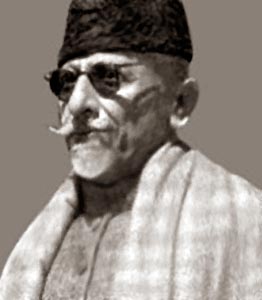
 One of Gandhiji`s greatest achievements was to lead the revolutionary movement to the path of non violence. According to him ahimsa or non-violence was the highest law. But to many others `non-violence was a matter of policy and not of creed`. It was basically the words of Maulana Abul Kalam Azad. Men like the Maulana felt that it freedom without violence was well and good; If not the nation had the right to expel oppressive foreigner by force. As it turned out, India was spared the horrors of a revolutionary war. But the lives of many young martyrs were sacrificed on the altar of the motherland in order that the country might be free.
During the 1920s most of the energies of the physical force party had been channeled into the non-co-operation movement. But in 1924 and 1925, after the movement had been suspended, there was a spurt of revolutionary activity. The old groups in Bengal as for example Jugantar and Anushila have again started up. The Hindustan republican association was organized by Ramprasad Bismil and others. This group carried out a daring train robbery near Lucknow. Most of those involved were caught and convicted in the Kakori conspiracy case of 1925. But Chandrasekhar Azad escaped arrest, and in 1928 he reorganized the association under the name of Hindustan socialist republican army.
In December 1928 Bhagat Singh, who was a member of this group, assassinated the British police officer. This British police officer was held responsible for the death of Lala Lajpat Rai. 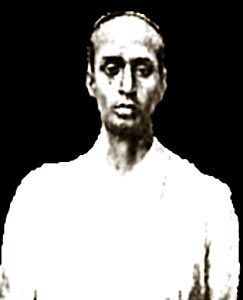 Later the people of Punjab were made to suffer police reprisals, and some complained that innocent men had to pay for the deeds of the revolutionaries. Bhagat Singh and B. K. Dutt boldly threw a bomb into the central legislative assembly. The bomb was harmless, and the two allowed themselves to be arrested. Their aim had not been to kill, but to make the deaf hear. They succeeded in their mission.
The trial and subsequent execution of Bhagat Singh and others became a political issue. A resolution was passed by the Karachi congress in 1931 commending their bravery. At this time it can be known in the words of the official congress historian that `Bhagat Singh`s name was as widely known all over India and was as popular as Gandhiji`s.`
The most successful revolutionary operation in the entire history of the freedom struggle took place in Chittagong. This place was situated in the eastern Bengal and the incident happen in the year of 1930. A group led by Surya Sen captured the government armoury and for a while took control of the town. This raid was intended to be part of a larger insurrection, but unfortunately it remained an isolated revolt, which the British were eventually able to put down. Surya Sen was popularly known as `Master-da`. He was escaped and continued to wage `guerrilla` warfare for another three years. During this period there were scores of revolutionary incidents in Bengal. All these happened during the year 1932. High officials, including three successive magistrates of Midnapur, were assassinated. Young girls took part in some of these daring attempts. Surya Sen`s betrayal, capture and execution in 1933 marked the end of this phase of revolutionary activity in India.
In 1934 a hush seemed again to have fallen over the country. The civil disobedience movement had been halted. Gandhiji had withdrawn from active politics and was involved in harijan uplift. Police repression had silenced the physical force movement. But in 1935 an ill-considered British legislative measure again prodded India into activity. Previously the same incidents happened in the years 1905, 1919, and 1927.